
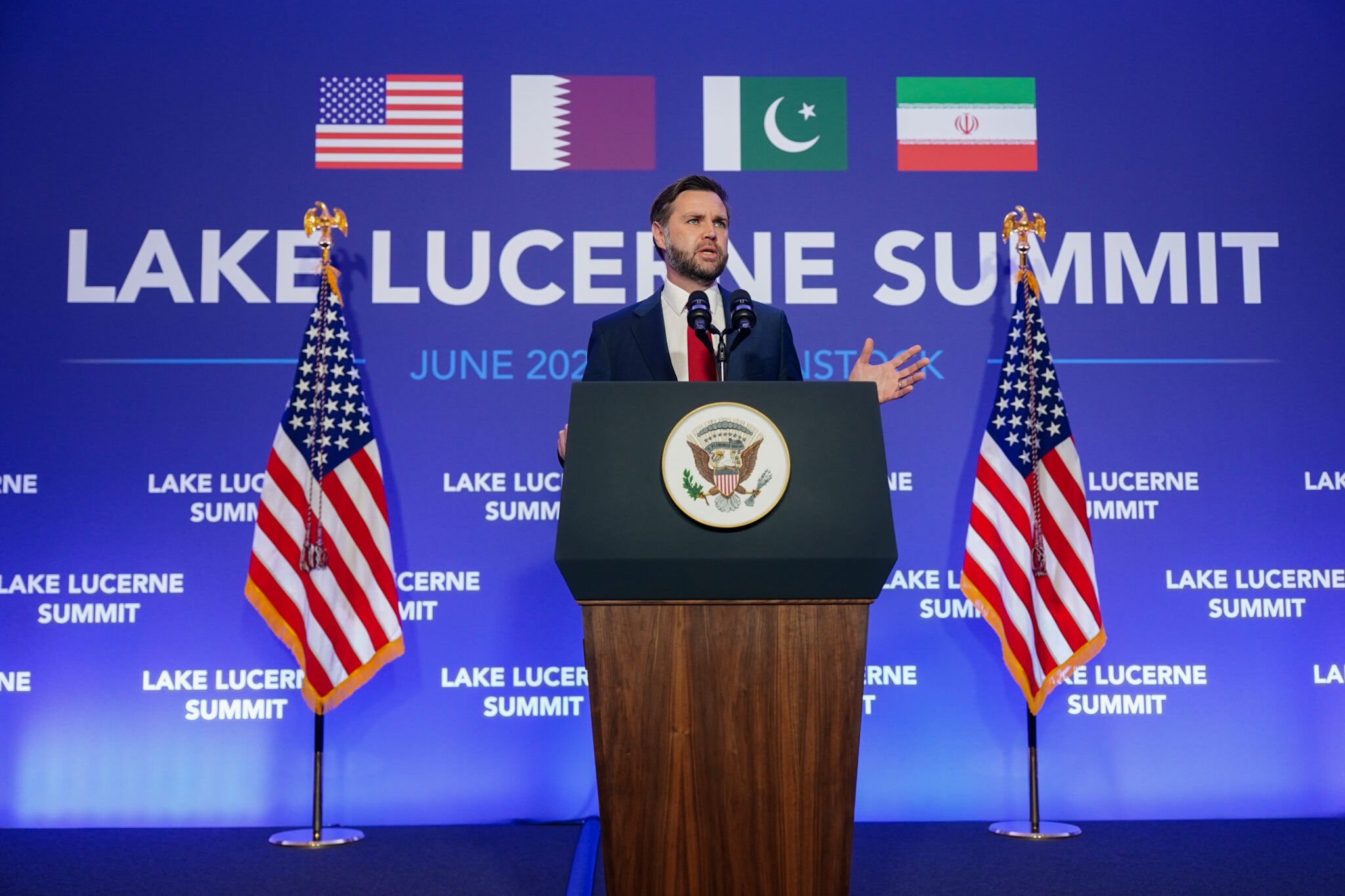

Vance Says Iran Talks Create Foundation for Permanent Peace Deal/ TezzBuzz/ WASHINGTON/ J. Mansour/ Morning Edition/ Vice President JD Vance says negotiations with Iranian officials in Switzerland established a strong foundation for a final peace agreement. Mediators reported progress on issues including Lebanon, the Strait of Hormuz, and Iran’s nuclear program. Technical negotiations will continue this week as both sides work toward a permanent deal within the 60-day framework.
US-Iran Talks Quick Looks
- JD Vance met with senior Iranian officials in Switzerland.
- Talks focused on implementing the interim U.S.-Iran agreement.
- Mediators Pakistan and Qatar reported “encouraging progress.”
- Technical negotiations will continue after high-level meetings concluded.
- The U.S. floated a proposal involving Iranian assets purchasing American agricultural products.
- Discussions included maintaining access through the Strait of Hormuz.
- Lebanon’s ceasefire remains a key issue in negotiations.
- Iran described progress in Lebanon as a major breakthrough.
- President Trump’s public comments briefly disrupted discussions.
- Negotiators continue working toward a permanent agreement to end the war.

Deep Look
Vance Says Switzerland Talks Established Foundation for Final Agreement
Vice President JD Vance said Monday that extensive discussions with senior Iranian officials in Switzerland have laid important groundwork for a broader agreement aimed at permanently ending the conflict that began between the United States, Israel and Iran earlier this year.
Following meetings with Iranian parliamentary speaker Mohammad Bagher Qalibaf and other officials, Vance described the initial round of negotiations as productive despite significant challenges.
“The final deal is the house,” Vance told reporters after initial talks with Iran’s parliamentary speaker Mohammad Bagher Qalibaf. “We set the foundation. We haven’t built the house, but we’ve laid a successful foundation to get to a good place for the American people.”
The negotiations began Sunday and stretched into early Monday, with mediators reporting both moments of tension and areas of meaningful progress.
Proposal Would Link Iranian Assets to American Agricultural Purchases
One of the most significant developments emerging from the talks involved a U.S. proposal regarding frozen Iranian assets.
Vance suggested that Washington could support allowing certain Iranian funds to be unfrozen under a structured arrangement that would direct spending toward American agricultural products.
According to Vance, senior U.S. negotiator Jared Kushner worked with Qatari officials to develop the proposal.
Under the concept, sanctions relief could allow Iran access to assets that would be used to purchase American-grown commodities, including soybeans, corn and wheat.
Vance explained that Qatar would play an oversight role in the process and that Iranian funds “would actually go to buy American soy, American corn and American wheat for the benefit of the Iranian people.”
Iran has long sought access to billions of dollars in frozen assets restricted through sanctions, banking controls and international legal disputes. Iranian officials have not publicly commented on the proposal tying those funds to purchases of U.S. products.
Technical Negotiations Continue After High-Level Meetings End
Although the top-level diplomatic meetings have concluded, negotiations are far from over.
In a joint statement, mediators Pakistan and Qatar announced that technical discussions will continue throughout the week in Switzerland.
The mediators described the latest developments as “encouraging progress.”
The talks are being conducted under the framework established by last week’s interim agreement between President Donald Trump and Iranian President Masoud Pezeshkian.
That agreement created a 60-day negotiating period intended to address several unresolved issues, including the future of Iran’s nuclear program, sanctions relief, regional security concerns and long-term peace arrangements.
Progress Reported on Strait of Hormuz and Lebanon
Vance said negotiators made advances on several critical issues beyond nuclear policy.
Among the areas discussed were mechanisms designed to keep the Strait of Hormuz open and ensure that maritime trade and global energy shipments continue without disruption.
The strategic waterway remains one of the most important energy corridors in the world.
Negotiators also focused heavily on preserving a ceasefire between Israel and Hezbollah in southern Lebanon, a conflict that nearly derailed talks before they began.
While returning to Washington, Vance emphasized the importance of the technical phase now underway.
“We wanted to set up a structure for that so that you could have proper political oversight, but obviously, as much as this place is very beautiful, I can’t stay here for the next 60 days,” Vance told reporters.
U.S. envoys Jared Kushner and Steve Witkoff are expected to oversee many of the detailed negotiations moving forward.
Although President Trump did not attend the talks in Switzerland, his presence loomed over the negotiations through a series of public statements made from Washington.
According to Iranian state media, talks briefly paused Sunday after comments from Trump were viewed as offensive by Iranian officials.
Iranian outlets reported that discussions halted following the “publication of an insulting message by the U.S. President.”
Despite the disruption, negotiations resumed and ultimately continued through the evening.
A senior U.S. diplomat familiar with the talks said one of the issues discussed involved Iran’s messaging regarding the Strait of Hormuz.
Iranian military officials claimed over the weekend that the waterway had once again been closed due to continued fighting in Lebanon. U.S. Central Command has disputed those claims.
Iran Stands Firm on Uranium Enrichment
Ahead of the negotiations, Iranian President Masoud Pezeshkian reaffirmed Tehran’s position regarding its nuclear program.
According to Iranian state media, Pezeshkian vowed to “never back down from the right to enrich uranium.”
Trump responded forcefully during a Fox News interview Sunday, warning the Iranian president about his public statements and reiterating pressure on Tehran.
At the same time, Trump posted a warning on social media directed at Iranian-backed groups in Lebanon.
“Iran must immediately stop their highly paid PROXIES in Lebanon from causing trouble. If they don’t, we’ll hit Iran very hard again, just like we did last week, only harder!!!”
Despite the rhetoric, negotiators continued working toward a framework for a long-term agreement.
Iran Sees Lebanon as the First Real Test
Iranian officials emphasized that progress in Lebanon remains central to the broader success of the negotiations.
Foreign Minister Abbas Araghchi wrote on X that mediators had delivered “major progress to end the Lebanon War.”
However, he cautioned that implementation would determine whether the progress becomes meaningful.
He described the ceasefire mechanism as the first “real test” of the broader diplomatic process.
Neither Israel nor Hezbollah signed the U.S.-Iran agreement, making stability in Lebanon one of the most fragile elements of the current negotiations.
Still, signs of improvement have emerged.
Israeli authorities announced plans to lift movement restrictions near the border, while Lebanon experienced another day without reported Israeli strikes. Hezbollah has also refrained from announcing new attacks since Saturday.
The current lull represents the longest period of relative calm since the latest Israel-Hezbollah conflict erupted in early March.
“This region has been a basket case for a very long time,” Vance said.
As technical talks continue, negotiators now face the challenge of transforming preliminary progress into a comprehensive agreement that addresses nuclear concerns, regional conflicts, economic sanctions and long-term security arrangements.
More on US News
Comments are closed.