
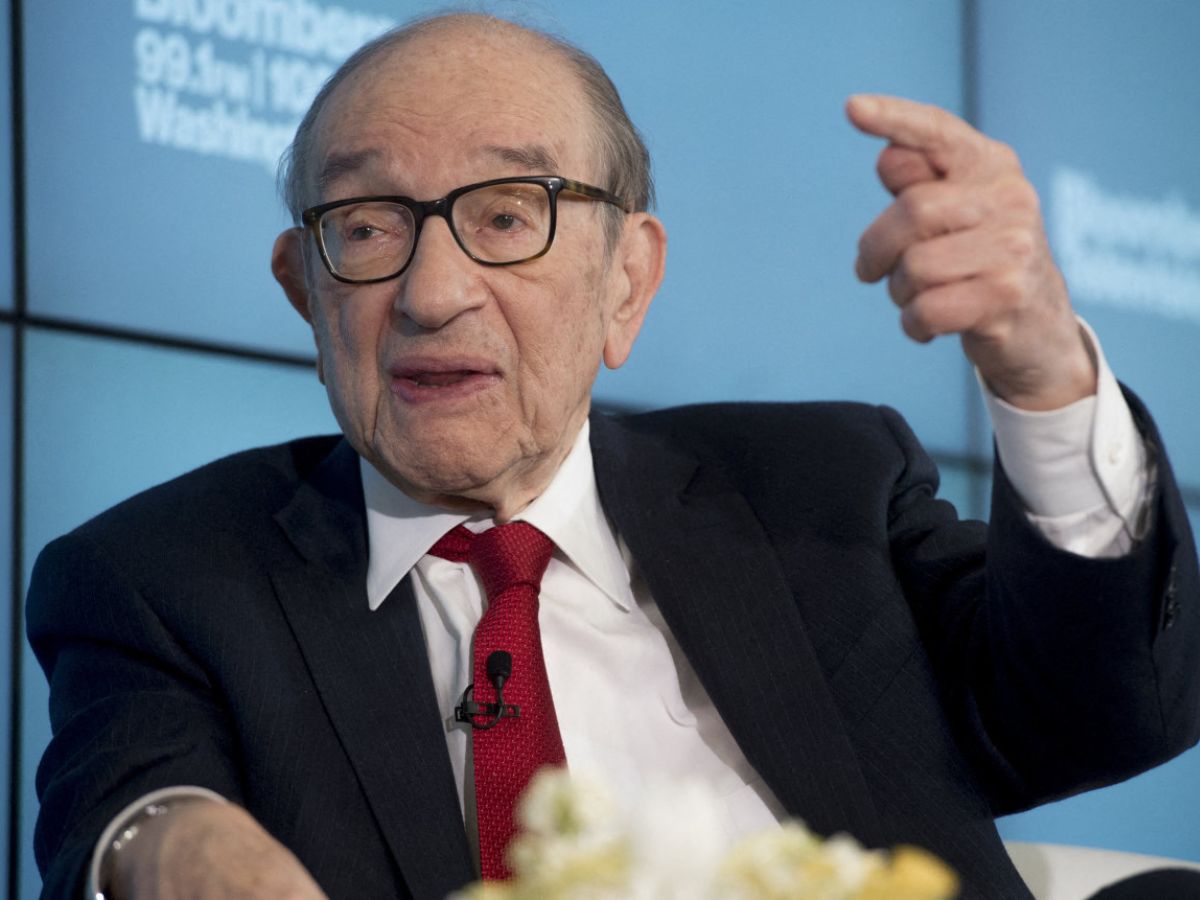

Alan Greenspan, an economist who headed the US Federal Reserve for almost two decades and emerged as one of the most powerful people in international finance, has died at the age of 100. Greenspan died on Monday due to complications related to Parkinson’s disease at his home, as per a statement issued by his wife, Andrea Mitchell, chief Washington correspondent and chief foreign affairs correspondent of NBC News.
His death marks the end of a career that shaped American monetary policy across four presidencies. During his long tenure at the Federal Reserve, Alan Greenspan guided the US economy through major events ranging from the 1987 stock market crash to the dotcom boom and the aftermath of the September 11 attacks.
Who was Alan Greenspan and how he became one of America’s most powerful economists
As per reports, Alan Greenspan was born in the Washington Heights district of New York City on March 6, 1926. As a youth, he had a keen interest in maths and music. He joined Juilliard School and became a jazz saxophonist and clarinetist until he turned his attention to economics.
He got his bachelor’s and master’s degrees from New York University and went on to earn his doctorate at Columbia University under the guidance of Professor Arthur F. Burns who would eventually become the Federal Reserve chairman. In the 1950s, Alan Greenspan was working as an economic consultant. He also became the president of Townsend-Greenspan & Co. He gave advice to the Nixon presidential campaign and later became the chairman of the Council of Economic Advisers in President Gerald Ford’s administration from 1974 to 1977.
Alan Greenspan’s Federal Reserve years and the rise of the ‘Maestro’
President Ronald Reagan nominated Alan Greenspan as Federal Reserve chairman in August 1987. He went on to serve five consecutive terms, working under Ronald Reagan, George H.W. Bush, Bill Clinton and George W. Bush.
Reports say that, it was during this time that the USA had one of the greatest economic booms since 1991 to 2001. Inflation rates were low, and globalization and the internet economy were booming. His way of communication which was usually very elaborate was known as “Fed speak.” The immense power that he wielded was nicknamed by some people “the Maestro.” After the “Black Monday” stock market crash in 1987, he did things that helped stabilize the financial markets and gave rise to something referred to as the “Greenspan put.”
Alan Greenspan’s legacy shaped by praise, criticism and the 2008 crisis
Though there was much acclaim on Alan Greenspan’s contribution in ensuring economic growth and stability, he was later criticized following the financial crisis that occurred in 2007-08. This is because of the high risks taken due to his advocacy for deregulation and the self-regulation of the markets.
According to reports, in testimony before Congress in 2008, he described the collapse as a “once-in-a-century credit tsunami” and acknowledged weaknesses in his assumptions. A later bipartisan inquiry concluded that long-term deregulation policies supported by his philosophy had helped create conditions that contributed to the crisis.
Alan Greenspan remained influential long after leaving the Federal Reserve
After retiring from the Federal Reserve on January 31, 2006, Alan Greenspan continued working as an author, consultant and public commentator. His 2007 memoir, The Age of Turbulence, reflected on his decades in public life and relationships with several US presidents.
He received numerous honours, including the Presidential Medal of Freedom in 2005 and an honorary knighthood from Queen Elizabeth II in 2002. Survived by Andrea Mitchell, he was remembered by her as “a giant of a man who helped shape the U.S. economy for decades under presidents of both parties” and someone who was “always honest in acknowledging his mistakes.” She also recalled his lifelong love of baseball, tennis, golf and jazz.
Also Read: Major Blow To Iran-US Deal? Israel Says It Won’t Withdraw From Lebanon’s ‘Security Zone’
Khalid Qasid is a media enthusiast with a strong interest in documentary filmmaking. He holds a Master’s degree in Convergent Journalism from AJK MCRC. He has also written extensively on esports at Sportsdunia. Currently, he covers world and general news at NewsX Digital.
The post Alan Greenspan, Former Chairman Of US Fed, Dies At 100 appeared first on NewsX.

Comments are closed.