
Vietnam business confidence rebounds as firms accelerate AI adoption and ASEAN expansion: UOB study

The survey found that 85% of Vietnamese businesses reported positive sentiment, up from 48% in 2025, when confidence was affected by uncertainty surrounding U.S. tariff policies.
More than 90% of respondents expect business performance to improve in 2026, with revenue growth projected to strengthen further over the following two years.
At the same time, nearly half of surveyed firms said operating costs had increased as a result of tariffs and geopolitical developments, prompting companies to focus on efficiency, resilience and long-term transformation.
Energy efficiency becomes a strategic priority
Energy management is emerging as a key area of focus for businesses in Vietnam.
The study found that 96% of respondents consider energy efficiency important, compared with a regional average of 87%.
Amid volatile global energy markets and concerns over supply stability, businesses are adopting more structured approaches to energy management. More than half (55%) cited securing reliable energy supplies as a priority, while 53% are focused on optimizing energy consumption and 47% aim to reduce overall energy use.
To support these efforts, many companies are investing in energy-efficient equipment (43%) and solar power systems (42%), seeking to balance cost management with operational resilience.
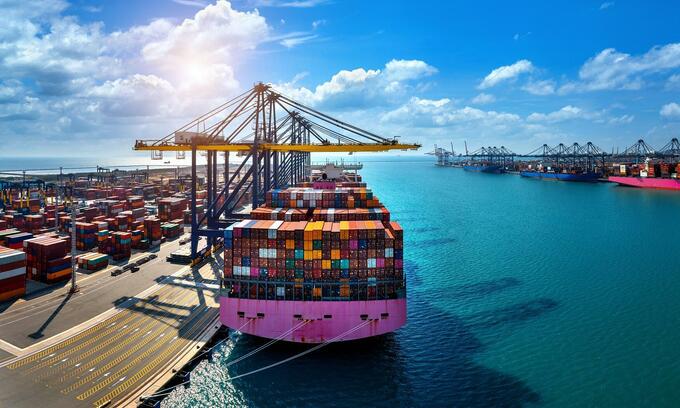
A container ship docked at port. Photo courtesy of UOB |
AI adoption gathers pace
Vietnamese businesses are also accelerating digital transformation efforts, with AI playing an increasingly prominent role.
According to the study, eight in 10 companies have begun implementing AI, although only 25% have adopted more advanced applications.
Businesses with more mature digital infrastructure were found to be significantly more likely to deploy AI solutions.
Among companies already using AI, 49% reported gains in productivity, 47% cited improved cost efficiency, and 46% said the technology contributed to revenue growth. Reflecting growing confidence in AI, two-thirds of respondents plan to increase AI-related investment by more than 25% in 2026.
However, several barriers remain. Respondents identified investment costs (49%), limitations in available AI solutions and partner ecosystems (48%), and insufficient data and system readiness (47%) as key challenges.
 |
Vietnamese companies accelerating digital transformation, with AI emerging as a key growth driver. Photo courtesy of UOB |
ASEAN expansion gains momentum
Supply-chain resilience remains another major concern, with 97% of respondents describing it as critical to their operations.
While supply-chain disruptions have eased compared with previous years, companies continue to face challenges linked to geopolitical developments (40%), procurement complexity (34%) and regulatory uncertainty. Overall, 88% of businesses said regulatory issues affect their operations.
To strengthen resilience, four in five companies plan to diversify supplier networks in 2026. More than half intend to increase sourcing from suppliers within ASEAN, while 23% plan to expand domestic sourcing.
Nearshoring is also gaining traction. Around one-third of respondents plan to establish or expand manufacturing operations in Vietnam, while 43% are considering broader expansion across Southeast Asia.
The survey found strong interest in overseas growth. Seven in 10 Vietnamese businesses expanded internationally in 2025, and nine in 10 plan further expansion over the next three years.
Meanwhile, 80% expect to invest abroad within the next two years, with planned investments averaging more than US$28 million.
ASEAN remains the preferred destination for expansion, selected by 65% of respondents. Thailand, Singapore and Indonesia were identified as the most attractive markets.
Businesses cited legal and regulatory requirements (36%), identifying suitable local partners (36%), and accessing collaboration opportunities with established companies and government-linked organizations as the main challenges when entering overseas markets.
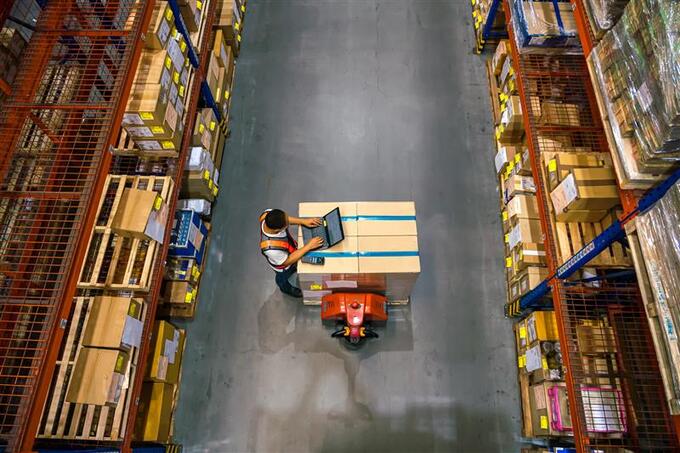 |
Supply chain resilience remains another key priority, with 97% of Vietnamese businesses describing it as critical to their operations. Photo courtesy of UOB |
To support regional expansion, UOB said it leverages a network of 11 Foreign Direct Investment (FDI) Advisory Centers across Asia, providing market access, regulatory guidance and business connections. The bank has also introduced its Financial Supply Chain Management solutions on the UOB Infinity platform in Vietnam, allowing businesses to manage cross-border supply chains digitally through a single system.
“Vietnamese businesses are demonstrating resilience and adaptability in an increasingly complex global environment,” said Annie Pham Nhu Anh, head of wholesale banking at UOB Vietnam.
“We are seeing a shift from recovery to transformation, with companies investing in digital capabilities, strengthening supply chains and expanding across ASEAN to capture long-term growth opportunities.”
She said the bank’s regional network and local expertise enable it to support clients seeking to navigate uncertainty, pursue cross-border opportunities and expand sustainably across Southeast Asia.
Now in its seventh year, the UOB Business Outlook Study has moved to a twice-yearly publication schedule and expanded its scope to better reflect evolving economic and geopolitical conditions.
The 2026 edition covers Singapore, Indonesia, Malaysia, Thailand, Vietnam, mainland China and Hong Kong. The Vietnam findings are based on an online survey of 226 medium-sized and large enterprises nationwide.
 |
Annie Pham Nhu Anh, Head of Wholesale Banking at UOB Vietnam. Photo courtesy of UOB |
UOB Vietnam officially commenced operations as a wholly owned subsidiary on July 2, 2018. The bank has operated in Vietnam for more than three decades, beginning with a representative office in 1993 before becoming the first Singaporean bank to establish a branch in the country in 1995.
Today, it provides retail and corporate banking services through five branches in Ho Chi Minh City and Hanoi, following the acquisition of Citibank Vietnam’s consumer banking business in 2023.
The bank says it continues to support businesses and individuals in Vietnam while leveraging its regional network to connect customers with opportunities across ASEAN.
See full report here.
Comments are closed.