

You have questions. We have answers.
Reviewed by Dietitian Madeline Peck, RDN, CDN
Key Points
- Protein promotes satiety and helps build muscle, bones, enzymes, hormones and antibodies.
- To maximize protein’s benefits, include it in every meal and most snacks.
- Animal and plant proteins each have unique advantages, and both can support muscle health.
For five years and counting, protein has been America’s most sought-after nutrient. Yet there’s still a surprising amount of confusion about what it can and can’t do for your health. “Most people think of protein simply as a muscle-building nutrient, but it is involved in nearly all of the body’s biological functions,” Matthew Nagra, NDexplains. He shares that it is involved in the production of hormones, enzymes and antibodies and is a key structural component of many tissues, including bone.
While you’re likely to find all kinds of protein-related advice on social media, much of it is reduced to one-size-fits-all messaging. As a result, it often fails to mention that protein needs vary by age, body size, activity level, health status, appetite and even your medications, explains Drew Hemler, M.Sc., RD, FAND.
To sort out the facts from the hype, we asked nutrition experts to expose the most common protein myths and truths. Here’s what you need to know.
Truth #1: You’re Probably Not Eating Enough Protein
For years, we were told that we eat more than enough protein. The logic was based on decades-old research showing that the average healthy adult needs about 0.8 grams of protein per kilogram of body weight per day (roughly 0.4 grams per pound).
However, nutrition science is continually evolving. Over the years, a growing body of research has found that, while the old protein recommendations were sufficient, they were hardly optimal. Fast-forward to the release of the new Dietary Guidelines for Americans, 2025-2030. These updated guidelines increased protein recommendations by a staggering 50% to 100%, with a daily goal of 1.2 to 1.6 grams per kg (0.5 to 0.7 grams per pound).
That may sound like a lot, but you can strategically meet your needs. “For many Americans, the issue is not a classic protein deficiency,” says Hemler. “The goal is to add, not overhaul.” To close the gap, he recommends adding convenient protein sources to meals and snacks throughout the day. For breakfast and snacks, he recommends quick options, like strained (Greek-style) yogurt, eggs, hummus, cheese, tuna, nuts or seeds. At lunch and dinner, he likes adding beans, lentils, tofu, tempeh, chicken, lean meat or fish to salads, bowls, pasta and noodle dishes.
Truth #2: Protein Helps Support Muscle Health, but It Won’t Magically Build More Muscle
The main reason people try to eat more protein is to build more muscle. That’s a good thing, because muscle doesn’t just keep you strong, it also helps you use calories and glucose more efficiently, which is beneficial for metabolic health.
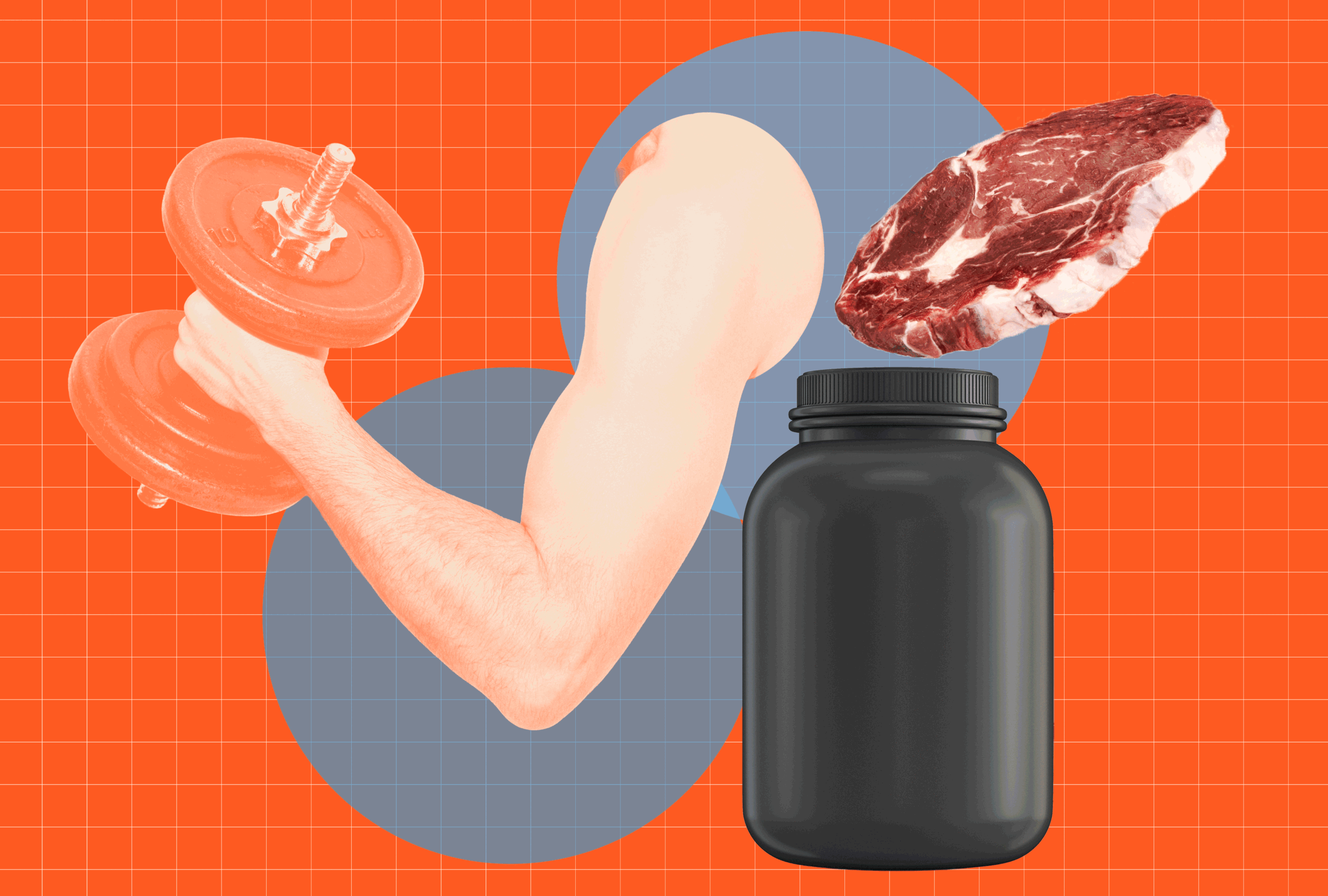
However, when it comes to protein’s muscle-building capabilities, there’s some confusion. “Protein supplies amino acids, which are the raw materials your body uses to repair and build muscle tissue,” explains Umo Callins, M.S., RD, CSSD. But simply eating more protein won’t get the job done. “Protein by itself can help support muscle maintenance, but it does not build much new muscle on its own in healthy adults,” says Callins. For that, you’ll need a stimulus to kick-start the muscle-building process, and that stimulus is resistance exercise.
If you’re wondering how much resistance exercise you’ll need, health experts say a good goal is at least two weekly strength-training sessions. This could be weight training, working out with a resistance band or even doing exercises that enlist your body weight, like pushups and sit-ups.
Truth #3: Most of Us Don’t Eat Protein Very Efficiently
Another benefit of protein is that it can help you feel full for longer after a meal—and it does this in several ways. On the most basic level, protein takes a long time to break down and digest, so it hangs out in your stomach for a while. It also stimulates the release of hormones that control appetite. If weight loss is your goal, protein requires more energy to digest than fat or carbohydrates, which can modestly increase a caloric deficit.
Unfortunately, most people aren’t fully leveraging these benefits. That’s because most of us follow a top-heavy protein pattern, eating most of our protein at dinnertime, slightly less at lunch and an even smaller amount at breakfast and snack time. “We don’t store protein for later use,” says Wendy Bazilian, Dr.PH., M.A., RDN. “Spacing it more evenly tends to support satiety, energy and muscle health more effectively.”
The result? “Someone may get enough protein [overall] by the end of the day while still having meals or snacks that are too low in protein to keep them satisfied,” says Hemler. Fortunately, he has a strategy to balance things out. “To spot potential gaps or unbalanced intake, ask: Where is the protein-rich food here, and is there enough of it to keep me full?” he says. Then consider timing, suggests Bazilian. “A simple, realistic goal is including protein every three to five hours throughout the day, at all meals and all or most snacks,” she says.
The Myth: Animal Protein Is Superior to Plant Protein
Perhaps the biggest point of confusion surrounding protein is the assumption that animal protein is better for you than plant protein. While two-thirds of the average American’s protein comes from animal foods (especially meat, poultry, eggs and seafood), plants still supply one-third of our protein intake. But why does plant protein have such an image problem? “Animal proteins are often described as the gold standard because many contain all essential amino acids in proportions that efficiently support muscle protein synthesis,” says Bazilian. That’s true, she says. But somewhere along the line, what was thought to be more “effective” started getting translated into “superior,” she adds.
The reality is that plant proteins, like beans, lentils, tofu, whole grains, nuts and seeds, often provide many nutrients that animal proteins lack, especially fiber and antioxidants, says Nagra. Plus, they tend to be rich in health-promoting unsaturated fats, yet are low in saturated fat with zero cholesterol. This may explain why substituting plant protein for animal protein has been shown to protect against type 2 diabetes and lower the risk of death from heart disease and dementia.
Plant proteins have another advantage. “For satiety, many whole-plant protein foods come packaged with fiber and volume, which can be incredibly satisfying,” says Bazilian. For instance, a whole-grain bowl that includes beans, veggies and sliced avocado may stay with you far longer than a few slices of deli turkey or a bowl of strained (Greek-style) yogurt or cottage cheese, she says.
What about muscle-building? Studies show that animal proteins provide a slight edge for increasing muscle mass. But they are comparable to plant protein for strength and physical performance.
Our Expert Take
Eating more protein is a high priority for many Americans, and for good reason. Protein promotes satiety, helps build muscle and aids in the production of hormones, enzymes and antibodies. Yet despite protein’s popularity, it is somewhat misunderstood. Many people assume that the best way to get protein is exclusively from animal foods, like meat, chicken, fish, dairy and eggs. However, plant protein has several advantages, like protecting against heart disease and dementia and helping you stay full and satisfied. What’s the best strategy to maximize your intake? “What matters most is the big picture: getting enough protein consistently throughout the day and pairing it with resistance training,” says Bazilian.

Comments are closed.