
Explainer: Ring of Fire or something else? Why do such dangerous earthquakes occur in Venezuela, what is the science behind it?

Venezuela Earthquakes Main Reasons: So far, at least 164 people have died and more than a thousand people are said to be injured in two earthquakes that occurred one after the other in Venezuela on Wednesday evening. Experts believe that if the rescue operation continues, the death toll may increase rapidly. The 7.2 and 7.5 magnitude earthquakes that struck on Wednesday evening were among the strongest to hit the country in more than a century. In 1990, an earthquake of 7.7 magnitude occurred in Caracas, the capital of Venezuela.
The US Geological Survey said the first earthquake occurred west of Moron on the Caribbean coast, about 170 kilometers west of Caracas. Its depth was 22 kilometers. The second earthquake, which was even more dangerous, occurred 39 seconds later. Whose depth was 10 kilometers and its center was 16 kilometers south-west of Moron.
The ‘Ring of Fire’ What is the role of?
Whenever there is talk of any dangerous and destructive earthquake in the world, often in people’s mind pacific ocean of ‘Ring of Fire’ The area of (Ring of Fire) starts rotating in the mind. However, the terrible seismic tragedy in Venezuela has drawn the attention of scientists and geologists to a different area. South American country Venezuela’s ‘Ring of Fire’ Despite having no direct connection with the Pacific Ocean, the country is one of the most seismically sensitive areas in the world. Let us understand in simple language what is there under the soil of Venezuela, which makes it the epicenter of dangerous earthquakes again and again and what is the real science behind it.
Is Venezuela in the ‘Ring of Fire’? comes in?
First of all it is important to remove this confusion. ‘Ring of Fire’ There is a vast area spread around the Pacific Ocean, where 90% of the world’s earthquakes occur and most of the active volcanoes are located. Venezuela is not part of this ring. It is geographically located at the northern end of South America, off the coast of the Caribbean Sea. Despite this, the reason for earthquake in Venezuela is as dangerous as the one in the Ring of Fire.
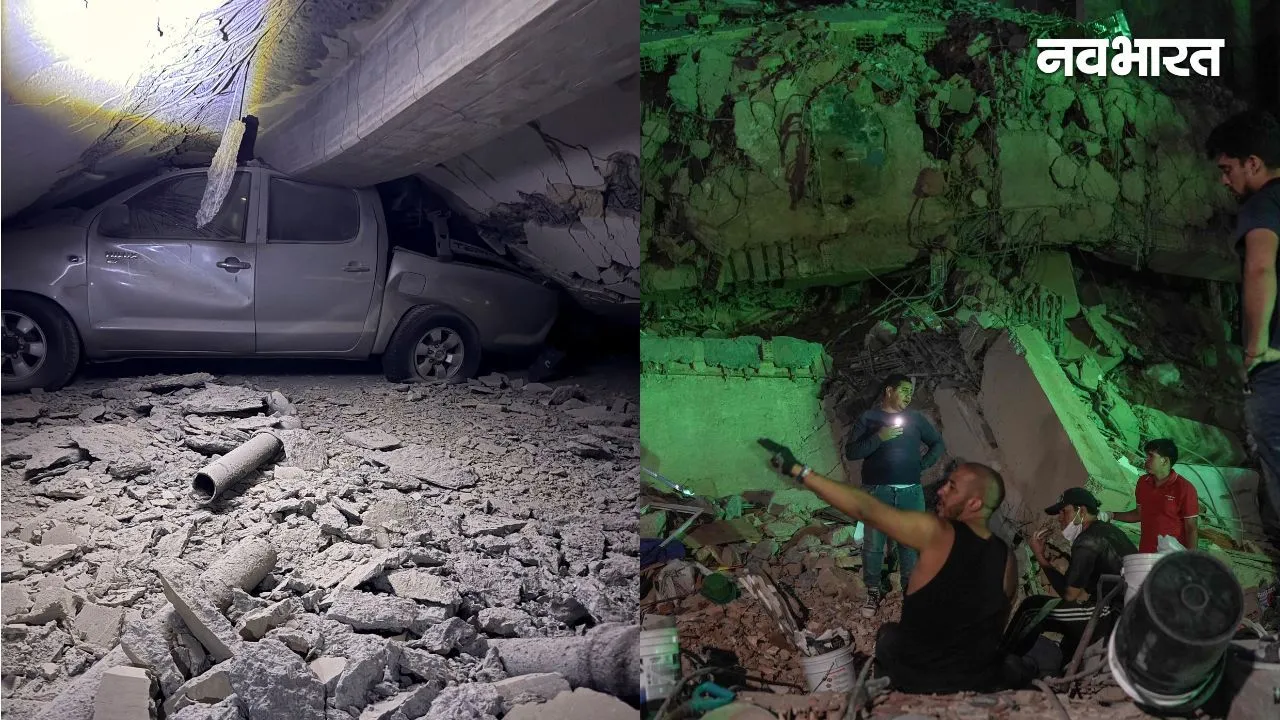
Picture after the massive earthquake in Venezuela, (Source- Social Media)
The real science behind the devastating earthquakes in Venezuela is Plate Tectonics. The upper surface of our Earth is divided into many large and small tectonic plates, which float very slowly. Venezuela is located exactly at the mouth of two major plates – the Caribbean Plate and the South American Plate.
Why does the earth tremble violently?
The northern part of Venezuela lies on the fault line where the Caribbean Plate and the South American Plate collide. The Caribbean Plate is continuously moving eastward, while the South American Plate is moving westward. When these two giant plates rub against each other or press under each other, a huge amount of energy gets stored inside the ground. When this energy suddenly comes out, the earth trembles violently.
Three fault lines tearing the country
According to scientists, not one or two, but three major active fault systems pass beneath Venezuela, which makes it extremely sensitive. Because of these three fault lines, a large part of Venezuela, especially where the population is highest (such as Caracas, Cumaná and Mérida), is always at risk.
- Bokono Fault: It passes through the Andes mountain region of Venezuela. This fault is responsible for most of the major earthquakes that occur in western Venezuela.
- San Sebastian Fault: It runs parallel to the country’s central-northern coastal region, very close to the capital, Caracas.
- El Pilar Fault: It passes through eastern Venezuela and increases geological activity in the region.
The biggest earthquake in history occurred in Venezuela
Venezuela’s seismic history has been extremely scary. There have been many such occasions in history when the earth here destroyed everything. The Caracas earthquake of 1812 is considered the deadliest earthquake in Venezuelan history. Its intensity was about 7.1 on the Richter scale. In this disaster, the capital Caracas was completely destroyed and more than 10,000 people lost their lives.
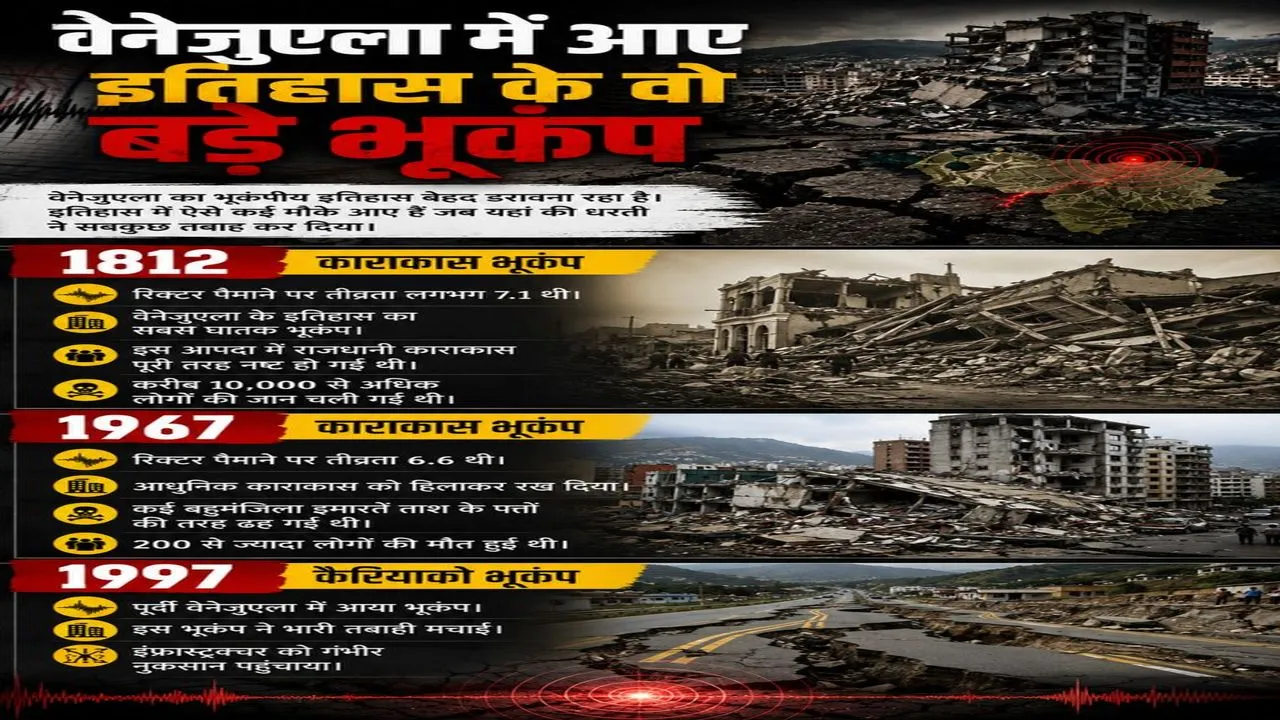
At the same time, in 1967, another earthquake of 6.6 magnitude shook modern Caracas, in which many multi-storey buildings collapsed like cards and more than 200 people died. After this, the devastation caused by the Cariaco earthquake of 1997 was no less. This earthquake in eastern Venezuela caused massive devastation and caused serious damage to the infrastructure.
Also read: So far 32 people have died due to earthquake in Venezuela, more than 700 injured; Relief and rescue operations continue
Poor infrastructure increases the challenge
seismology According to this, earthquakes do not kill people, but unsafe buildings do. This holds completely true in the case of Venezuela. Due to the long-running economic crisis, anti-earthquake techniques have not been followed in construction works in the country. Due to old buildings, dense population and weak houses built on hill slopes, whenever an earthquake of even moderate intensity occurs, the loss of life and property becomes huge.

Comments are closed.