
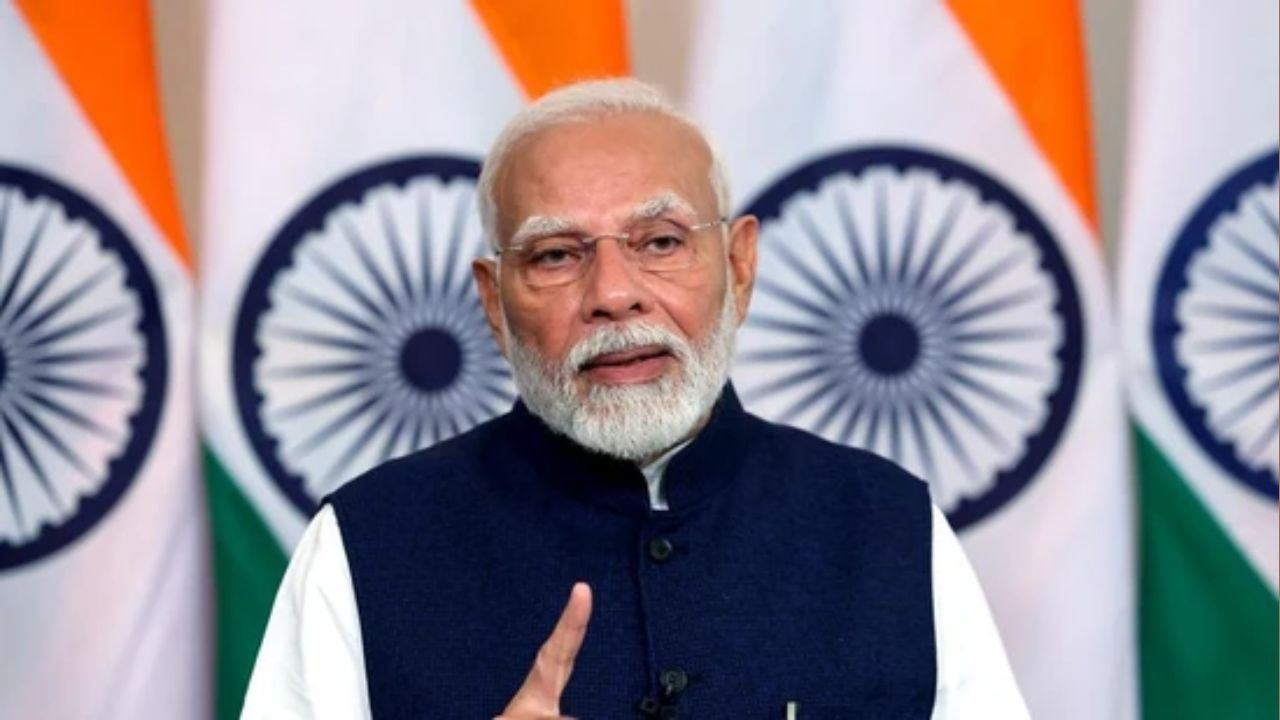
‘Emergency is a ruthless strangulation of Indian democracy’; Prime Minister Modi’s indirect attack on Congress

- According to Prime Minister Modi, Emergency was a direct attack on the Constitution
- Modi explained his stance behind observing June 25 as ‘Constitution Killing Day’
- A call for commitment to democracy, the Constitution and the protection of citizens’ rights
Prime Minister Narendra Modi referred to the Emergency imposed in 1975 as one of the darkest chapters in the history of Indian democracy. In a post on social media platform ‘X’, he said that the Emergency was a direct attack on the Indian Constitution. During this period, civil liberties were suspended, freedom of expression was restricted, and democratic institutions were severely attacked.
The Prime Minister paid tribute to all those who fought to protect democratic values during the Emergency. He said that during that time, thousands of citizens showed courage to defend the ideals of the Constitution by raising their voices against oppression. It is because of their struggle that democracy in India became stronger.
The Constitution symbolizes the aspirations of 140 crore Indians
Modi said the Constitution is not just a document but a symbol of the rights, duties and dreams of 140 crore Indians. He stated that it is our collective responsibility to build India based on the values of justice, freedom, equality and fraternity.
‘Dharmendra Pradhan so arrogant?’; Arvind Kejriwal was furious as the students opposing the paper leak were called traitors!
Exactly what said Prime Minister Modi ?
your authorized ‘X’ from the account Post doing Prime Minister said“Today we pay tribute to all those individuals who staunchly defended democratic values during one of the darkest chapters in India’s history – the ‘Emergency’ period. The Emergency was a direct blow to our Constitution. During this period civil liberties were suspended, freedom of expression was curtailed, political leaders, journalists and social workers were arrested, not just institutions that were the pillars of our democracy.”
Today, we pay homage to all those who steadfastly defended democratic values during one of the darkest chapters in India’s history, the Emergency.
The Emergency was a direct assault on our Constitution. It witnessed the suspension of civil liberties, curbs on freedom of…
— Narendra Modi (@narendramodi) June 25, 2026
That Next said“This period also witnessed the extraordinary courage shown by countless citizens; who refused to remain silent and upheld the ideals of our Constitution. For all of us, our Constitution symbolizes the aspirations, rights and duties of 140 crore Indians. We reiterate our collective commitment to protect constitutional values. Inspired by the spirit of the Constitution, we will build an India that will always be committed to justice, liberty, equality and fraternity.”
Controversial decisions during the Emergency
The Central Government has declared 25th June as ‘Constitution Killing Day’. On June 25, 1975, the then government imposed Emergency in the country. According to the government, power was abused during that time and ordinary citizens faced injustice and oppression.
PM Modi Cabinet: Changes in Modi’s cabinet soon! BJP’s mega plan, ‘bicycle’ in UP and ‘broom’ cleaning in Punjab
During the Emergency period, strict restrictions were imposed on the media. Many political leaders, journalists and social activists were arrested. Also constitutional amendments were passed which reduced the power of judicial review. Decisions such as the forced sterilization campaign also became a source of great controversy.
Emergency was in effect in the country from 25 June 1975 to 21 March 1977. The general elections that followed brought major political changes and the Emergency was officially ended in March 1977. This period in the history of Indian democracy is considered to be the most discussed and controversial even today.

Comments are closed.