
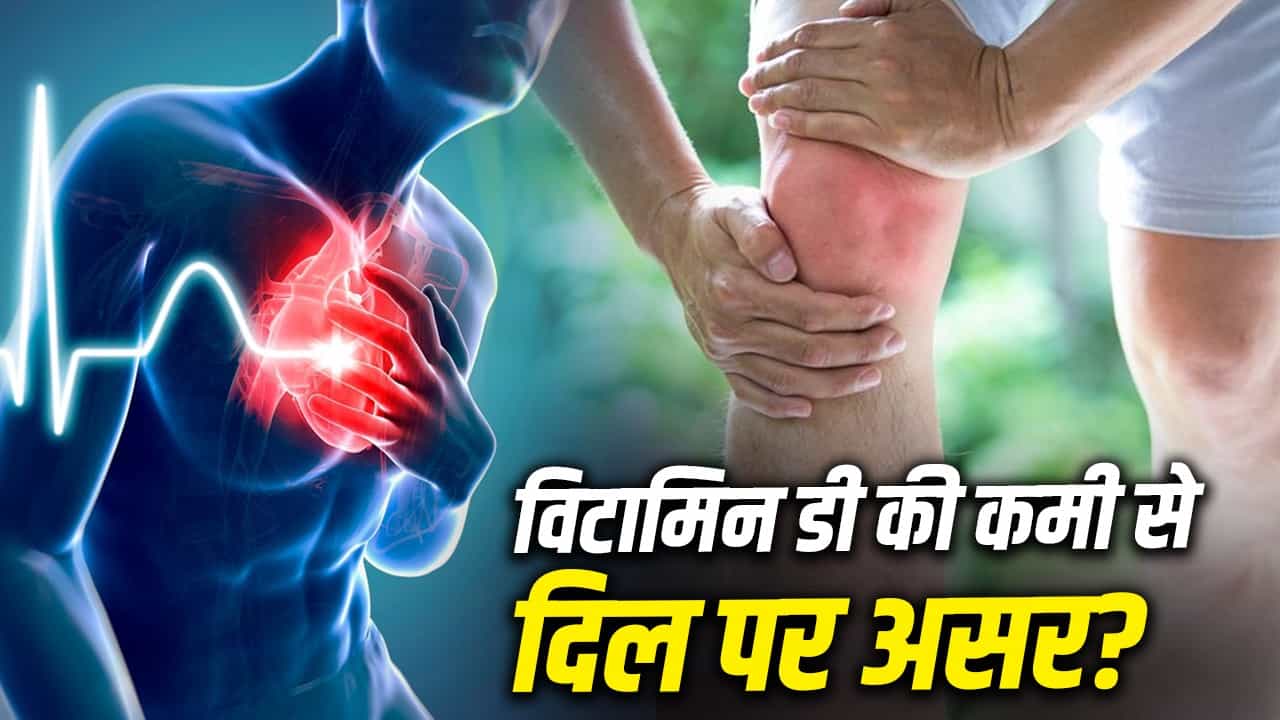
Vitamin D deficiency and heart health: Is ‘sunshine vitamin’ weakening not only your bones but also your heart?

New Delhi/Health Desk: Due to today’s busy life, habit of working for long hours in closed rooms or offices and distance from sunlight, deficiency of ‘Vitamin D’ has taken the form of a global epidemic. Generally people associate Vitamin D only with strong bones and teeth, but in the growing era of medical science, many more surprising aspects of it are coming to light. Many international research conducted in recent years have shown a deep connection between Vitamin D and heart health. In such a situation, it is natural to raise the question whether the deficiency of this essential vitamin in the body can make your heart sick? Let us know what is the opinion of the National Institutes of Health (NIH) and health experts on this subject.
Does Vitamin D deficiency directly increase the risk of heart attack?
According to the National Institutes of Health (NIH) of the USA and many cardiologists, people who have low levels of Vitamin D in their body for a long time have a higher risk of heart-related diseases than others. Actually, Vitamin D works not just as a nutrient in our body, but as a hormone, which helps in controlling the flexibility of blood vessels and contraction of the heart muscles.
However, doctors have made one important thing clear here. The clinical research available so far has not been able to completely and directly prove that vitamin D deficiency is the sole cause of heart attack or heart disease. Deterioration of heart health also depends on many other major factors, such as high blood pressure, uncontrolled diabetes, increasing obesity, physical inactivity and smoking. Therefore, vitamin D deficiency is considered a major ‘risk factor’ instead of being considered the only cause of heart disease.
These 6 initial symptoms appear when Vitamin D is reduced in the body.
Many times, when Vitamin D levels fall, no symptoms are visible initially, which is also called ‘silent deficiency’. But when this deficiency starts increasing, the body starts giving the following signals:
Constant fatigue and lethargy: Despite adequate sleep and good eating habits, the body remains worn out and feels extremely weak throughout the day.
Muscle and joint pain: Complaints of muscle strain, weakness or cramps while getting up or sitting.
Constant pain in bones and back: A mild, persistent pain, especially in the spine and bones of the legs.
Falling sick frequently: Due to weak immune system, one becomes easily vulnerable to cold, cough or other seasonal infections.
Time taken for wound healing: Wounds from any kind of injury or surgery taking longer than usual to heal.
Mood swings and stress: Sudden feeling of depression, anxiety or sadness due to neurotransmitters being affected in the body.
How to maintain correct level of Vitamin D? Adopt these 3 easy methods
To maintain the optimum level of Vitamin D ($Vitamin\D$) in the body, not any expensive medicine is required, but the right lifestyle:
Lukewarm sunlight is best: Sun rays are the biggest and free source of Vitamin D. every morning time 15 to 20 minutes Sit or take a walk in the mild sunlight. Keep in mind that strong afternoon sunlight can damage the skin, hence lukewarm morning sunlight is most effective.
Include these things in your diet: Sources of Vitamin D are a bit limited in a vegetarian diet, but you can make fortified milk, fortified cereals, mushrooms and egg yolk a part of your diet. Whereas non-vegetarian people can consume fatty fish (like salmon or tuna).
Do not take supplements without doctor’s advice: If you are experiencing the symptoms mentioned above, do not start taking high-dose vitamin D supplements (such as 60K capsules) from the drug store. First of all on the advice of a good doctor 25-Hydroxy Vitamin D Get a blood test done. In case of negative results, the doctor will decide the right dosage according to your condition, because excessive amount of Vitamin D in the body (Vitamin D Toxicity) can also be harmful for health.

Comments are closed.