
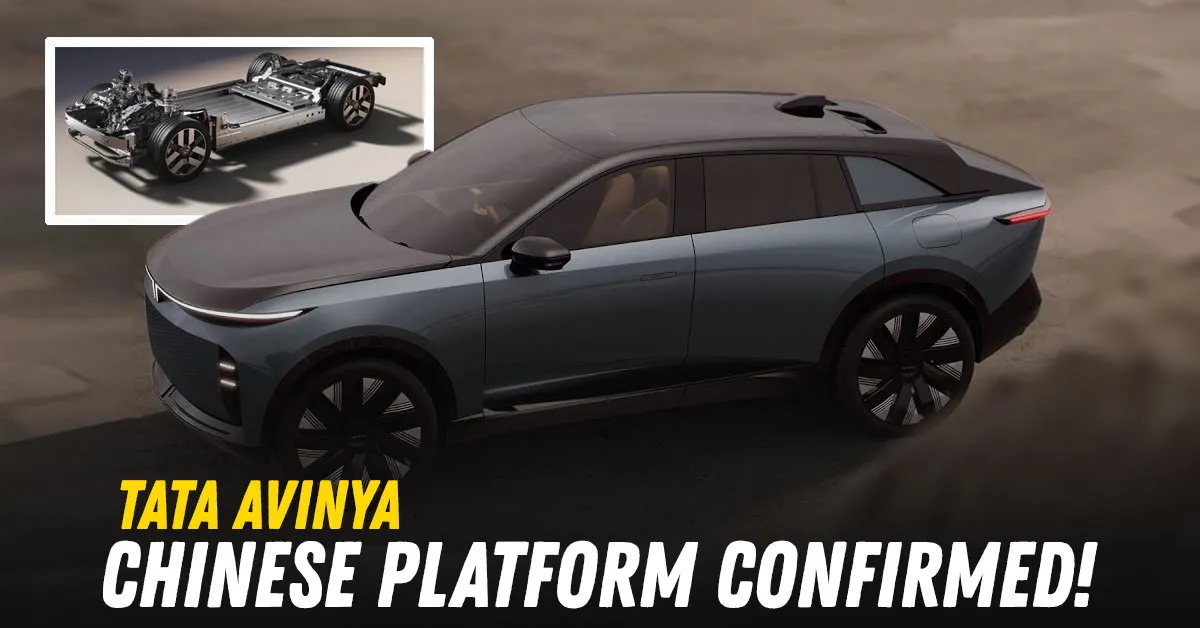

Tata Motors is preparing to enter the luxury EV space with the Avinya range. At least five models are known to be under development, with the first slated for an early 2027 debut. The carmaker has now officially confirmed that the Avinya will use a Chinese platform.
Speaking at the Investor day on June 23, 2026, Shailesh Chandra, Tata Motors Passenger Vehicles and Tata Passenger Electric Mobility Managing Director and CEO, confirmed that the Avinya range will be underpinned by a Chery-engineered platform. This has been realised through Jaguar Land Rover’s (JLR) long-standing partnership with Chery. This will be the same architecture used in the reborn Freelander.
Chandra talked in detail about the process that landed Tata Motors on the Chery platform. Since the Avinya was Tata’s first product in the luxury EV segment, the company wanted to be sure about its technical maturity. Initially, the Avinya was said to be underpinned by Jaguar Land Rover’s EMA (Electrified Modular Architecture) platform. The company later took a U-turn and resorted to the Chery platform.
The MD said that they had started to work with JLR for the (new) Freelander platform and froze it mid-way. Chery then stepped in and took the project forward, eventually giving birth to the JLR-Chery Freelander brand.
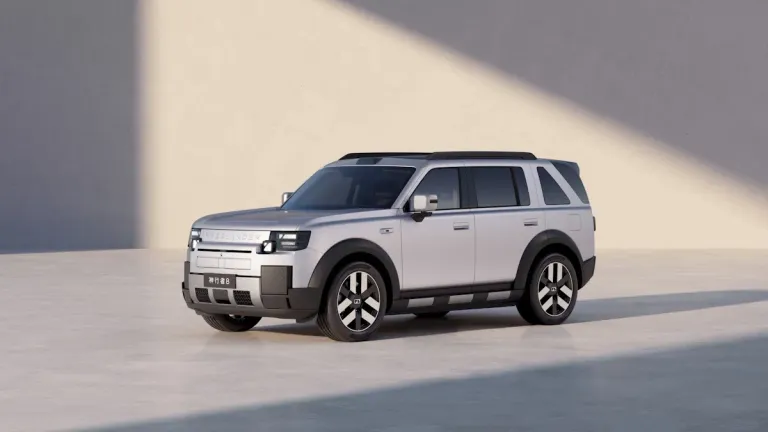
Tata Avinya will source its core architecture from the Freelander programme, However, the EV family will be heavily localised. Tata Motors will handle the design, localisation and manufacturing of the Avinya range. The first Avinya model was originally slated to make a 2025 debut. It, however, got delayed due to the decision of platform swapping.
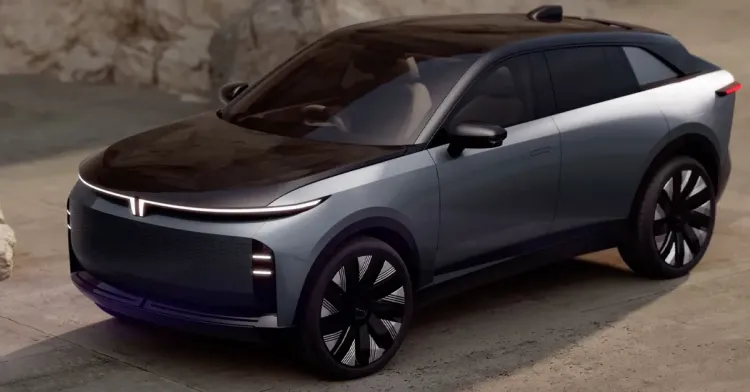
Let’s now talk about the platform. The Chery-Jaguar Land Rover platform underpinning the new Freelander is called ‘iMAX’. For now, the revived Freelander is only available in the Chinese market.
The Avinya was originally envisioned as a product that will be underpinned by a born-electric platform, and not a converted internal combustion platform. The EMA would have facilitated this. The iMAX is not strictly a born electric platform. The transition to it seems to have been brought about by cost, timing and engineering constraints. It is definitely a more practical and less complex route.
The EMA would have given the Avinya a more advanced electrical and electronic backbone, better software, capabilities and better battery packaging. But it will be too expensive for the volumes that Tata Motors targets with the Avinya and the market positioning in plans. These factors likely led to the carmaker rethinking the platform strategy. The iMAX is a significantly more cost effective alternative. It is a proven EV platform.
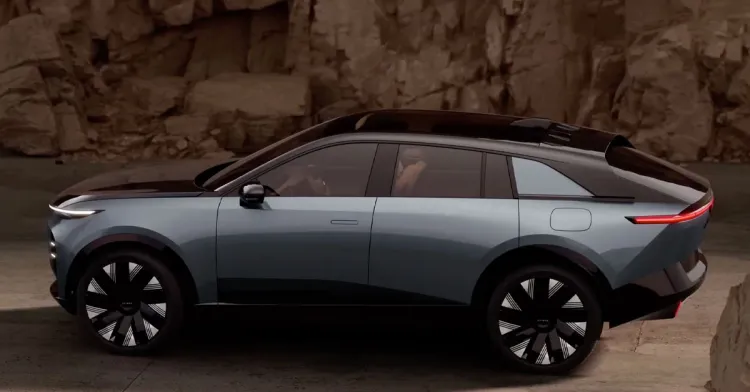
On the Avinya, the mechanical architecture will come from the Chery-JLR program. Tata Motors will, however, modify key parts of the electronics, software and vehicle systems with Indian requirements in mind. These adaptations are expected to be made by Tata Technologies’ engineering teams in China, India and UK.
Battery details have not been revealed officially. Insiders suggest that the first Avinya model could have its battery capacities in the 65-80 kWh range.
The first Avinya model to launch in India will likely be the Avinya X. Transitioning to the Chery platform will help in keeping costs under check and in speeding up the development. The production-spec Avinya SUV will reportedly be manufactured at Tata’s newly acquired plant in Chennai. These EVs will be sold through separate premium dealerships as well. These facilities will use a phygital approach in sales.
Comments are closed.