
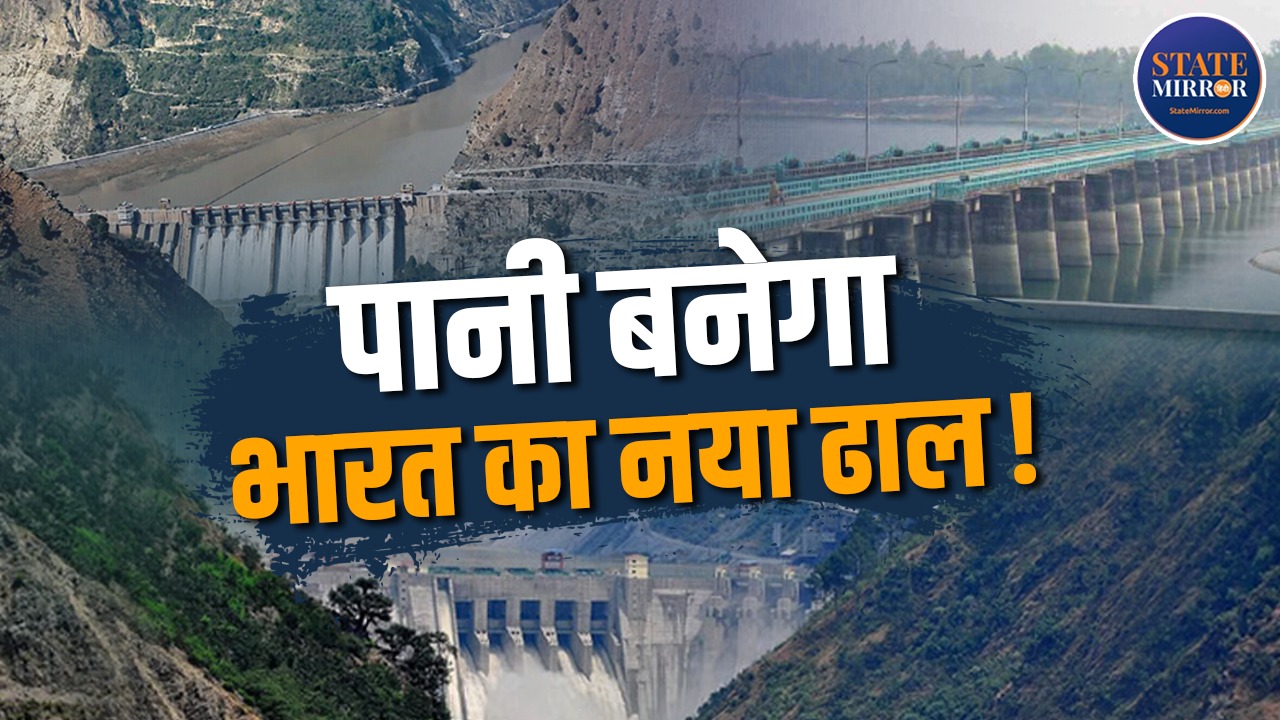
Water will become India’s new weapon! What does Water Security Strategy mean for China, Pakistan and Bangladesh?

In South Asia, not only borders but also rivers are becoming a major basis of strategic power. International rivers like Indus, Brahmaputra, Ganga and Teesta have become the center of diplomacy, security and economic interests between India, China, Pakistan and Bangladesh. On one hand, tension has increased over the Indus Water Treaty with Pakistan, on the other hand, China is building a huge dam on the Brahmaputra in Tibet, while issues like Teesta water sharing and Ganga water agreement with Bangladesh are still under discussion.
finsindia.org, theconversation.com and orcasia.org According to, at such a time, India is strengthening its Water Security Strategy afresh. Its purpose is not to stop any country’s water, but to make maximum use of its legitimate water rights, increase water storage capacity, accelerate irrigation and hydropower projects and strengthen national security and strategic interests through water diplomacy. Pakistan is so angry over India’s stance that it has even threatened India with war. Understand how water strategy can become a new weapon for India in the politics of South Asia.
every drop of strategic strength How?
In the 21st century, the world’s biggest wars will not only be over land, oil or gas, but water is also becoming the most important weapon of global strategy. Many countries of the world have started giving a prominent place to water security in their national security policy. India is also moving rapidly in this direction. However, India’s new Water Security Strategy does not mean blocking water from any neighboring country, but making full and effective use of its share of water, increasing water storage, strengthening irrigation capacity, increasing power generation and using cross-border water resources in accordance with national interests.
This strategy of India can have the biggest impact on three neighboring countries (China, Pakistan and Bangladesh). However, India’s situation with the three countries is different. In the case of China, India itself is a downstream country, in the case of Pakistan India is in an upstream position, whereas India’s policy with Bangladesh has been based more on cooperation than competition. Therefore, the impact of Water Security Strategy will also be visible differently on the three countries.
What is Water Security Strategy?
If understood in common language, Water Security Strategy means that a country should make maximum and safe use of its share of water, so that there is no crisis in agriculture, drinking water, industry, power generation and national security in future.
This strategy includes steps like large dams, reservoirs, hydropower projects, rain water harvesting, river interlinking projects, flood control, groundwater conservation and better management of trans-border rivers. Its objective is not to harm any other country but to protect its national interests.
Why does India need to adopt Water Strategy?
India is facing many challenges like rapidly increasing population, climate change, irregular monsoon, decreasing groundwater level and increasing water demand. On the other hand, China is continuously building big dams in Tibet. Pakistan repeatedly raises water disputes in international forums and the Teesta river issue with Bangladesh has been pending for years.
In such a situation, India realized that instead of relying only on water agreements, it is necessary to make full use of its share of water. This is the basic objective of Water Security Strategy.
Brahmaputra Chinese Dam on the Indian border with Tibet
China: where From India’s biggest strategic challenge begins
Among the three neighbours, the situation is the most different with China. Important rivers like Brahmaputra (Yarlung Tsangpo) and Sutlej have their origin in Tibet. That means China is the upper riparian country of these rivers, while India is the downstream country.
According to experts, India gets about 20 percent of its total water requirements from river systems whose source is in the Tibet region controlled by China. However, about 60 percent of the Brahmaputra’s water comes from India’s own catchment area, while about 40 percent of the flow comes from Tibet.
This is why whenever China announces big dams or hydropower projects on Brahmaputra, India’s concern increases. India is now accelerating its hydropower and storage projects in Arunachal Pradesh and Assam to deal with any situation in future.
Why will PAK be affected the most?
If India’s Water Security Strategy can have the biggest impact on any one country, it is Pakistan.
About 90 percent of Pakistan’s agriculture depends on the Indus river system. About 80 percent of its economy is directly or indirectly linked to this water system. Rivers like Indus, Jhelum and Chenab reach Pakistan through India.
The Indus Water Treaty of 1960 had fixed the rights of both the countries. But India could not fully utilize its share of water for a long time. Now India is rapidly progressing dams, reservoirs and hydropower projects under its legitimate rights. Baglihar, Kishanganga, Ratle, Pakal Dul and other projects are considered part of this strategy.
By deciding to suspend the Indus Water Treaty after the Pahalgam terrorist attack, India gave a clear indication that terrorism and normal water cooperation cannot go together. After this, the concern regarding water security increased further in Pakistan.
Pakistan’s biggest fear is that if India starts fully utilizing its share of water, the water available for irrigation may reduce. However, international law gives India the right to use its share of water within the scope of the treaty.
Tista Barrage on India Bangladesh border
Tista Barrage on India Bangladesh border
Why is Bangladesh worried?
The situation of Bangladesh is different from Pakistan. It depends on 54 shared rivers with India. Rivers like Ganga, Teesta, Brahmaputra and Barak are lifelines for it.
The Ganga Water Treaty of 1996 had paved the way for cooperation between the two countries. But Teesta water distribution is still pending. Bangladesh fears that if India uses more of its share of water, farming and drinking water in its northern areas may be affected.
For this reason, Bangladesh has also been trying to increase China’s participation in the Teesta project. However, India’s policy with Bangladesh has not been confrontation but cooperation and joint development.
On which rivers is the entire strategy based?
India’s Water Security Strategy mainly focuses on trans-border rivers like the Indus River System, Ganga, Brahmaputra, Teesta, Barak, Sutlej, Ravi, Beas, Jhelum and Chenab. The reservoirs built on these rivers are important not only for power generation but also for flood control, irrigation, drinking water, industrial use and strategic needs.
What is Water Diplomacy?
Water Diplomacy does not mean waging war with water but creating diplomatic balance through water. When two or more countries share a river, issues like water sharing, flood information, water flow data, dam construction and river management are negotiated. This process is called Water Diplomacy.
India has developed arrangements such as the Indus Water Treaty with Pakistan, the Ganga Water Treaty with Bangladesh and limited hydrological data sharing with China.
Why is India’s strategy a matter of concern for PAK and Bangladesh?
India decided to postpone the Indus Waters Treaty (IWT) with Pakistan after the Pahalgam terror attack in 2025 and clarified that it will now make maximum use of its share of water under the treaty. Under this strategy, hydropower and water management projects like Baglihar, Kishanganga, Ratle and Pakal Dul on rivers like Chenab and Jhelum are being expedited.
Pakistan fears that India will develop large-scale water storage and water management projects to fully utilize its legitimate water rights. This could affect the timing and quantity of water flow in the Indus Basin, which could pose a challenge to its irrigation-based economy. Although experts say that India cannot completely stop the flow of any river, but it can definitely make maximum use of its share of water.
On the other hand, the time for review of the Ganga water sharing agreement between India and Bangladesh is near, while the issue of Teesta water sharing is still pending. Bangladesh is concerned that if India expands water storage and irrigation projects upstream, it could impact its water supply during the dry season. For this reason, Dhaka has also taken steps towards increasing China’s participation in the Teesta River Management Project.
Indian Kishanganga Hydropower Project in the border area with Pakistan
Indian Kishanganga Hydropower Project in the border area with Pakistan
pakistan war of Why did you warn?
About 90 percent of Pakistan’s agriculture and water requirements of its large population depend on the Indus River system. Therefore, Islamabad’s concerns have increased due to India suspending the Indus Water Treaty, adopting a policy of using more of its share of water and accelerating new hydropower projects.
Many senior leaders and officials of Pakistan have described this policy of India as a serious challenge to their water security. Pakistan’s Defense Minister had also warned that if there was an attempt to harm its legitimate water rights, it would consider it a serious issue related to its national security. However, India’s official stance is that it only wants to make maximum use of its share of water resources while remaining within the ambit of international obligations and its legitimate rights.
What will be the benefit to India?
- If India makes full use of its share of water, it will bring many big benefits.
- Irrigation will expand in Jammu-Kashmir and Ladakh. Hydropower production will increase. Water storage capacity will be strengthened in North India. There will be improvement in the management of floods and droughts. Agricultural production will increase and energy security will also be strengthened.
- Most importantly, India will be able to gain a strategic edge by using its legitimate water rights.
Can water really become a weapon?
Experts believe that in the modern era, water cannot be made a weapon like a gun or missile. International law and water treaties do not allow this.
But scientific use of its share of water, construction of large reservoirs, hydroelectric projects, flood control and water management can definitely increase the strategic strength of any country. This is the reason why water security is now being considered a part of national security.
Which country may suffer the most losses?
- Pakistan is the most vulnerable among the three neighbors because its economy and agriculture depend on the Indus River system. Full utilization of its share of water by India can become the biggest challenge for Pakistan.
- The impact on Bangladesh may be limited but significant, so the policy of cooperation is considered more effective there.
- India’s situation is different in the case of China, because China is located upstream there. Therefore, India’s priority is not to stop water against China but to strengthen its water security.
How effective is the government’s Water Security Strategy?
According to the statement issued by PIB, at the domestic level, the Modi government has laid special emphasis on water conservation, drinking water availability and better management of water resources. After the formation of Jal Shakti Ministry, many initiatives related to Jal Jeevan Mission, Catch the Rain Campaign, Atal Ground Water Scheme and water conservation were started. Under these schemes, a target was set to provide tap water to crores of rural families, while a large number of water conservation and rainwater harvesting structures were developed across the country. The government claims that these initiatives have strengthened groundwater conservation, irrigation potential and rural drinking water supply.
India’s policy in the matter of trans-border rivers has been to strike a balance between water diplomacy and national interests. After increasing tension in relations with Pakistan, India has made it clear that it will make maximum and legitimate use of its share of water under the Indus Water Treaty. For this, hydropower and water management projects are being given impetus in Chenab and Jhelum basins. On the other hand, talks are ongoing with Bangladesh on issues like Ganga and Teesta, while in the context of China, the focus is on water security, monitoring and strengthening infrastructure in the Brahmaputra basin. According to experts, in the coming years, India’s Water Security Strategy will not be limited to water management only, but will also become an important basis for national security, energy, agriculture and regional diplomacy.
Actually, the aim of India’s Water Strategy is not to make any country thirsty, but to consider every drop of water as a national asset and make maximum use of it. In the changing global environment, water has now become not just a natural resource but the basis of strategic power, economic development and national security. India’s water policy may deeply influence the politics, diplomacy and security of South Asia in the coming years. This is why water security is being considered one of the most important policies of future India.

Comments are closed.