
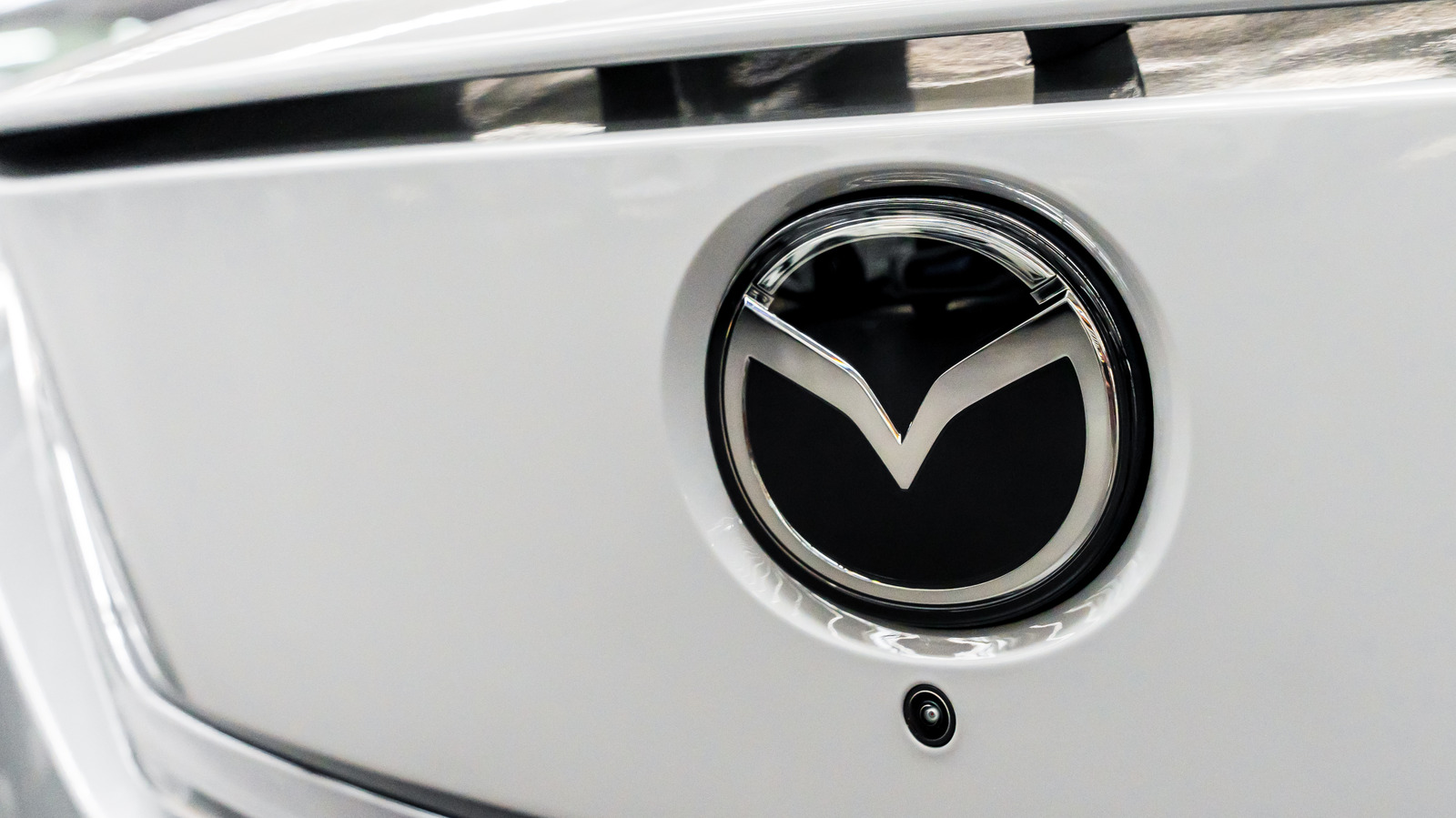

Mazda has become one of the most recognizable automotive brands in the United States, and the sales numbers back that up. In 2024, Mazda sold a record 424,382 vehicles in the U.S., a 16.8 percent increase over 2023. The brand sold more cars than brands such as BMW and Mercedes-Benz, but not as good as Subaru, Kia, or Nissan.
Larger vehicles drove the overwhelming majority of that volume, accounting for 377,402 of those sales. The CX-5 led the charge as Mazda’s top-selling model, with the CX-30 and CX-50 also selling well — though Mazda deliberately tanked CX-30 SUV sales in 2025 to limit tariff exposure. But Mazda has never been just about crossovers. The brand earned its reputation on driver-focused cars — most notably with the MX-5 Miata, the world’s best-selling two-seat roadster. That philosophy carries through to every model in the lineup.
Many Mazda vehicles earn praise for their balance of engaging dynamics, cool interiors, and daily practicality, often offering an experience akin to a more expensive badge. That combination of qualities has a natural side effect: strong resale value. Cars that are well-built, reliable, and broadly desirable tend to hold their value longer than average, and Mazda has made a habit of producing exactly that kind of vehicle. Here are five Mazda models that stand out for their ability to retain value over time.
Mazda MX-5
As previously mentioned, the Mazda MX-5 Miata is the world’s best-selling two-seat sports car — a Guinness World Records first certified in May 2000 and that Mazda has continued to extend since. That sustained global demand shows up directly in resale data because the MX-5 retains it better than any other Mazda out there. According to iSeeCarsthe MX-5 Miata retains 69.2 percent of its value after 5 years. The best part is, the Mazda MX-5 RF is ranked second at 67.9 percent.
Low ownership costs are part of the equation. RepairPal gives the MX-5 Miata a reliability rating of 4.0 out of 5.0 and puts its average annual repair cost at $429, compared to $652 for all vehicle models. The Miata’s $429 annual maintenance cost is lower than that of the Nissan 370Z ($504), Toyota Supra ($561), and Subaru BRZ ($672) -– all notable Mazda MX-5 alternatives. The MX-5 is powered by a 2.0-liter Skyactiv-G four-cylinder producing 181 horsepower and 151 lb-ft of torque, with a standard six-speed manual or an optional six-speed automatic.
Then there is the cult status the MX-5 cultivated throughout the years. It is an enthusiast’s vehicle, not a family crossover SUV like the CX-5. This means that it is likely bought by someone who knows everything about it, and is likely to take decent care of it. All in all, the MX-5 is the Mazda to get if you want superior value retention.
Mazda CX-5
The Mazda CX-5 is Mazda’s best-selling model and one of the most popular compact SUVs in the U.S. According to iSeeCarsthe CX-5 depreciates 37.9% after 5 years, compared to 39.9 percent for the compact SUV category and 44.9 percent for all SUVs. CarEdge also places the CX-5’s 5-year depreciation rate at 39 percent. That said, it doesn’t lead its class; the Toyota RAV4 — the world’s best-selling car — depreciates just 28 percent after 5 years. Meanwhile, the Honda CR-V clocks in at at 29 percent, putting both vehicles ahead of the CX-5.
The CX-5 does, however, beat out the Hyundai Tucson (47 percent), Chevrolet Equinox (52 percent), and Ford Escape (55 percent). As is the case with most cars and value, reliability plays a pivotal role. RepairPal gives the CX-5 a reliability rating of 4.5 out of 5.0, ranking it 1st out of 26 midsize SUVs, with an average annual repair cost of $447. That figure compares favorably to $573 for midsize SUVs and $652 across all vehicle models.
The chance of the CX-5 suffering from a major reliability problem is just 8% for the CX-5, compared to 13percent for midsize SUVs and 12 percent for all vehicle models. Not long ago, Mazda announced that cumulative global sales of the CX-5 reached 5 million units as of the end of 2025 — only the third model in the automaker’s history to reach that milestone, after the Mazda 323 and the Mazda3.
Mazda3
The Mazda3 is available in two body styles — sedan and hatchback. Good news is that both hold their value reasonably well for the compact car segment. According to CarEdgethe Mazda3 Sedan depreciates 38 percent after 5 years, with a resale value of $19,620. The Hatchback depreciates slightly more at 41 percent after 5 years. For context, iSeeCars puts the Mazda3 Sedan’s 5-year depreciation at 34 percent, compared to 27.4 percent for the Toyota Corolla.
Reliability is consistently good, just like with the rest of Mazda’s lineup. RepairPal gives the Mazda3 a reliability rating of 4.0 out of 5.0. This translates into it being ranked 9th out of 36 compact cars, with an average annual repair cost of $433. The average annual repair cost for compact cars in the same category is $526, while the average for all vehicles is $652.
The Mazda3 is also the cheapest 2026 Mazda you can buy, and its recent sales numbers have suggested that there is life for compact hatchbacks/sedans in the world of crossover SUVs. For those looking for a compact car footprint with enough space, amenities, and a dynamic driving experience at a budget, the Mazda3 truly is hard to beat.
Mazda CX-30
The Mazda CX-30 sits between the Mazda3 and CX-5 in Mazda’s lineup. According to iSeeCarsthe CX-30 depreciates 35.6 percent after 5years, compared to 38.4 percent for the subcompact SUV category and 44.9 percent for all SUVs. CarEdge puts the 5-year depreciation at a near-identical 36 percent, with a resale value of $21,764. When stacked against its rivals, the CX-30 holds its own.
The Subaru Crosstrek depreciates 34 percent after 5 years and the Honda HR-V depreciates 31 percent across the same period — both slightly ahead of the CX-30 on paper, though all three comfortably beat the segment average. On the maintenance side, estimates place the CX-30’s total maintenance and repair costs over its first 10 years at $7,837, beating the industry average for SUV models by $675.
The chances that the CX-30 is going to need a major repair during its first 10 years of ownership is 22.65 percent. Although it does fare slightly worse than its competitors in outright resale value, these repair cost projections are 1.32 percent better than similar vehicles in its segment. When we compared the Mazda CX-30 to the Mazda3, we noted that the CX-30 serves the more utilitarian buyer, thanks to its bigger size and AWD, but the Mazda3 is more fuel efficient.
Mazda CX-50
The Mazda CX-50 is the newest model on this list, having launched for the 2022 model year. According to iSeeCarsthe CX-50 depreciates 39.3 percent after 5 years, compared to 39.9 percent for the compact SUV category and 44.9 percent for all SUVs. CarEdge puts the 5-year resale value at a slightly less favorable 37 percent, or in other words, $25,035 on an average new price of $39,979. After 3 years on the market, the CX-50 depreciates 25.9 percent, with a resale value of $22,145.
Maintaining a CX-50 costs $506 per year on average through the first 5 years of ownership. Across all Mazda models, the 10-year maintenance and repair brand average is at $7,381, which is $1,590 less than the industry. However, the CX-50 is still a fairly new model, meaning that long-term cost projections are merely estimates, and that we will have to wait to check whether they are correct.
Still, the market perception of the Mazda CX-50 remains fairly positive. Existing owners deem the Mazda CX-50 a good car, with the hybrid powertrain, the styling, comfort, and driving feel all getting lots of praise. Long-term reliability data remains limited, though some owner reports have mentioned issues not typically associated with Mazda’s reputation for dependability.
How we made the list
Every model on this list was selected based on depreciation data from iSeeCars and CarEdge and then cross-referenced with reliability data from RepairPal. iSeeCars analyzes over 15 million vehicles to calculate 5-year depreciation rates from MSRP, while CarEdge builds its depreciation curves from historical pricing data. RepairPal’s reliability ratings are based on the cost, frequency, and severity of unscheduled repairs across all model years.
The 5-year window is the industry standard for depreciation comparisons, which is why it is the primary metric used throughout. Models were selected where the data consistently showed depreciation rates below the segment average, combined with low annual maintenance costs. Sales data referenced throughout comes from Mazda’s official press releases and Good Car Bad Car.
Maintenance cost projections from CarEdge assume vehicles in good condition averaging 13,500 miles per year. It is worth noting that depreciation figures represent trends, not guarantees for individual vehicles. A car’s real-world resale value depends on a ton of factors, including mileage, condition, trim, history, and regional demand at the time of sale.

Comments are closed.