
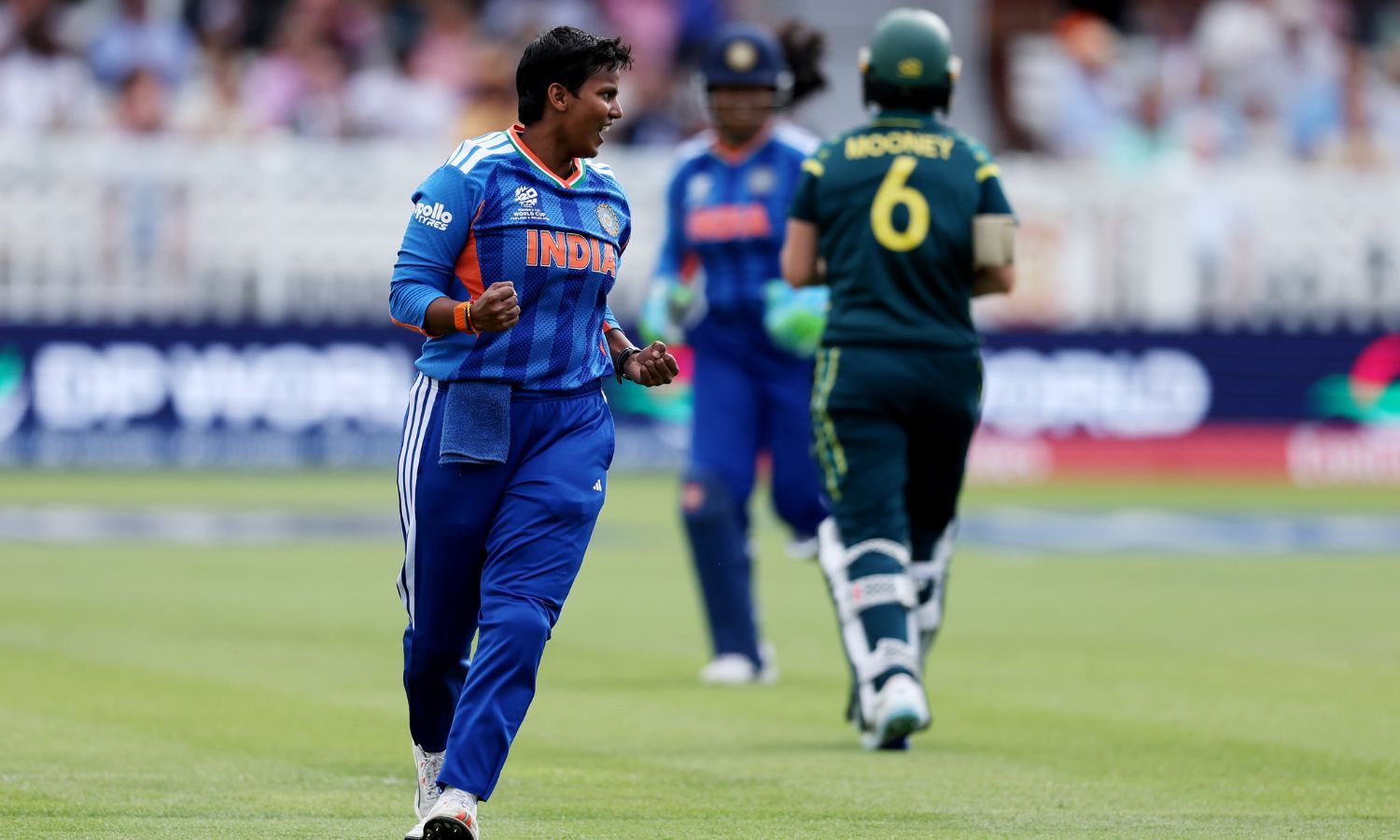

India’s campaign at the ICC Women’s T20 World Cup 2026 came to an end in the group stage after a defeat to Australia on Sunday. The tournament, held in England from June 12 to July 5, saw India placed in a challenging group alongside Australia, South Africa, Bangladesh, the Netherlands and Pakistan.
Entering the tournament, India were considered one of the stronger batting sides in the competition, boasting experienced players such as Smriti Mandhana, Harmanpreet Kaur, Jemimah Rodrigues, Shafali Verma and Richa Ghosh. However, despite winning three of their five group-stage matches, India failed to qualify for the semifinals, leaving them to reflect on a campaign that showed both promise and exposed several recurring concerns.
India opened the tournament with victories over Pakistan, the Netherlands and Bangladesh to keep their semifinal hopes alive. The wins showcased the team’s potential, with Smriti Mandhana, Shafali Verma, Richa Ghosh and Deepti Sharma all producing impactful performances at different stages. However, they also revealed issues that resurfaced when India faced stronger opposition.
The campaign ultimately unraveled in the final two group-stage matches against South Africa and Australia, with both defeats exposing problems that had been evident throughout the tournament.
The biggest concern: Batting
India’s batting lineup was expected to be the team’s biggest strength, but it never consistently delivered as a unit. While individual players produced important performances, the batting order struggled to build on strong starts and maintain momentum through the middle overs.
The defeat to South Africa highlighted many of those concerns. India made a strong start through Shafali Verma and Smriti Mandhana but lost momentum after regular wickets interrupted partnerships. Although they posted 159, the total proved insufficient.
The contrast between the two sides was most evident during the middle overs. India scored 59 runs in the powerplay despite losing two wickets but failed to maintain that scoring rate. South Africa, meanwhile, recovered from a cautious start to add 97 runs in the middle overs without losing a wicket, underlining India’s inability to control the game after a promising beginning.
A similar pattern emerged against Australia. India once again finished around 20 to 30 runs short of a competitive total. The decision to retire out Jemimah Rodrigues and promote Richa Ghosh did not produce the desired result, while the batting struggled to accelerate at the right time.
Throughout the tournament, India often started strongly but were unable to carry that momentum beyond the powerplay. The middle order frequently lost momentum, and the finishing impact usually provided by Richa Ghosh was largely missing during the team’s biggest matches. Losing wickets in clusters further prevented partnerships from developing and restricted India’s ability to post match-winning totals.
Bowling combinations remained unsettled
India’s bowling attack faced its own challenges throughout the tournament. The side relied heavily on spin, while the pace attack struggled to consistently take wickets or apply pressure.
The bowling unit conceded runs at an economy rate of 7.43 and lacked a settled combination. India fielded a different bowling attack in all five matches, regularly changing both the seam attack and the new-ball pairing. The lack of continuity made it difficult to establish clear roles within the bowling group.
The pace attack was a particular concern. Renuka Singh, Arundhati Reddy, Kranti Gaud and Nandini Sharma managed only five wickets collectively at an average of 47, with none of the seamers consistently providing breakthroughs with the new ball.
India’s dependence on spin became even more evident as the tournament progressed. Deepti Sharma shouldered much of the responsibility, while Shreyanka Patil’s injury further disrupted the balance of the bowling attack.
Against South Africa, Deepti was unable to provide the breakthroughs India desperately needed, while debutant Shree Charani’s three wickets were not enough to defend the total. The problems continued against Australia, where more than three Indian bowlers conceded at an economy rate of over 10 as the defending champions completed a comfortable chase.
Positives India can build on in the future
Despite the early exit, there were several encouraging performances.
Deepti Sharma once again underlined her importance to the side with a five-wicket haul against Pakistan and by equalling the record for the most wickets in women’s international cricket during the tournament.
Shafali Verma was another bright spot, providing aggressive starts and remaining one of India’s most effective batters, while Smriti Mandhana delivered crucial runs in India’s victories.
Perhaps the biggest positive was the emergence of Shree Charani. The left-arm spinner consistently impressed, picked up important wickets and established herself as a dependable option, offering India a promising prospect for the future.
The tournament highlighted several areas India will need to address moving forward. The batting unit must find a way to sustain momentum beyond the powerplay and convert strong starts into match-winning totals. The middle order needs greater consistency, while the finishing role must once again become a strength rather than a concern.
India’s campaign in England was not without positives, but the defeats to South Africa and Australia highlighted the gap between potential and performance. The talent within the squad remains evident, but turning that talent into consistent results against the strongest teams remains the challenge ahead.

Comments are closed.