
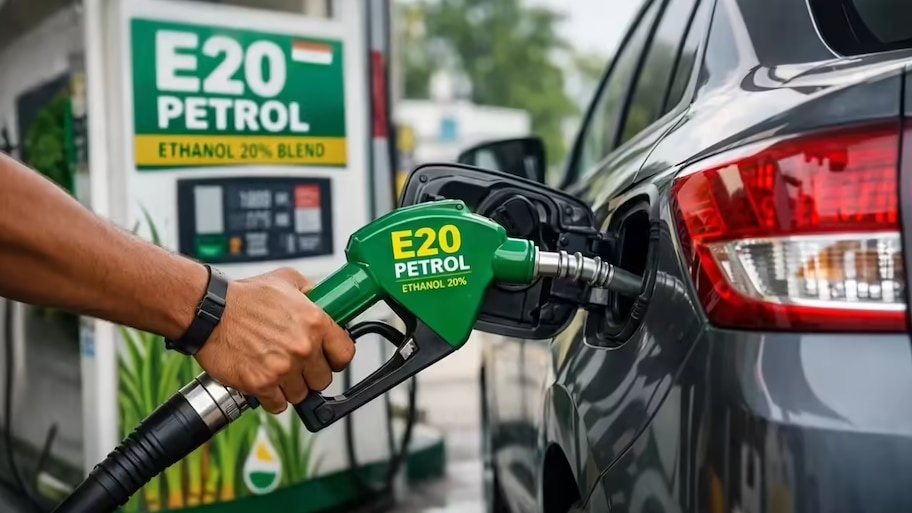
E20 Petrol Pros and Cons: Will ethanol blending really benefit the environment? Understand 5 major policy aspects of this policy

According to Islamic philosophy and Sufi teachings, man is not the owner of this beautiful land, but is an ‘Amin’ (trustee) sent by God. The Holy Quran always gives strict instructions to do justice, avoid wasteful expenditure of resources and not to spread any kind of mischief or destruction on earth. If seen from this philosophical and ethical perspective, whenever any government policy has any far-reaching impact on water, agriculture, environment or the life of a common man, then it becomes very important to have a healthy democratic debate on it.
In this context, the current fuel system of the country is being implemented E20 petrol (20% ethanol and 80% petrol mixture) There is a need to look deeply at the policy. The Central Government argues that this step will reduce the import of crude oil, save huge foreign exchange, increase the income of farmers and benefit the environment. These objectives of the government are certainly very noble, but a serious debate has erupted in the policy and scientific circles of the country as to whether this is the right and sustainable way to achieve this goal?
1. Big water crisis: Is it right to sacrifice ‘ground water’ for fuel?
The first and most basic question before the E20 policy is about the water resources of the country. India is today going through the most serious water crisis in history. A large part of the ethanol produced in India is produced from crops like sugarcane and maize.
According to agricultural scientists, sugarcane is such a cash crop that requires a lot of water to grow. When the groundwater level in many major agricultural states of the country is continuously going down at an alarming rate, then to what extent is it justified to use such a large amount of water to prepare the fuel to run the vehicles? On one hand, the government appeals to the general public to save every drop of water, while on the other hand, the same water is being used to make fuel – this is a big policy contradiction (Tazad).
2. ‘Food vs Fuel’ war and decreasing mileage
Impact on the pocket of common consumer: The internal energy density of ethanol is much less than that of pure petrol. This is why experts in automobile engineering believe that using E20 fuel will improve the performance of vehicles. reduction in mileage Can come. If the price of petrol remains the same and the mileage of your vehicle decreases, then ultimately the direct burden of this inflation will fall on the pocket of the common consumer.
Plate or tank of vehicles?: An even bigger crisis is that of “food versus fuel”. When a large part of grains, maize and sugarcane starts going into the fuel tanks of vehicles instead of human stomachs, then questions about food security are bound to arise. In a huge country like India, where even today a large population is dependent on government ration and cheap food system, this sensitive aspect cannot be ignored.
3. Technical challenges of crores of old vehicles
Even today, crores of such old two-wheeler (Bikes) and four-wheeler (Cars) vehicles are running on the roads of India, which were not designed for E20 or higher ethanol mixture. Automobile giants and mechanical engineers say that if the ethanol content in petrol is more than 10%, the risk of rusting or melting of rubber seals, fuel lines, carburettor and certain plastic parts of old vehicles increases. If the availability of normal petrol stops completely in the future, then the owners of crores of these old vehicles will face a big technical and economic crisis.
4. The real truth about the environment: Well-to-Wheel analysis
The government claims that the use of E20 petrol will reduce harmful carbon emissions from vehicles, which is partly true. But the scientific community says that we should not just look at the smoke coming out of the vehicle’s silencer.
Let us evaluate the entire process Well-to-Wheel Will have to be done on the basis of. That is, the total carbon footprint of the huge amount of electricity, diesel and coal that is burnt in growing sugarcane, irrigating it, applying chemical fertilizers, transporting the crop to sugar mills and then preparing ethanol in the distillery, should also be added. Self A report of NITI Aayog 2021 According to , the total greenhouse gas (GHG) benefit of E20 over conventional fuel is only around 18%, not 50% as is often promoted in advertisements.
5. Global alternatives and the path to sustainable progress
When Germany and many European countries launched ethanol blended fuel, they did not take away the right of choice from common consumers. Even today, different fuel dispensers (options) are available at petrol pumps as per the requirement of old and new vehicles. In India too, if low blend fuel (like E10 or pure petrol) is available in sufficient quantity along with E20 during the transition period, then the public will not feel helpless.
Today, big economies of the world are not dependent only on ethanol. They include electric vehicles (EV), green hydrogen, strong public transportation systems and Second Generation (2G) Biofuel (which is made from the remaining crop waste or stubble) is working rapidly. It is not far-sighted to consider any one technology as the final and only solution.

Comments are closed.