
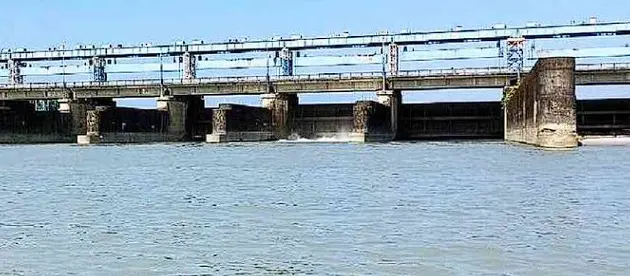

New Delhi: India on Friday said its development assistance for projects in Bangladesh is guided by a “mutually agreed roadmap” and that New Delhi will consider “all related developments” when shaping its overall approach to the Teesta river project, PTI reported.
The remarks by Ministry of External Affairs spokesperson Randhir Jaiswal were in response to questions about the Teesta after reports that Dhaka and Beijing discussed the Teesta River Comprehensive Management and Restoration Project (TRCMRP) during Bangladesh Prime Minister Tarique Rahman’s recent visit to China.
China’s role in managing the Teesta could complicate India’s relations with Bangladesh because of the river’s strategic importance. The Teesta rises in the eastern Himalayas, flows through Sikkim and West Bengal, then enters Bangladesh, where it provides irrigation and supports the livelihoods of millions.
“India’s development assistance for projects in Bangladesh is based on a mutually agreed roadmap which is regularly reviewed. Our views on the Teesta river project have been previously conveyed to the Bangladeshi side. We will factor all related developments in our overall approach to the Teesta issue,” Jaiswal said.
The Teesta basin lies close to the Siliguri Corridor, the narrow 22-km stretch that connects India’s northeast with the rest of the country, heightening the project’s strategic sensitivity.
On questions about reports that Bangladesh’s Mongla Port, strategically located, is being upgraded and that Dhaka plans to buy fighter jets from China, Jaiswal said, “We pay attention to all these issues and take whatever appropriate steps we deem necessary.”
Bangladesh Foreign Minister Khalilur Rahman said on June 27 that ties with China had reached their “highest level” after Prime Minister Tarique Rahman’s trip. He said there had been “significant progress” on the TRCMRP, with China pledging support and both sides agreeing to speed up a feasibility study.
The two countries also agreed to expedite the Mongla Port Modernisation and Expansion Project and the Chinese Economic and Industrial Zone Development Project in Chattogram, the foreign minister added.
Meanwhile, in response to a question on consular services, Jaiswal said India’s missions in Australia, Kuwait and the UAE “continue to offer… limited consular services.” He noted that outsourcing agencies supporting these services “have been kept on hold as the matter is presently sub judice. We await directions from the honourable high court.”
Asked about reports that UNESCO had asked Pakistan to reverse reconstructions that “undermined the integrity” of two sites at Taxila, Jaiswal stressed the collective responsibility to protect cultural assets. “Cultural heritage… especially those recognised by UNESCO, don’t belong to any one person or country. It belongs to the entire world. And as such, it’s our responsibility to protect and preserve our heritage and move forward,” he said.
Pakistani media reported UNESCO warned it might “delist” Taxila from the World Heritage List if the reported changes were not reversed. The Taxila site in Pakistan’s Rawalpindi district includes a Mesolithic cave and archaeological remains of multiple early settlements, Buddhist monasteries, and later Islamic structures such as a mosque and a madrassa.

Comments are closed.