
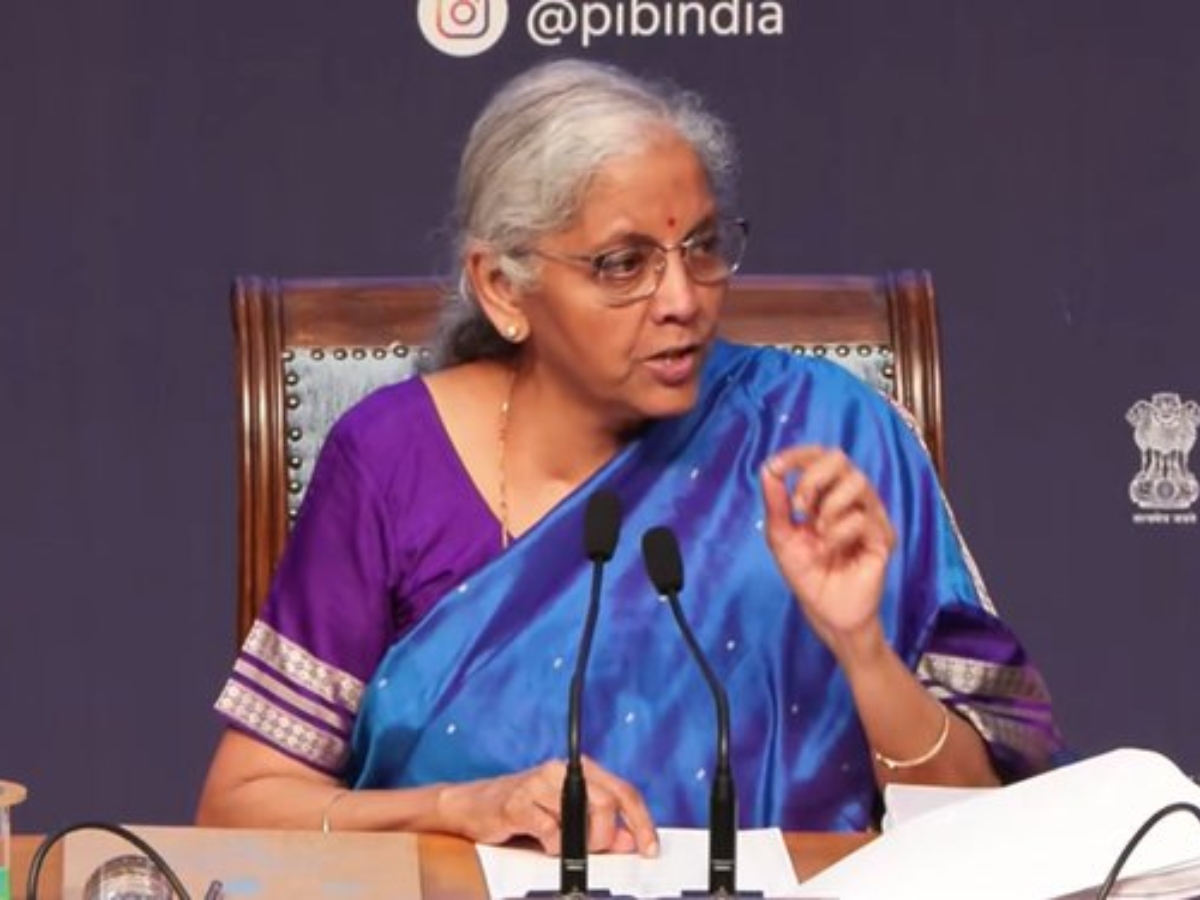
Will Smaller Cities Become India’s New Economic Powerhouses? FM Sitharaman Makes A Big Growth Bet

For years, big metros like Mumbai, Delhi, Bengaluru and Hyderabad have primarily driven India’s economic growth. But that picture may be changing faster than many expected. According to finance minister Nirmala Sitharaman, the next consumption boom and economic expansion will be increasingly driven by smaller cities where a fast-growing middle class is reshaping India’s growth story. She believes that this shift could make nearly 500 cities the next big economic centres of the country in the coming years.
India’s middle class is no longer a metro phenomenon. India’s growing middle-income population is becoming the largest driver of consumption and economic growth, Finance Minister Nirmala Sitharaman said during a panel discussion on “How to Promote the Rise of a New Middle Class” at the Rencontres Economiques d’Aix-en-Provence in France.
The minister said that the middle class accounted for about 31% of India’s population today and had grown at an average annual rate of 6.3% since India’s economic liberalisation.
Middle Class Could Drive Almost All Consumer Spending
One of the biggest takeaways from Sitharaman’s comments was her forecast that consumer demand in upcoming years will be led by India’s middle-income and marginally affluent households. “We think 93% of all spending in India will be because of the middle class or the slightly affluent consumers,” she said, as reported by Fortune.
She added that this growing consumer base is no longer concentrated in metropolitan cities. “This has resulted in wealth distribution spreading beyond metropolitan cities. We see the middle class not just as beneficiaries of growth, but actually as the engines of growth. It is their consumption which is making the economy grow,” Sitharaman said.
The change indicates a demand for housing, cars, consumer electronics, financial services and discretionary spending that could come increasingly from tier-II and tier-III cities rather than India’s traditional economic centres.
Why Almost 500 Cities Matter
Sitharaman said that India’s economic activity is becoming far more geographically diversified.
Growth is moving beyond the country’s largest urban centres, she said, with nearly 500 cities set to become new centres of economic activity.
The minister said the transformation was the result of a combination of government policies to expand financial access and improve income opportunities. She pointed out measures like financial inclusion programmes, GST rationalisation, collateral-free loans for small businesses and the Pradhan Mantri Awas Yojana are helping expand India’s middle class.
India Likely To Surpass China In Terms Of Middle-Class Population
Referring to an OECD study, Sitharaman said India is expected to overtake China in terms of the size of its middle-class population between 2030 and 2035.
Household consumption, one of the biggest pillars of India’s economy, is expected to continue receiving a boost from sustained policy support, rising incomes, and broader financial inclusion, she said.
She also said that India remains the fastest-growing major economy in the world post-pandemic, with domestic consumption playing a key role in supporting growth.
Govt Urges AI Skilling To Prepare Workforce
The government’s approach is to prepare workers for the changes rather than impede technological change, Sitharaman said when asked about concerns that artificial intelligence could displace jobs. “AI skilling camps are being organised in partnership with the private sector at the district level,” she said.
The finance minister said ongoing upskilling efforts are enabling workers to develop new skills so that they can take advantage of opportunities generated by AI and the wider digital economy.
MSMEs, GCCs To Drive Growth Momentum
Sitharaman also said India’s small businesses and tech ecosystem are playing a larger role.
Micro, small and medium enterprises (MSMEs) are now contributing nearly 40% of India’s exports and are increasingly adapting AI-led business models while creating demand for professionals with digital skills, she said.
The large base of skilled talent in India continues to attract Global Capability Centres (GCCs) and data centre investments, making the country an increasingly important destination for companies investing in AI and digital transformation, she said.
What This Means For India’s Growth Story
Sitharaman’s message hints at a larger change in India’s growth model. The government believes that the next phase of economic growth will come from a wider and more geographically spread middle class rather than depending on a few metropolitan cities. If consumption continues to deepen in hundreds of emerging cities, India’s next growth story may well unfold far beyond its traditional urban centres.
Also Read: ‘Darwinian Moment’ For Employees? Palo Alto CEO Nikesh Arora Says 90% Of Workers Are Not AI-Ready
Priyanka Roshan is a business writer and assistant editor at the NewsX website who tracks everything from stock market swings and corporate earnings to personal finance trends and policy shifts. Known for turning fast-moving business developments into sharp, reader-friendly stories, she combines speed, accuracy, and a data-driven approach to break down complex financial news for everyday audiences.
With over 9.5 years of newsroom experience, Priyanka has worked with leading media organisations, including Bussiness, Times Now, and Ping Digital, covering diverse beats such as business, politics, technology, auto, travel, sports, and the world. From live breaking news desks to SEO-led digital storytelling, she specialises in creating engaging content that keeps readers informed without overwhelming them.
The post Will Smaller Cities Become India’s New Economic Powerhouses? FM Sitharaman Makes A Big Growth Bet appeared first on NewsX.

Comments are closed.