


NOM Dining recently won “Opening of the Year” at the 2026 Michelin Guide, marking the first time this award has been given in Vietnam.
Fong, the head chef and co-founder, says what he treasures most is not the title itself but the fact that his team’s efforts have been acknowledged.
“The award gives us a platform to share Vietnam, its culture and stories with international diners.”
A horseshoe-shaped counter takes center stage at NOM Dining, highlighted by a red color palette. Photo courtesy of the restaurant |
The Singapore native did not come to Vietnam intending to re-create something familiar with locals, but instead spent years trying to understand what makes Vietnamese cuisine distinct.
Influenced by his mother’s cooking and his own work across East Asia, he learned to view food through the lens of history, culture, and people rather than technique alone.
That outlook led him to open his restaurant in Ho Chi Minh City, drawn by its cultural diversity. From regional Vietnamese flavors to Khmer, Cham, and Chinese-Vietnamese heritage, the city provides him with endless inspiration.
“I think what’s most special about Ho Chi Minh City is that people from so many different backgrounds all chose to call it home,” he says.
The restaurant is named after Nom, the earlier Vietnamese writing system. To him, Nom represents more than communication, and is a symbol of creativity and the desire to build an identity.
He sees the same spirit in Vietnamese food.
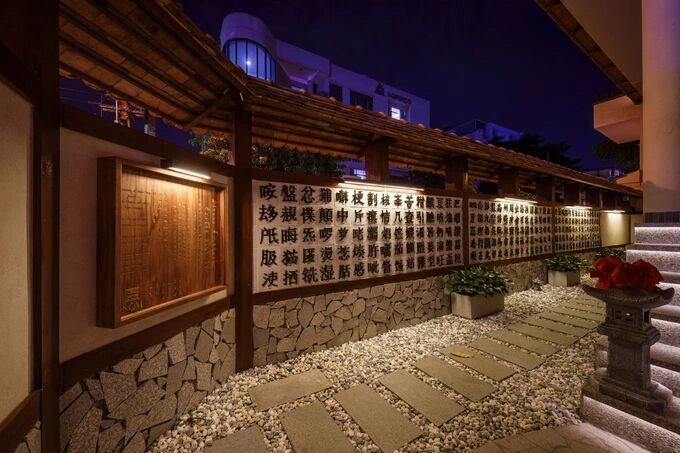 |
The exterior of NOM Dining restaurant features a wall adorned with Nom characters. Photo courtesy of the restaurant |
One thing that has surprised him since opening is the number of Vietnamese diners. He had assumed most of his guests would be foreigners, but Vietnamese make up 30% of them, and as much as 40% on some days.
“I never imagined so many Vietnamese people would choose to dine at a restaurant where a Singaporean chef is telling the story of their own cuisine,” he says.
He believes diners return for the stories behind the food, not just the meal itself, and says many foreign guests bring friends, family, or business partners back on future trips to Vietnam to share the experience.
“Our customers become ambassadors who introduce Vietnam to others. We just keep telling the rest of the story.”
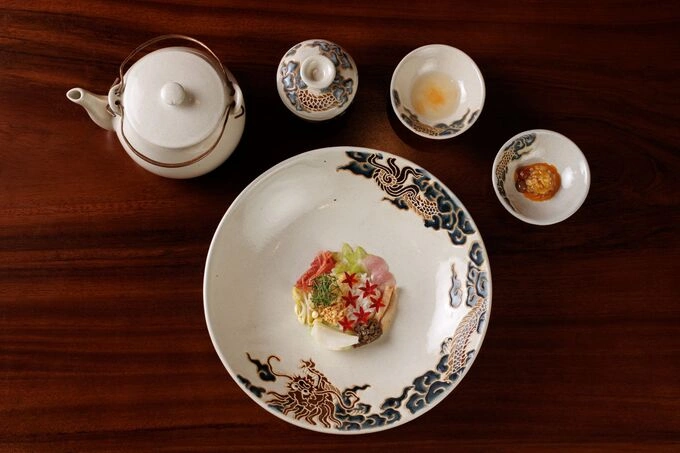 |
Clam rice, a Hue specialty, is given a modern transformation by the chefs at NOM. Photo courtesy of the restaurant |
Despite running a fine dining establishment, Fong insists his source of inspiration remains street food.
“Honestly, every dish at NOM is inspired by Vietnamese street food.”
When asked to choose three dishes to represent Vietnam’s regions to international guests, he picks Hanoi’s bun thang (chicken noodle soup), the central region’s Quang-style noodle soup, and the south’s it’s his (pork and seafood noodle soup), explaining each reflects the history, customs, and people of its origin.
A message from Michael, a Vietnamese restaurant owner in Australia, resonates with Fong: “What matters isn’t where you come from, but where you want to go.”
This gave him the confidence to try his hand at Vietnamese cuisine.
“Instead of worrying about my background, I chose to focus on what I could contribute to the future of this cuisine. We’re also upgrading the restaurant to give diners the best experience and preparing for the journey toward a Michelin star.
“But the most important thing is doing that without losing the ‘Vietnamese soul’, the identity that shaped NOM from the beginning.”
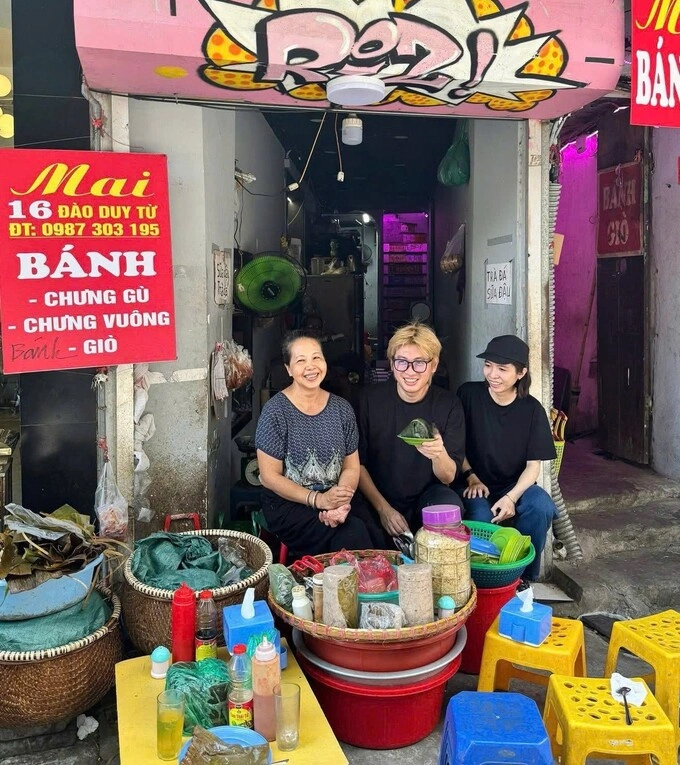 |
Chris Fong (C) poses for a photo with a street food stall owner (L) in Hanoi. Photo courtesy of Chris Fong |
Comments are closed.