
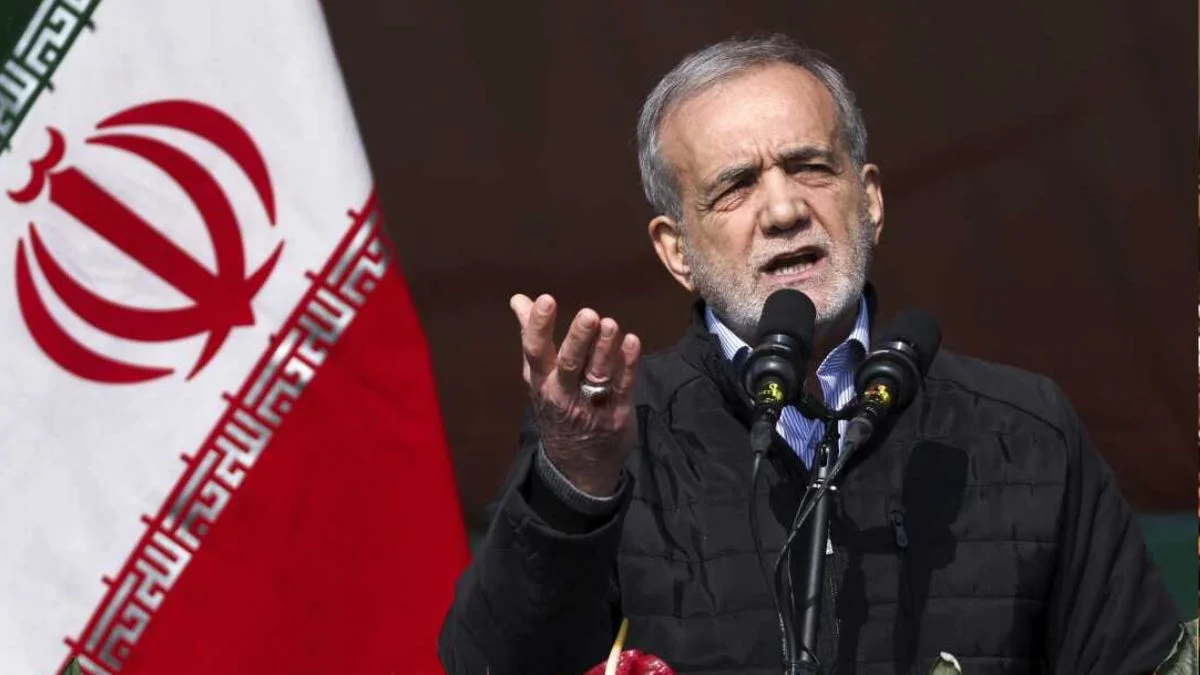
Iranian President Pezeshkian threatened to resign if U.S. agreement was rejected: Report

Iranian President Masoud Pezeshkian warned Supreme Leader Mojtaba Khamenei that the country’s economy and essential supplies were under severe strain from the ongoing naval blockade, with a report by The New York Times saying the warnings played a key role in securing approval for a memorandum of understanding (MoU) with the United States.
According to the report, Pezeshkian informed Khamenei before signing the agreement that the naval blockade had effectively paralysed Iran’s economy and threatened the country’s ability to sustain essential imports. The report said the president also warned he would resign if the proposed agreement with Washington was rejected.
The New York Times further reported that the Governor of the Central Bank of Iran sent a message to Khamenei warning that food and medicine stocks could be exhausted by the end of August if the blockade continued. The message reportedly underscored the worsening economic situation and helped persuade the Supreme Leader to approve the memorandum.
The report said the central bank governor’s assessment was a decisive factor in Khamenei’s decision, highlighting the growing pressure on Iran’s leadership as sanctions and maritime restrictions disrupted trade, financial flows and the import of critical goods.
Iran and the United States signed a memorandum of understanding in June aimed at ending hostilities and creating a framework for broader negotiations. The agreement includes provisions for the phased removal of the U.S. naval blockade, reopening commercial shipping through the Strait of Hormuzand negotiations toward a comprehensive agreement within 60 days.
While Iranian officials have publicly acknowledged that Khamenei approved the agreement after receiving assurances that Iran’s national interests would be protected, they have not officially confirmed the specific conversations or warnings described by The New York Times. Khamenei has said he approved the MoU despite personal reservations after President Pezeshkian and senior officials accepted responsibility for safeguarding Iran’s rights.
The reported exchanges provide a rare glimpse into internal deliberations within Iran’s leadership and suggest that mounting economic pressures may have influenced Tehran’s decision to pursue diplomacy with Washington after months of heightened regional tensions.
Neither the Iranian presidency nor the Central Bank had publicly commented on the reported details as of Saturday.

Comments are closed.