

The Sentosa Development Corporation (SDC) unveiled on Friday its Greater Sentosa Master Plan that outlines a series of projects to transform Sentosa and the neighboring 120-hectare Pulau Brani over the next two decades, Channel News Asia reported.
Key developments include a transport hub linking the two islands and a new multi-purpose venue, the Sensorium, at Siloso Beach.
As part of the plan, a new transport hub featuring a tram system will also link the two islands and serve as the gateway to the area, with water taxis being explored as an option, the SDC said.
Minister-in-charge of Trade Relations Grace Fu said the master plan is part of Singapore’s efforts to refresh its tourism offerings and strengthen its appeal amid growing global travel demand, The Straits Times reported.
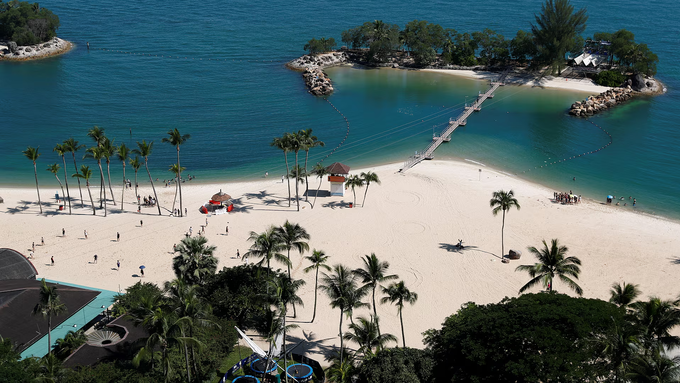
A view of Siloso Beach on Sentosa Island. Photo by Reuters |
Sentosa is 10 minutes from mainland Singapore by monorail, and also accessible by road via a bridge connecting the island to the city.
Authorities have not disclosed the cost of the Greater Sentosa project, which is expected to double the number of visitors to the island once the redevelopment is completed.
Singapore previously pledged to invest S$740 million (US$584 million) into tourism development projects over the next five years after the country posted record tourism receipts of S$32.8 billion in 2025, with 16.9 million international visitors.
Phu Quoc and Bali, voted Asia’s most beautiful islands by readers of Condé Nast Travelerhave enjoyed a tourism boom in recent years, fueled by major entertainment developments and luxury resorts.
Phu Quoc, Vietnam’s largest island which is undergoing developments to prepare for APEC 2027, welcomed 1.32 million international visitors in the first half of the year, a 50% increase from a year earlier. It is aiming to attract 2 million foreign tourists by year-end.
Bali welcomed nearly 7 million international visitors in 2025, accounting for a significant portion of Indonesia’s overall 15.39 million foreign tourist arrivals.
Comments are closed.