
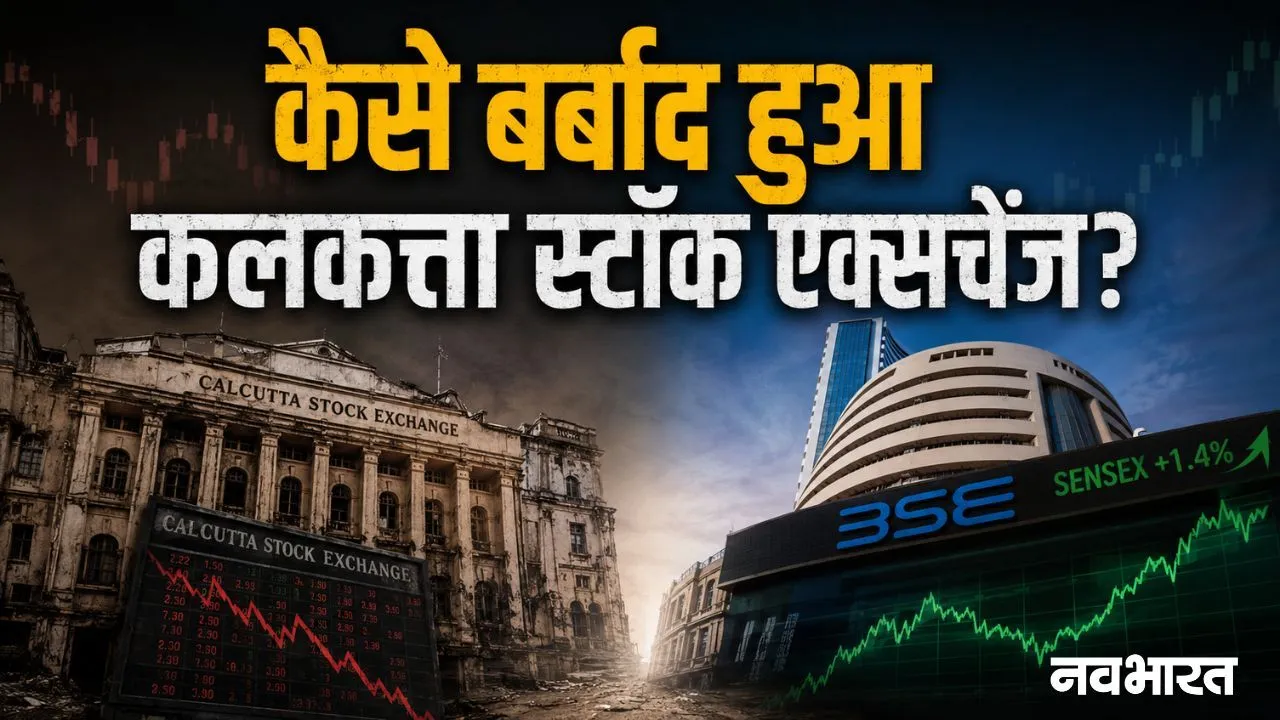
Explainer: Calcutta Stock Exchange once used to compete with Mumbai’s BSE, how did a scam wipe out the empire?

Calcutta Stock Exchange Collapse Story: Exactly a year ago today, a stock exchange was started under a Neem tree, which is now completely ruined due to a scam. Actually, we are talking about the Calcutta Stock Exchange (CSE), which once traded from the Lions Range of the city. At one time it was as important in Bengal as Dalal Street is in Mumbai today.
The wood traders used to bid loudly and loudly. Industrialists used to decide the future of tea gardens, jute mills and shipping companies from this place. Calcutta Stock Exchange was the economic center of Eastern India for a long time. But, today the situation is different. There has not been a single trade on this stock exchange since April 2013.
Why is Calcutta Stock Exchange in discussion?
However, after the change of power in West Bengal, the discussion about Calcutta Stock Exchange has started again. There is talk of reviving it again. During the budget speech in the Bengal Assembly, state Finance Minister Swapan Das Gupta said that the government will support the restarting of the Calcutta Stock Exchange. It will be re-operationalized, so that Kolkata can again become the financial center of Eastern India.
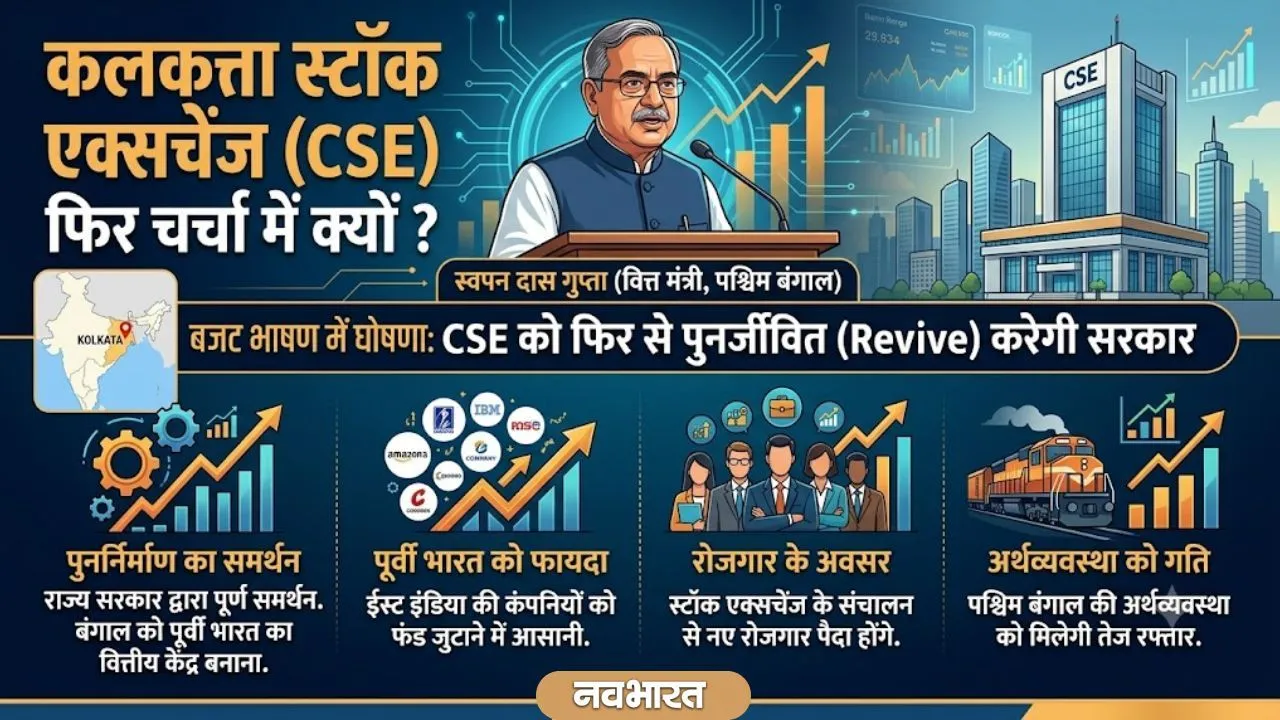
In his budget speech, he said that the re-operation of Calcutta Stock Exchange will make it easier for East Indian companies to raise funds. The state government has also argued that the reopening of this stock exchange will generate new jobs and also give a boost to the economy of West Bengal.
How easy is it to start again?
However, right now this is just a government proposal. The real question is, can the Calcutta Stock Exchange be reopened? To understand it simply, the process of restarting this stock exchange is not easy. To understand this, we have to know the background of Kolkata Stock Exchange, how did the CSE, which was once the financial heartbeat of the country, get ruined?
Stock trading in Kolkata began around 1830, when buying and selling of stocks took place informally under a neem tree. A large number of stock brokers used to trade openly under this tree. Gradually it expanded and a time came when all the brokers got organized. Then in May 1908, an association was formed by the name of Calcutta Stock Exchange Association. The headquarters of this organization with a total of 150 members was at 2, China Street.
How did the Calcutta Stock Exchange sink?
Under the Equity Contract Act, 1956, the Government of India on April 14, 1980 Calcutta Stock Exchange Was given permanent recognition. For a long time it established itself as the most important financial institution of the country. It was known as the oldest stock exchange in Asia. At one time it was the second largest stock exchange in India. But, a scam completely ruined it. That big scam was the Ketan Parekh Scam of 2001.
What is the Ketan Parekh Scam of 2001?
In the year 2001, stock broker Ketan Parekh manipulated some stocks on a large scale. The result was that the Calcutta Stock Exchange completely crashed. Ketan Parekh and his associates manipulated the prices of some key shares of the exchange, causing liquidity shortage in the entire system and causing huge losses to investors.
How did Ketan Parekh manipulate?
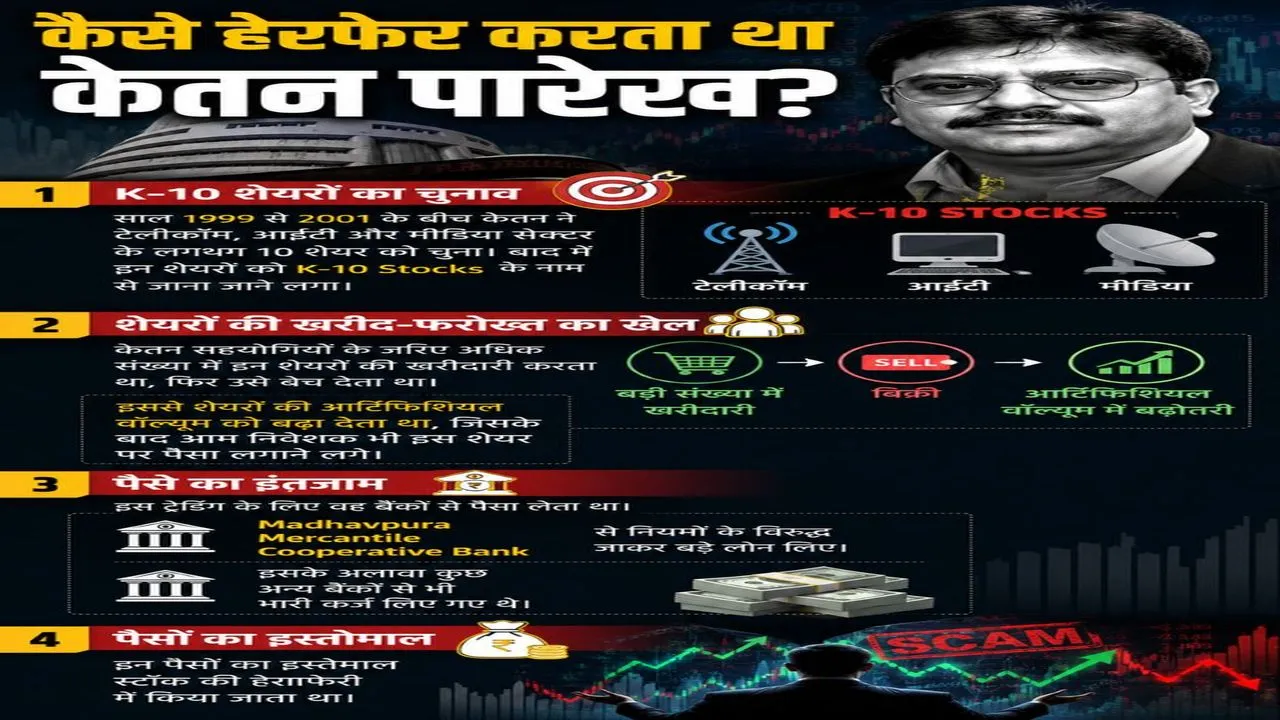
Between 1999 and 2001, Ketan selected about 10 stocks from the telecom, IT and media sectors. Later these stocks came to be known as K-10 Stocks. Ketan used to purchase these shares in large numbers through associates and then sell them. Through this he would artificially increase the volume of shares. After which common investors also started investing money in this share. He used to take money from banks for this trading. Especially, he took huge loans from Madhavpura Mercantile Cooperative Bank against the rules. Apart from this, huge loans were also taken from some other banks. This money was used for stock manipulation.
How was Ketan Parekh’s game revealed?
As soon as the Central Government presented its budget in March 2001, market decline The process intensified. During this time, the Calcutta Stock Exchange also started falling rapidly, because its roots had already weakened. Ketan Parekh’s shares also started weakening rapidly. Seeing the market situation, banks started demanding cash back in exchange for the pledged shares. Then what happened was that brokers started selling shares and heavy selling started taking place.
Also read: explainer: VB-G RAM G implemented in the country, why only BJP ruled states are protesting; What kind of challenge is this before the governments?
SEBI stopped trading in 2013
This scam within the Calcutta Stock Exchange was so big that CSE could not recover from it again. From 2005 to 2012, the daily trading turnover of this stock exchange fell by more than 90 percent. Another major reason behind this was that listed companies gradually started shifting themselves towards National Stock Exchange (NSE) and Bombay Stock Exchange (BSE). The effect of this was that SEBI completely stopped trading on Calcutta Stock Exchange in 2013.

Comments are closed.