
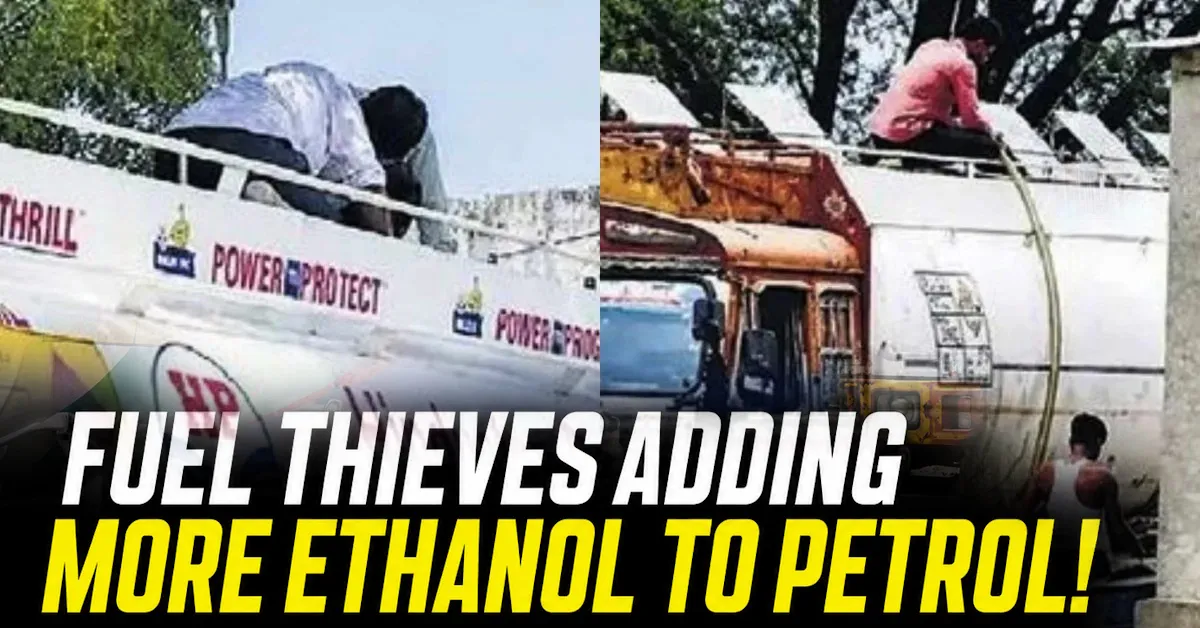

Most people in the country are already annoyed with the E20 rollout and the reports of isobutanol being mixed with diesel. However, now, adding to this, another shocking news report has recently emerged. This time around, the news agency Dainik Bhaskar conducted an investigation and found out that there is an organised fuel theft racket operating openly on highways in Rajasthan.
Dainik Bhaskar and its reporters recently conducted a five-day investigation, and they have claimed that fuel is being stolen from tankers soon after they leave the depot. It has also been reported that the missing quantity of fuel from the tankers is then getting replaced with ethanol in petrol tankers. Meanwhile, biodiesel is being added to diesel tankers before the vehicles continue their journey.
It has to be noted that these reports are part of Dainik Bhaskar’s investigation and have not been independently verified by us. However, if these claims are true, they will raise a number of serious questions about fuel quality, tanker security, and the monitoring systems used during transportation.
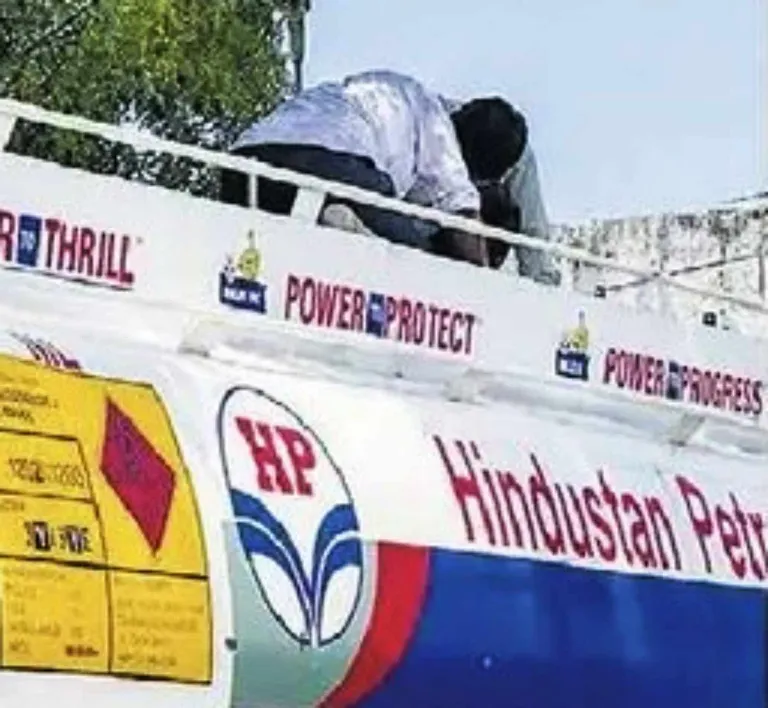
According to the report, the five-day investigation was carried out across nearly 150 km of highways, covering the Ajmer-Beawar, Nasirabad-Bijainagar, and Jaipur routes. During this period, reporters monitored 67 roadside dhabas and a number of other suspicious locations where fuel tankers were frequently stopping.
The investigation also involved undercover reporting. As per the reports, the journalists posed as customers and even worked at dhabas to closely observe how this network operates. During the investigation, the reporters claimed that they witnessed fuel theft taking place at multiple locations.
The report states that most of these activities begin shortly after tankers leave the Saradhana oil depot. It has been highlighted that instead of continuing on the highway, many tankers divert towards farm enclosures, village roads, workshops, and isolated areas behind roadside dhabas.
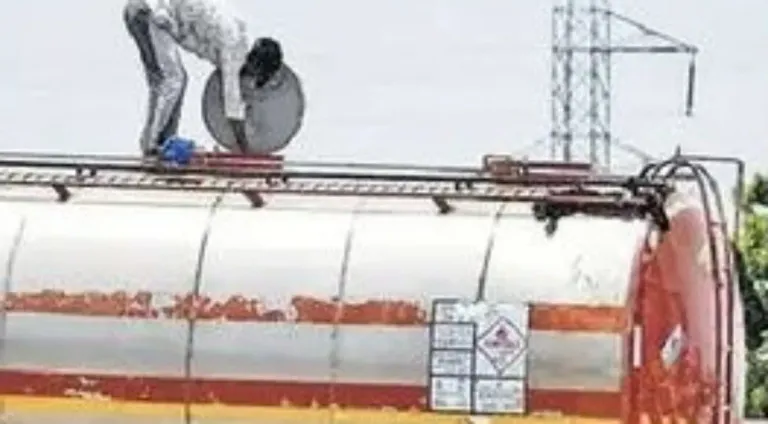
According to the investigation, once the tanker reaches these isolated locations, those involved in the racket empty out around 50 to 150 litres of petrol or diesel within just 15 to 20 minutes. The reports also claim that after removing the fuel, the missing quantity is replaced before the tanker resumes its journey.
It also added that these people are mixing ethanol into petrol tankers. Meanwhile, biodiesel is added to diesel tankers to compensate for the stolen fuel. This entire operation reportedly takes only a few minutes, after which the tanker quickly returns to the highway and continues towards its destination.
The report has highlighted Saradhana as one of the most active locations. Reporters claim that they found several tankers parked behind dhabas. At these locations, pipes were attached to the vehicles, and fuel extraction was taking place in broad daylight.
At Tabiji, reporters also followed a tanker after it left the depot. Now, instead of remaining on the highway, it entered an enclosure between agricultural fields and returned around 20 minutes later. Many local residents reportedly told reporters that such stops are common.
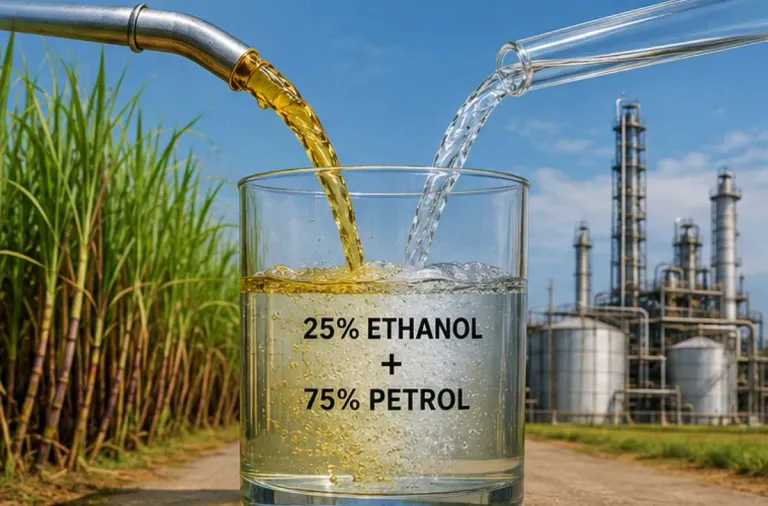
Another incident was reported from Kesarpura, where three tankers were parked on a dirt road. One of them reportedly had a pipe attached to it as well. As soon as people noticed a camera, the driver and helper allegedly removed the pipe and left within minutes. Many locals have also claimed that cheaper fuel than at petrol pumps is available at nearby dhabas.
At Mangliyawas, some reporters also posed as customers and asked a dhaba owner about buying petrol and diesel. According to the report, the owner offered fuel at a price lower than at petrol pumps but said the minimum purchase should be 20 litres. This suggests that stolen fuel is also being sold in the open market.
According to the investigation, those involved in the racket use three different methods to steal fuel. The first method involves using a suction pump through a specially prepared opening in the tanker. Meanwhile, the second method involves directly removing fuel by opening either the top or bottom lid of the tanker.
Lastly, in the third method, a more advanced technique is used. This involves making technical changes to the tanker’s datum plate. This then helps in stealing larger quantities of fuel.
One of the biggest questions raised by the report is how such theft continues despite GPS tracking. It is a known fact that these fuel tankers are equipped with GPS systems that record every stop and send this information to the concerned authorities.
However, despite this, the report claims that the theft continues without interruption. Many petrol pump operators quoted in the investigation have stated that stricter monitoring is required. They have suggested installing CCTV cameras inside and behind tankers, along with electronic surveillance, so that every stop can be properly monitored.
The report has also included an explanation from petroleum engineer Ajay Kumar. According to him, petrol and diesel expand when temperatures increase. This process is known as thermal expansion. In a tanker carrying around 20,000 litres of fuel, hot weather can increase the fuel volume.
As a result, these organised gangs take advantage of this additional volume during summer. They remove part of the fuel and later replace the missing quantity with ethanol or biodiesel before the tanker continues its journey.
According to the report, such incidents can be reduced through stricter monitoring systems. Suggested measures include Automatic Temperature Compensation (ATC), electronic seals on tankers, Vehicle Tracking Systems (VTS), better GPS monitoring, and mandatory CCTV surveillance around fuel tankers during transportation.
Source
Comments are closed.