
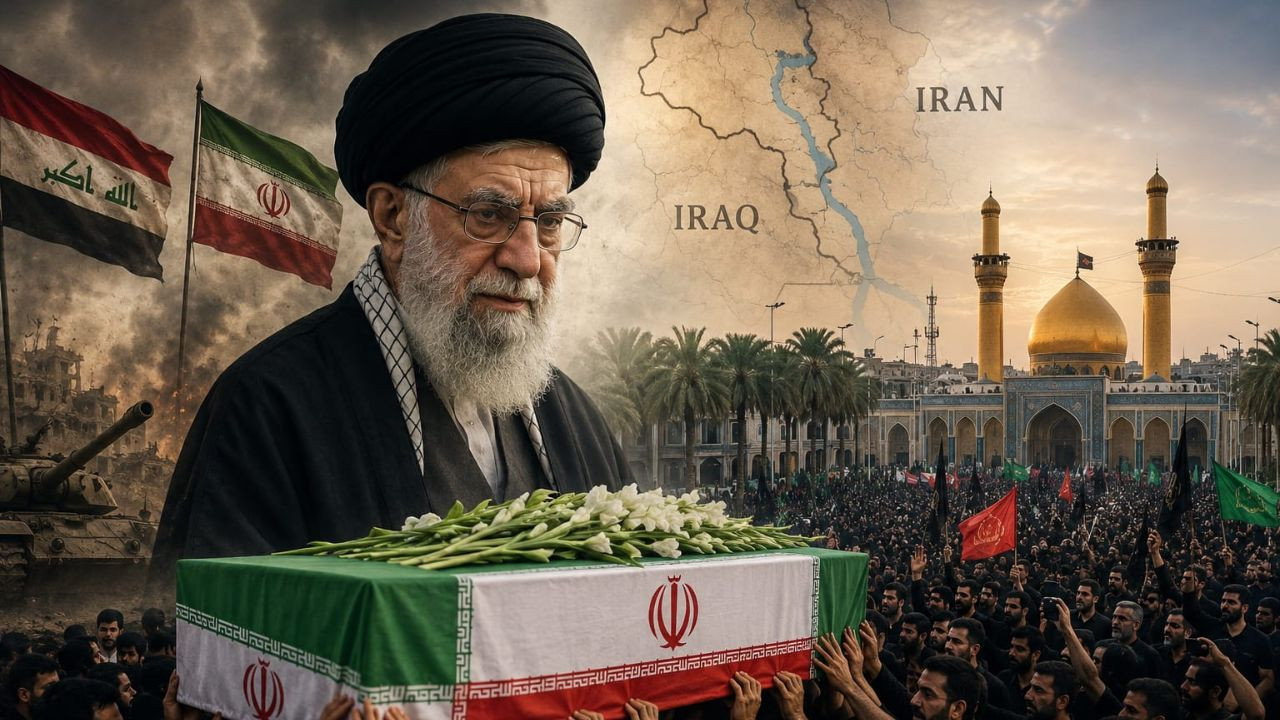
Ali Khamenei’s body will be taken to Iraq, the country with which Iran fought a bloody war for 8 years.

New Delhi: Sometimes such historical turning points occur in the geopolitics of West Asia, which demolish the walls of decades-old conflicts and enmity. The circumstances arising after the death of Iran’s Supreme Leader Ayatollah Ali Khamenei are creating such a unique and unexpected scene. Iran is not only using the final farewell of its supreme leader as a means of uniting the Muslim world, especially the Shia community, but is also using it as a major regional show of power.
Ali Khamenei’s last journey
The most shocking picture in this regard will be seen on Wednesday, July 8, when Ali Khamenei’s body will cross the borders of Iran and reach the soil of neighboring Iraq. This is the same Iraq with which Iran fought a very bloody and destructive war for eight years (1980 to 1988). Lakhs of people on both sides lost their lives in that bloody conflict and generations continued to pay the price. But today that bitter truth of history has been completely overshadowed by the strategic reality of the present.
Last rites and regional messages in religious cities
According to the scheduled funeral, on Tuesday, July 7, Khamenei’s body will be taken to the city of Qom, Iran’s main center of religious and Shia education, where special religious rituals will be performed. The next day i.e. on July 8, his body will reach the holy Shia cities of Iraq, Najaf and Karbala. Many big names and prominent faces of Iran’s regional Shia proxy network are expected to participate in the events to be held in these two cities, which will clearly demonstrate Iran’s growing influence and influence in West Asia.
What was the reason for the historic war of 1980?
If we turn the pages of history, after the Islamic Revolution in Iran in 1979, the command there first came into the hands of Supreme Leader Ruhollah Khamenei. Fearing this revolution, the then Iraqi President Saddam Hussein attacked Iran in 1980. Saddam Hussein feared that the spark of Iran’s Shia revolution could spread to Shia-dominated areas of Iraq and destabilize his rule. Apart from this, the ‘Shatt-al-Arab’ waterway and border dispute between the two countries also became a major reason for this destructive war. Iran’s first elected President Abdul Hassan (who took office in February 1980) was commander-in-chief of the army during the early stages of the war, but he was removed from the post in 1981 after differences with Khamenei and moved to France.

Comments are closed.