
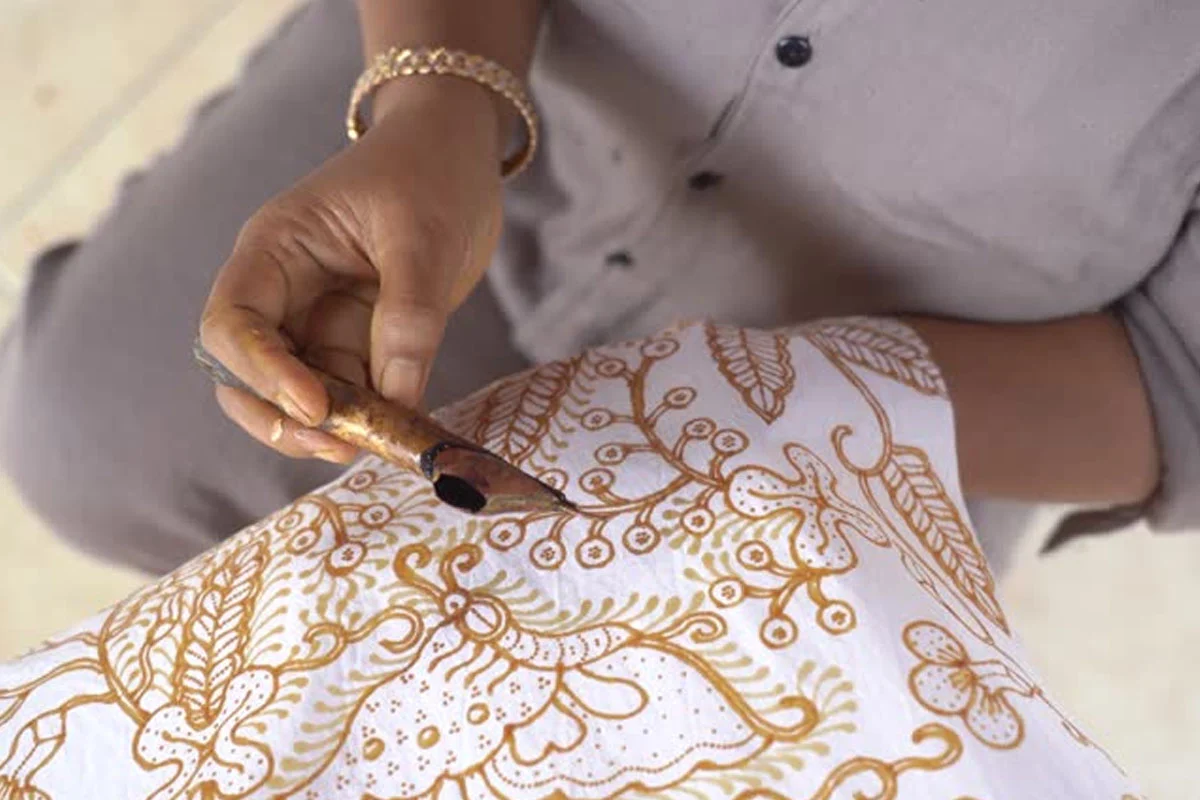

Santiniketan Batik Print (Batik Print) got the GI (Geographical Indication) tag this year. Rabindranath Tagore’s artistic thought gave birth to this special style of dyeing cloth. In 1921, Rabindranath returned to the country after a long trip abroad and became engrossed in the practice of batik art. He also organized workshops. Artists Suren Kar and Dhirendrakrishna Devavarman accompanied Rabindranath during his visit to Java in 1927. The royal family of Java was impressed by their exquisite batik making skills.
After returning from there to Santiniketan, they gave birth to modern batik art in collaboration with Nandalal Bose. At present, batik print sarees, fatuas, chadars can be found in almost everyone’s wardrobe.
Although this printing technique is complex, a simpler version can be made at home if desired.
Whatever it takes—
• White cotton cloth or handkerchief
• Wax (a mixture of paraffin and beeswax is best)
• Fabric colors
• Touch
• Ironing
• Newspapers
• Pencil
Procedure—
First, wash and dry the fabric on which you want to print batik. Draw flowers, leaves, flowers, birds or geometric designs on it with a pencil. After melting the wax, dab it on the design with a thin brush or stick. Where there is a layer of wax, the dye will not penetrate – this is a simple calculation to keep in mind.
Now dip the cloth in the fabric color of your choice. Allow to dry completely. When the paint is dry, lay the fabric between two sheets of newspaper, and iron on top of the paper. The wax will melt on the paper in the heat. Change the paper a few times if necessary and iron the same way.
Now wash the cloth gently in cold water and dry it. No need to over rub. By the way, make your own homemade batik print clothes!
If successful in this task, later you can print batik on large cloth or saree using this method.

Some Tips for New Artistes—
• Practice with a small handkerchief or scarf first.
• Always use cotton cloth.
• When using hot wax, keep it away from children and take care yourself.
Santiniketan Batik is not only a handicraft but also a cultural symbol of Bengal. So learning to print batik at home is not only a creative hobby, but also an imperative to pass on a century-old art tradition to the new generation.
Comments are closed.