
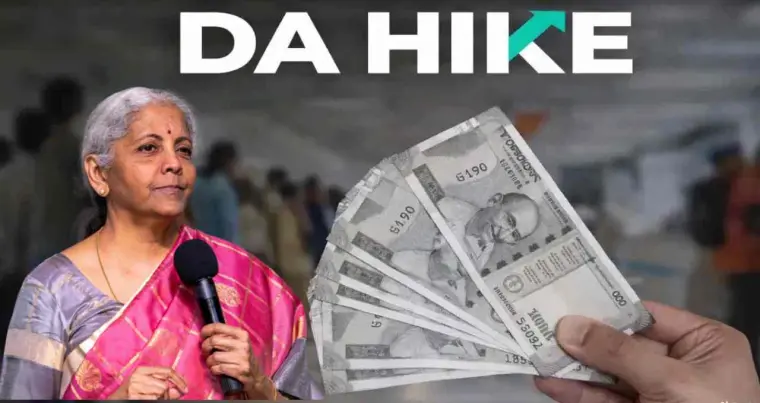

The Central Government has made it clear that at present no proposal is under consideration to merge Dearness Allowance (DA) with Basic Pay. Minister of State for Finance Pankaj Chaudhary said in his official statement in Parliament that the existing DA amendment system will continue to deal with inflation and price rise.
Business News: Dearness Allowance (DA) has been a topic of discussion for a long time for lakhs of central government employees and pensioners. Especially the employee organizations are continuously raising their voice regarding the demand of merging DA with Basic Pay. Meanwhile, the Union Finance Ministry has made its stand clear on this issue.
The government has clarified that at present no proposal is under consideration to merge Dearness Allowance (DA) with Basic Pay. That is, under the current system, the amendments in DA from time to time will continue as before and there is no separate merger planned.
Finance Ministry gave clear answer in Parliament
Union Minister of State for Finance Pankaj Chaudhary said in an official statement given in Parliament that the government is currently not considering including DA in Basic Pay. He said that the existing system is sufficient to provide relief to the employees from inflation and under this, the dearness allowance is reviewed every six months. After this statement, the speculations which were being claimed that the government may soon add DA to the basic salary have come to an end.
Process related to 8th Pay Commission continues
The government has already notified the Terms of Reference (ToR) for the 8th Pay Commission. The Commission is visiting various states to collect suggestions from employee organizations, unions and other stakeholders. Experts believe that if any major change is made in the salary structure in future, it will be implemented directly on the basis of the recommendations of the 8th Pay Commission. At present, there is no indication of any major amendment in the existing salary and allowances system.
Under the 7th Central Pay Commission, dearness allowance to central government employees and pensioners is given on the basis of All India Consumer Price Index (AICPI). It is reviewed twice a year—January and July—while the revised rates are usually announced in March and October. In January this year, the government had increased DA by 2 per cent. After this, dearness allowance has increased to 60 percent of basic pay. This increase brought relief to lakhs of employees and pensioners, but the demand for DA merger also intensified.
Why is there a demand to merge DA with Basic Pay?
Government employees argue that most of the allowances are calculated on the basis of basic pay. If 60 percent DA is included in the Basic Pay, then the basic salary of the employees will increase and along with it many other allowances will also automatically increase. Key allowances affected by this include:
- House Rent Allowance (HRA)
- Transport Allowance
- Children Education Allowance
- Hostel Subsidy
- Other salary based facilities
For this reason, employee organizations have been demanding DA merger for a long time.
Retirement benefits will also be affected
If DA is included in Basic Pay in future, the biggest benefit can be given to retiring employees. Many financial facilities like Gratuity, Provident Fund, Leave Encashment and Pension are calculated on the basis of basic salary and dearness allowance.
In such a situation, by increasing Basic Pay, the amount of all these benefits can also increase significantly. This is why employee organizations say that the DA merger will not only increase monthly salaries but also strengthen long-term financial security.
The recommendation of the old Pay Commission is also being cited.
The employee organizations demanding DA merger cite the 5th Pay Commission’s recommendation that if dearness allowance exceeds 50 percent, it should be considered for inclusion in the basic pay. Now that DA has reached 60 percent, employees believe that the same principle should be implemented again so that their purchasing power is maintained amid rising inflation. However, the government has not yet accepted this demand and has made it clear that the existing system will continue.

Comments are closed.