

Vietnam has become Asia’s largest branded residence market by value, with the sector estimated at VND211.2 trillion (US$8 billion), according to the Asia Branded Residences Market Review 2026 released by C9 Hotelworks.
The country’s share in Asia’s $40 billion branded residence market is ahead of Thailand’s $6.4 billion and South Korea’s $5.8 billion. Together, the three markets represent more than half of the region’s total market value.
Latest report by C9 Hotelworks reveals Vietnam’s rising position as a leading regional hub for branded real estate. Photo courtesy of C9 Hotelworks |
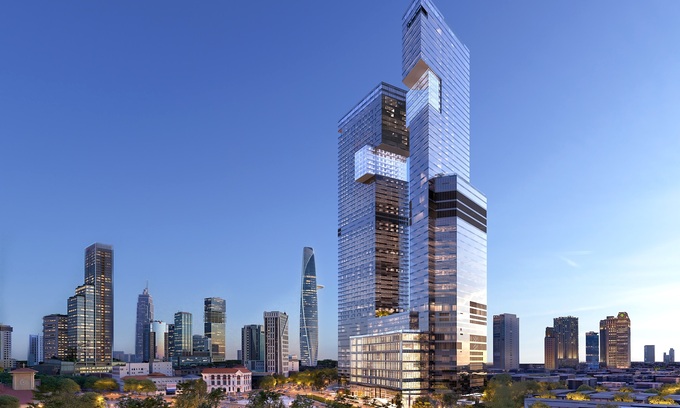
According to the report, growth has been supported by international hospitality and lifestyle brands launching projects in major cities and resort destinations. One Central Saigon, a mixed-use development featuring The Ritz-Carlton Residences, was among the projects launched in the second quarter of this year.
Bill Barnett, Managing Director of C9 Hotelworks, said infrastructure development has played an important role in the market’s expansion.
“Vietnam’s rise as a regional hub for travel, hospitality, and branded real estate has been remarkable,” he said.
“The accelerated expansion and modernization of the country’s infrastructure has been the catalyst for widespread investment and development, resulting in a significant supply of new residences in urban and resort destinations.”
 |
Bill Barnett, Managing Director of C9 Hotelworks. Photo courtesy of C9 Hotelworks |
Thailand currently leads Asia in completed and launched branded residence units, with 13,124, compared with Vietnam’s 12,592.
However, when projects under development are included, Vietnam ranks first with 15,762 launched and unlaunched units across 47 projects, according to C9 Hotelworks.
The report attributes Vietnam’s leading market value partly to the positioning of its developments. Around 38% of branded residence projects are classified in the luxury segment, contributing to higher average property values.
Hotels remain closely linked to the sector’s development. The report found that 83% of branded residences in Vietnam are co-located with hotels, while 13% form part of mixed-use developments and 4% are standalone projects.
The report noted that this hotel-led development model has coincided with Vietnam’s expanding hotel pipeline and growth in international visitor arrivals.
Non-hospitality brands are also entering the market. The Rivus by Elie Saab opened in Ho Chi Minh City in 2025, becoming Vietnam’s first branded residence project associated with an international fashion brand.
Development expands across the country
Vietnam’s branded residence pipeline extends beyond major cities to coastal and emerging destinations.
Da Nang leads with 3,034 units, followed by Ho Chi Minh City with 2,903. Quang Tri ranks third with 2,600 units, while Lam Dong and Hanoi have 2,288 and 1,817 units respectively.
Another 3,121 units are planned across eight other markets, including Dong Nai, Phu Quoc, Khanh Hoa, Lao Cai, and Hai Phong, indicating that branded residence development is expanding beyond the country’s largest urban and resort centres.
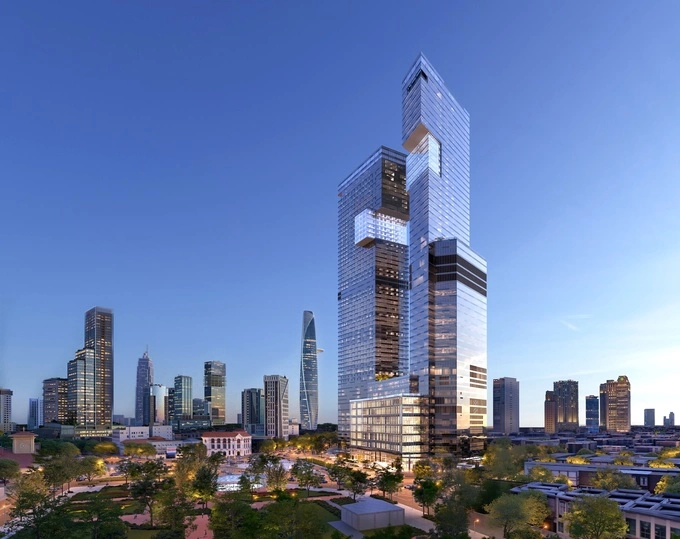 |
One Central Saigon project. Photo courtesy of the developer |
The report also noted that the growing supply presents challenges for developers, particularly in marketing and sales.
Barnett described this as an “unresolved question” as the market continues to expand.
“Marketing and sales strategies for branded residences are fundamentally different from traditional real estate,” said David Johnson, CEO of Delivering Asia.
“Developers need to focus on building a narrative architecture, market positioning, and an integrated communications program to drive desirability, buyer engagement, and sales performance if projects are to be successful.”
The expansion of branded residences has coincided with broader investment in Vietnam’s transport and tourism infrastructure.
Projects under development include Long Thanh International Airport, the planned high-speed railway linking Hanoi and Ho Chi Minh City, new expressways, and tourism developments.
C9 Hotelworks said these investments are expected to improve connectivity and support demand from leisure travelers, business visitors, and property buyers, contributing to continued growth in the branded residence market.
Comments are closed.