
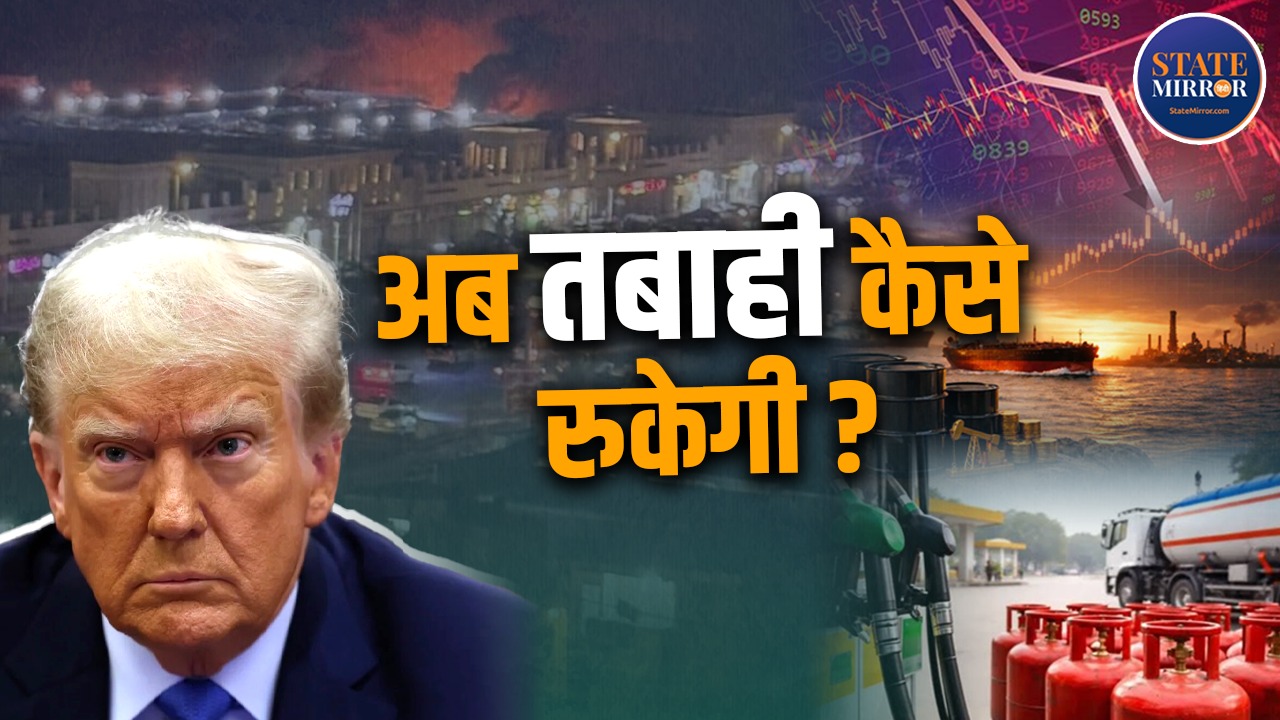
There is chaos in the stock market, there is fire in crude oil, a statement from Trump and the tension of March-April is returning? Understand in 8 points

US President Donald Trump Tension in West Asia has once again increased after Iran’s statement regarding the end of the ceasefire (ceasefire) with Iran. Its effect was seen in global markets as well as in India. There was a huge fall in the Indian stock market, there was a jump in the prices of crude oil and the pressure on the rupee increased. Since India is largely dependent on imported crude oil for its energy needs, any tension in the Middle East has a direct impact on the country’s economy.
If this crisis prolongs then inflation, prices of petrol and diesel, stock market, import-export and monthly budget of common people may also be affected. Let us know which areas can have the biggest impact on India after Trump’s statement.
1. Turmoil may increase in the stock market
After Trump’s statement, investors started staying away from risky investments, the effect of which was also visible on the Indian stock market. There was a big fall in Sensex and Nifty, while selling by foreign investors increased. In such an environment, market volatility increases and investors withdraw money from shares and turn to safe investment options like gold, dollar and government bonds.
2. Danger of rising crude oil prices
India imports about 85 percent of its crude oil needs. If tension increases in the Middle East or oil supply from the Strait of Hormuz is affected, there may be a sharp rise in oil prices in the international market. This will have a direct impact on India’s import bill and energy costs for the government will increase.
3. Petrol-diesel and LPG may become expensive
The first impact of crude oil becoming expensive is on fuel prices. If oil remains expensive for a long time, pressure on the prices of petrol, diesel and LPG cylinders may increase. Along with this, due to increase in transportation costs, air travel, freight transportation and many items of daily need may also become expensive.
4. Pressure on rupee will increase
India has to spend more dollars to import oil. Due to this the demand for dollars increases and the rupee starts weakening. A weak rupee impacts foreign travel, foreign education and prices of imported products like electronics. However, if necessary, the Reserve Bank of India can intervene in the market and try to keep the rupee stable.
5. Fear of rising inflation
The effect of increasing oil prices is not limited to fuel only. Due to cost of transportation, prices of food items, agricultural inputs, fertilizers, electricity and other essential commodities may also increase. If weather related challenges are also added to this, then there can be additional pressure on retail inflation and interest rates can also be affected.
6. Impact on India’s exports and trade
India has huge trade relations with the countries of West Asia. If tension in the region persists for a long time, exports to UAE, Iran and other Gulf countries may be affected. Increase in shipping and insurance costs will also increase the costs of Indian exporters, which may put pressure on many industries.
7. Trump’s tariffs may also increase problems
The Trump administration is talking about imposing new tariffs on many countries including India. If this decision is implemented, India’s textile, marine products, gems and jewelery and other labour-intensive export sectors may be affected. This may weaken the competitiveness of Indian exporters and create new challenges in trade relations.
8. How much will it affect the pockets of common people?
If the tension in West Asia remains limited to a few days then the impact will also be limited. But if the conflict prolongs, petrol-diesel, cooking gas, air tickets, transport, food items and other essential goods may become expensive. This will have a direct impact on the monthly budget of every family and common consumers may have to bear the burden of inflation.

Comments are closed.