
Super Typhoon Bavi, roughly the width of France, disrupts dozens of flights in Hong Kong, Japan and Singapore

Singapore Airlines (SIA) and its low-cost subsidiary Scoot have adjusted schedules and cancelled at least 18 flights to and from Taipei, Tokyo, Seoul and Sapporo as Super Typhoon Bavi approaches Taiwan and eastern China.
A total of 16 flights scheduled for July 10 and 11 have been cancelled, including Scoot services between Singapore and Tokyo’s Narita Airport, Seoul and Sapporo via Taipei, as well as four Singapore Airlines flights between Singapore and Taipei.
SIA flights SQ878 and SQ879 between Singapore and Taipei on July 10 have also been rescheduled, Asia One reported.
The airlines said affected passengers would be contacted directly with updated travel arrangements and advised travelers to check their flight status pages for the latest information, as adverse weather could cause further disruptions.
Passengers affected by the schedule changes can choose to be rebooked on another flight or request a full refund for the unused portion of their tickets, SIA said on its website Thursday.
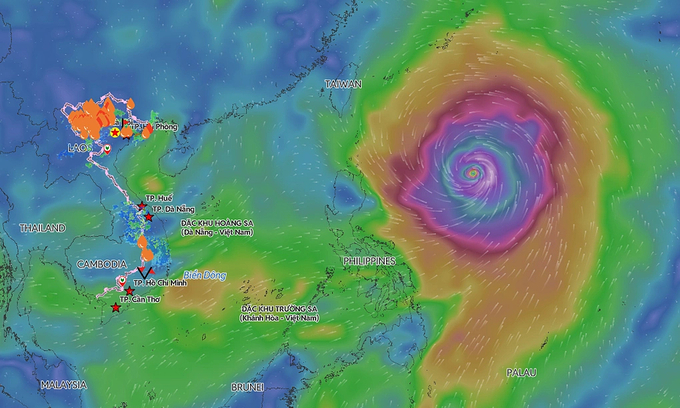
The location of super typhoon Bavi on the morning of July 9, 2026. Graphic by Vietnam Disaster Monitoring System |
Reuters reported multiple flight cancelations by Japanese airlines that affected more than 15,000 passengers.
Japan Airlines had cancelled 48 domestic flights and two international flights scheduled for July 10, while All Nippon Airways said it would cancel 34 flights mainly serving Okinawa’s Ishigaki and Miyako airports on July 10, with 33 further domestic flights set to be cancelled on July 11.
The South China Morning Post reported that more than 40 outbound flights from Hong Kong to Taiwan, mainland China and Japan – operated by Cathay Pacific Airways, HK Express, Hong Kong Airlines and Greater Bay Airlines – had been cancelled and 10 delayed to July 12.
Authorities in Taiwan on Thursday urged residents to prepare emergency supplies as Super Typhoon Bavi is expected to become the island’s strongest storm since 2024.
The typhoon was churning southeast of Taiwan in the Pacific Ocean on Thursday, with maximum sustained winds easing overnight to just under 200 kph (124 mph), Reuters reported.
Bavi, which spans about 1,000 km (621 miles) across at its widest point, roughly the width of France, is forecast to skirt northern Taiwan before making landfall in China’s eastern Fujian Province on Saturday evening, according to China’s National Meteorological Center.
Bavi is expected to be the largest storm by size to affect Taiwan since 1987, Taiwan Central Weather Administration forecaster Jason Chang told Reutersadding that storms of this scale have been “fairly rare in recent years.”
If Bavi maintains its forecast intensity, it would be the most powerful typhoon to affect the region since Super Typhoon Kong-rey in 2024, according to commercial weather forecasting service AccuWeather, according to Reuters.
Scientists have warned that climate change is contributing to more frequent and intense extreme weather events, leaving eastern Asia increasingly vulnerable to powerful storms.
Comments are closed.