

E20 Petrol: E20 petrol is rapidly becoming commonplace as part of the country’s push for cleaner fuel. Its availability at petrol pumps is increasing across several states, and it is being viewed as a key fuel for the future. Consequently, the biggest question among vehicle owners is whether E20 petrol will affect their bike or car’s performance or reduce mileage. People in major cities like Mumbai, Pune, Lucknow, and Delhi are also seeking information about this new fuel.
The Government of India has long been working on an ethanol blending program, and its impact is now becoming clearly visible to the average consumer. While some people may have initial doubts, vehicle manufacturers consistently state that most new vehicle models are designed with E20 fuel in mind. This is why the shift is being viewed not merely as a change in fuel, but as a move linked to the country’s broader energy policy.
What is E20 petrol?
E20 petrol is a fuel blend consisting of 20% ethanol and 80% regular petrol. Ethanol is a biofuel produced from sugarcane, corn, and other agricultural products. Its key characteristic is a high oxygen content, which facilitates easier combustion. India’s move in this direction has been gradual rather than abrupt; the journey progressed from E5 to E10 and now to E20, allowing fuel formulations to be adapted to vehicle requirements.
Objective of producing E20
The objective of this initiative goes beyond simply providing a new type of fuel; it aims to reduce the country’s dependence on imported crude oil. India imports a significant portion of its fuel requirements, and fluctuations in international crude oil prices directly impact the national economy. Therefore, increasing the use of domestically produced ethanol is also an effort to save foreign exchange.
What are the benefits of E20 petrol?
According to experts, a major benefit of E20 petrol is its environmental impact. Compared to regular petrol, the combustion of ethanol-blended fuel can result in lower emissions of carbon monoxide and certain other harmful gases. This shift is considered significant, especially in large cities where pollution remains a constant concern. Furthermore, increased ethanol production is expected to benefit farmers.
Sources indicate that the government has long been working to link energy security with the agricultural sector, and ethanol blending is part of this initiative. This approach allows for the utilization of surplus agricultural produce and creates new income opportunities for farmers.
A concern for motorists
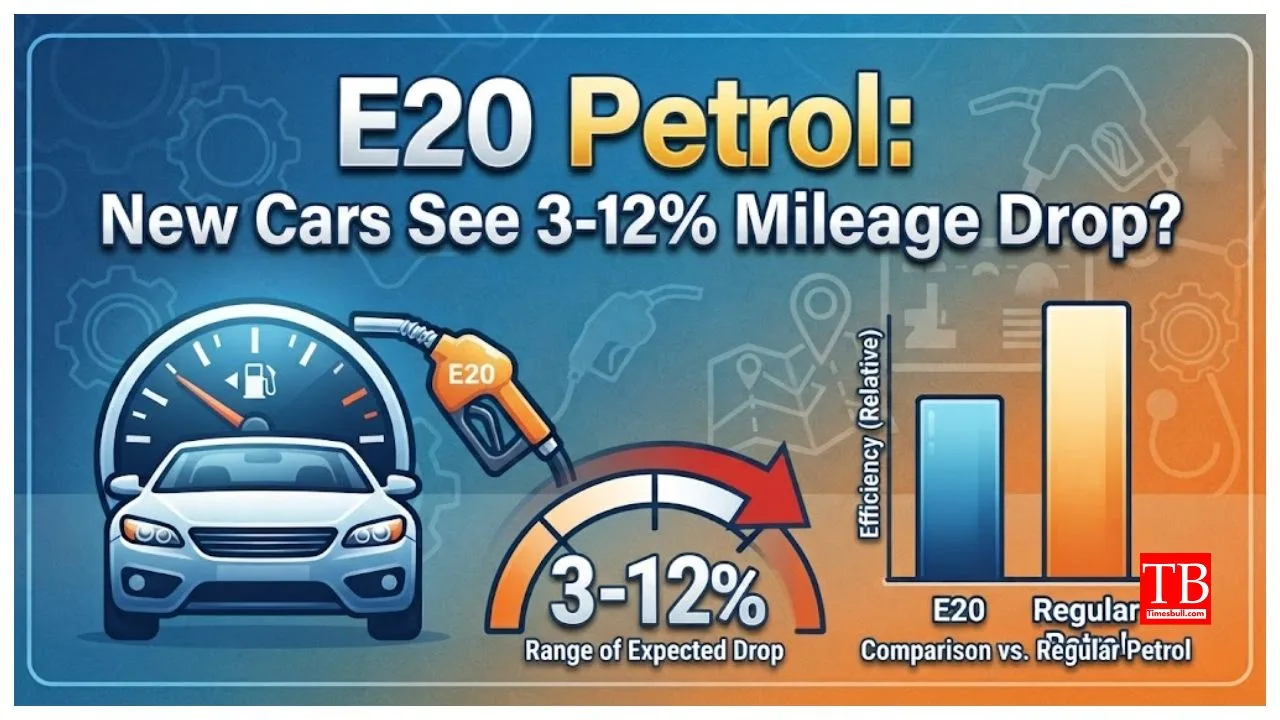
However, the most discussed aspect is mileage. A primary concern for motorists is the distance a vehicle can cover on a full tank. Technically, ethanol contains slightly less energy per liter than petrol. Consequently, a slight drop in mileage may be observed when using E20 petrol.
How much will mileage drop?
Reports suggest that the reduction in mileage could range from approximately 3 to 7 per cent. While motorists who cover long distances daily might notice a slight impact, modern engines are being designed with this change in mind. Therefore, performance is unlikely to be significantly affected during routine use. Many manufacturers have already made their new models E20-compliant, and future vehicles will largely be designed to meet this standard.
Questions regarding E20 petrol
The situation differs when considering fuels with higher ethanol blends. For instance, E85 contains a significantly higher proportion of ethanol, which can reduce fuel efficiency by 20 to 30 per cent. In contrast, E100 is a fuel based entirely on ethanol, which can result in a 30 to 35 percent reduction in mileage compared to petrol. However, experts note that ethanol has a higher octane rating. Consequently, specially designed engines can operate at higher compression ratios, improving engine efficiency and compensating for any potential drop in performance. This means that even with increased fuel consumption, engines equipped with the right technology continue to run smoothly.
The Role of E20 Petrol for Two-Wheelers
This shift is considered particularly significant for two-wheelers, as they constitute the largest vehicle segment in India. There is an ongoing discussion about E20 petrol among daily commuters who use bikes and scooters for work, college, or business. According to vehicle manufacturers, new models are already being designed to be compatible with this fuel. Therefore, under normal circumstances, no additional modifications or alterations will be required.
Safety for Older Vehicles
Owners of older vehicles are advised to consult their manufacturer’s guidelines and use fuel accordingly. It is reported that in the coming years, virtually all new two- and four-wheelers on the market will be fully compatible with E20 fuel.
The Government’s Objective
According to available information, the government’s goal is not limited to just E20 fuel. In the future, the scope of flex-fuel vehicles will be expanded, enabling them to run easily on fuels with even higher ethanol blends as required. This will help the country reduce expenditure on imported fuel and curb pollution. Currently, the introduction of E20 petrol is seen as the starting point of this transition.
Conclusion
Experts observe that while it is natural for people to have questions initially, this new fuel will become a part of everyday use as its availability increases and vehicles become fully compatible with it. E20 is expected to play an increasingly significant role in India’s transport sector.

Comments are closed.