
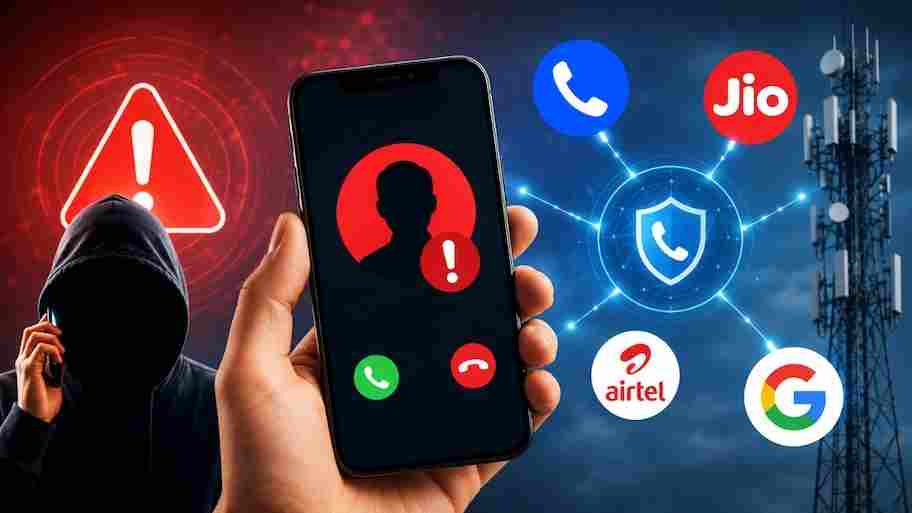
There will be a break on the arbitrariness of Truecaller! TRAI seeks power to take strict action from government, know the real game of identifying spam calls

In today’s digital age, whenever our smartphone rings, the first thing our eyes go to is the screen. If we see ‘Spam Call’ written in red, we disconnect the call without thinking. But have you ever wondered how your phone comes to know in advance whether the call is from a fraud or a telemarketer? Who decides which numbers to declare as spam? Recently, the Telecom Regulatory Authority of India (TRAI) has demanded strict powers from the Central Government to curb third-party apps like Truecaller, which has sparked a new national debate on the privacy and functioning of this entire system.
Why does TRAI want to take action and what is the stand of MeitY?
Telecom Regulatory Authority of India (TRAI) has made a very important demand from the Central Government. TRAI wants to get the legal authority to take direct action and impose fines against caller ID and call management apps like Truecaller. For this, TRAI has written an official letter to the Ministry of Electronics and Information Technology (MeitY). The ministry is now taking advice from legal experts on this sensitive matter and is preparing a framework in collaboration with the Department of Telecommunications (DoT). If this proposal is approved, there may be a strict ban on arbitrary and data handling of these apps.
Big concern for banks: Important calls are also being blocked
The main beginning of this entire controversy happened when many big government and private banks of the country put forward their serious problems before the regulator. Banks allege that these apps automatically show their official and important numbers (like 140 and 1600 series calls) issued for the security and convenience of customers as spam or block lists. Reasons for this:
Important alerts are being missed: Customers are not able to receive important alerts and verification calls related to their loan EMI recovery, banking fraud or any suspicious transaction.
Financial loss: This situation is proving to be a big loss for both the business of banks and the security of customers.
How does Truecaller’s spam detection system work?
According to Truecaller’s official claims, their call management system primarily works on three pillars—first is live feedback from a wide range of users (crowdsourcing), second is automated detection algorithms and third is their own in-house data analysis. When many people report the same number as spam repeatedly, the Spam Score of that number increases and it starts appearing in red color. Apart from this, the company also tracks calling patterns, call duration and call frequency. However, legitimate companies can also ask for a review to get their number whitelisted.
Airtel’s network level brain: AI security without apps
Bharti Airtel’s method of preventing spam is completely different from these third-party apps and is extremely safe. Airtel uses in-built Artificial Intelligence (AI) technology within the core layer of its telecom network. This advanced system identifies calls just milliseconds before they reach the customer’s handset.
Security advantage: For this, customers do not need to download any insecure third-party app on their phones. The special thing is that this AI system of Airtel never reads the personal content of calls or messages, but detects fraud only on the basis of network data and signaling patterns.
Google’s business data and in-device AI technology
The ‘Google Phone App’ available by default in Android smartphones also plays a very effective role in stopping spam calls. Google instantly matches the numbers coming from verified public business listings in its vast database. Along with this, Google has now introduced a new ‘AI Scam Detection’ feature which is processed completely inside the device. This feature, by understanding the conversation patterns during the call and the suspicious words used by the scammer, immediately alerts the user on the screen that it could be a fraud call.
Jio’s approach: awareness and trust on official channels
On the other hand, the country’s largest telecom company Reliance Jio has a slightly different view in this matter. Jio has not yet launched any network-wide AI filtering system on a large scale like Airtel. Jio’s main focus is on making its customers aware of cyber crimes. From time to time, Jio advises its users through official messages to never share their sensitive banking details or OTP on any call and to check the authenticity of any unknown call or offer through the official channel of the concerned company.

Comments are closed.