

6
Proposed legislation seeks unified regulator replacing UGC, AICTE and NCTE under NEP reforms.
The Centre is likely to table the Viksit Bharat Shiksha Adhishthan (VBSA) Bill, 2025, during the upcoming Monsoon Session of Parliament, paving the way for what is being described as the most significant overhaul of India’s higher education regulatory framework since Independence. Rooted in the National Education Policy (NEP) 2020, the proposed legislation seeks to replace the existing multi-regulator system with a single Higher Education Commission designed to oversee higher education through a technology-driven and outcome-based governance model.
The move comes after the 31-member Joint Parliamentary Committee (JPC), constituted to examine the Bill, completed its review. The committee is expected to submit its report during the Monsoon Session, clearing the way for the legislation to be taken up for consideration and passage.
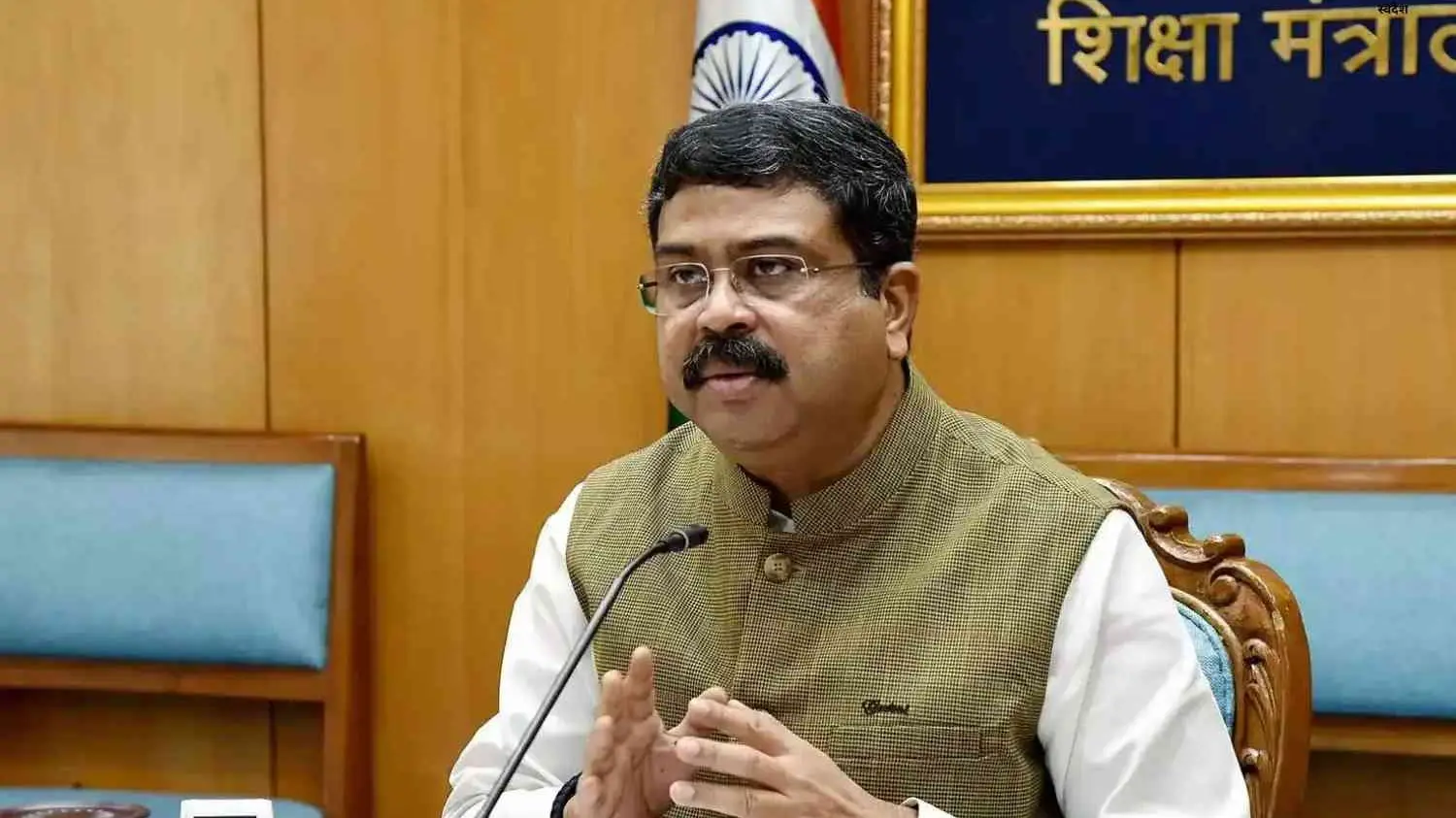
The Viksit Bharat Shiksha Adhishthan Bill was first introduced in the Lok Sabha on December 15, 2025, by Union Education Minister Dharmendra Pradhan. Amid strong objections from Opposition members, the government referred the legislation to a Joint Parliamentary Committee for wider stakeholder consultations instead of pressing ahead with its immediate passage. Following months of consultations with education experts, universities and other stakeholders, the committee has completed its examination and is expected to present its report during the Monsoon Session.
The VBSA Bill proposes the dissolution of three key higher education regulators—the University Grants Commission (UGC), the All India Council for Technical Education (AICTE), and the National Council for Teacher Education (NCTE). Their responsibilities would be consolidated under a new apex body, the Viksit Bharat Shiksha Adhishthan.
To streamline higher education governance and eliminate overlapping responsibilities, the proposed commission will operate through three independent councils, each with a distinct mandate. The Regulatory Council (Viksit Bharat Shiksha Viniyaman Parishad) will oversee regulation, compliance and institutional oversight, while the Accreditation Council (Viksit Bharat Shiksha Gunvatta Parishad) will be responsible for quality assessment and outcome-based accreditation. The Standards Council (Viksit Bharat Shiksha Manak Parishad) will formulate and maintain academic standards and degree benchmarks across institutions. The new framework will govern general higher education, technical education, teacher education and architecture, while medical and legal education will remain outside its ambit.
One of the most significant departures from the existing UGC framework is the separation of regulatory and funding functions. Under the proposed law, the new commission will not have the authority to disburse grants to universities. Instead, financial allocations will be handled directly by the Ministry of Education, a move the government says is intended to ensure that academic regulation remains independent of funding decisions.
The Bill also mandates comprehensive public disclosure of institutional information, requiring universities to publish financial records, governance details and academic data on a digital public portal in an effort to enhance transparency.
Further, the Bill proposes strict penalties to deter fraudulent institutions, with fines ranging from Rs 10 lakh for minor violations to Rs 2 crore for operating an unauthorised university. It also establishes a regulatory framework for the entry and operation of foreign universities in India.
While the government has described the VBSA Bill as a landmark reform to modernise higher education governance, Opposition parties have raised concerns over several of its provisions. They argue that the legislation centralises regulatory powers with the Centre despite education being a Concurrent List subject and provides limited representation to State Higher Education Councils.
The Opposition has also expressed concern over the transfer of grant-disbursal powers to the Ministry of Education, warning that it could increase bureaucratic control over universities. It has further questioned the Bill’s stringent compliance provisions, the absence of explicit safeguards for SC, ST and OBC reservations, and the use of Hindi names for the new regulatory bodies, arguing that it overlooks India’s federal and multilingual character.
Critics have also objected to the Centre’s authority to appoint the heads of the proposed councils and its power to supersede the commission, contending that these provisions could undermine institutional autonomy, including that of premier institutes such as the IITs, IIMs and NITs.
The Centre, however, has maintained that the legislation is intended to simplify higher education governance by replacing multiple overlapping regulators with a unified institutional framework that emphasises transparency, accountability, digital governance and academic quality.
If passed by Parliament, the Viksit Bharat Shiksha Adhishthan Bill, 2025, will fundamentally reshape the governance of higher education in India, marking a major step towards implementing the structural reforms envisaged under the National Education Policy, 2020.

Comments are closed.