

5
BJP alleges security risks, Congress defends residency certificates as constitutional and voter-friendly.
The political debate in Karnataka has intensified over whether the Congress government led by Chief Minister D.K. Shivakumar is jeopardising national security, with the Opposition National Democratic Alliance (NDA) alleging that the State government’s role during the ongoing Special Intensive Revision (SIR) of electoral rolls and its decision to introduce Permanent Residence Certificates (PRCs) have raised serious concerns. The Congress government has strongly rejected the allegations, describing them as politically motivated.
The NDA claims that the controversy surrounding the SIR exercise escalated after the Congress government introduced the Permanent Residence Certificate, 2026, to assist residents during the Election Commission of India’s ongoing Special Intensive Revision of electoral rolls.
Addressing a press conference at the BJP state headquarters, Jagannath Bhavan, in Bengaluru, Union Minister Shobha Karandlaje alleged that Chief Minister D.K. Shivakumar was acting with “arrogance” and attempting to alter the country’s demographic profile.
“The Chief Minister believes he can do anything and that no one can question him because he has the support of the Congress high command. You are attempting to change India’s demography and harm the country’s demographic balance. You should remember that,” she said.
Questioning the state’s authority to issue Permanent Residence Certificates, Karandlaje asked, “Who are you to provide citizenship or Permanent Residence Certificates? This move endangers the safety and security of Karnataka.”
Karandlaje has formally written to Union Home Minister Amit Shah seeking his intervention, arguing that the PRC undermines India’s uniform citizenship framework. She and other NDA leaders allege that issuing these certificates through local revenue authorities without central citizenship verification creates a dangerous loophole. According to them, this could enable illegal immigrants, particularly from Bangladesh, to become integrated into the state’s administrative system, thereby altering demographic patterns and posing a threat to public order.
She further alleged that large numbers of illegal Bangladeshi immigrants had entered Karnataka following the ongoing Special Intensive Revision of electoral rolls in other states.
“We have identified illegal Bangladeshi immigrants at several locations. Many of those who were staying in Bihar and West Bengal have come to Karnataka in large numbers by train and other means after the SIR exercise. The media has reported it, and officials are aware of it,” she claimed.
Karandlaje also alleged that the Congress government intended to facilitate the inclusion of illegal immigrants in the electoral rolls and extend government benefits to them.
“The government’s intention is to include illegal immigrants in the electoral rolls and provide them with government facilities. It has no concern for the interests of local people,” she alleged.
She further contended that the proposal to issue Permanent Residence Certificates should not be implemented in Karnataka, claiming it could be misused during the ongoing Special Intensive Revision of electoral rolls.
“They will gather people belonging to a particular religion and community in mosques and other places and attempt to include them in the voters’ list. There is a larger conspiracy behind this,” she alleged.
Union Minister H.D. Kumaraswamy also alleged a “SIR scam”, claiming that the government was pressuring officials to conduct mass verification drives at community centres instead of undertaking the mandatory door-to-door verification process, thereby systematically facilitating the inclusion of ineligible voters.
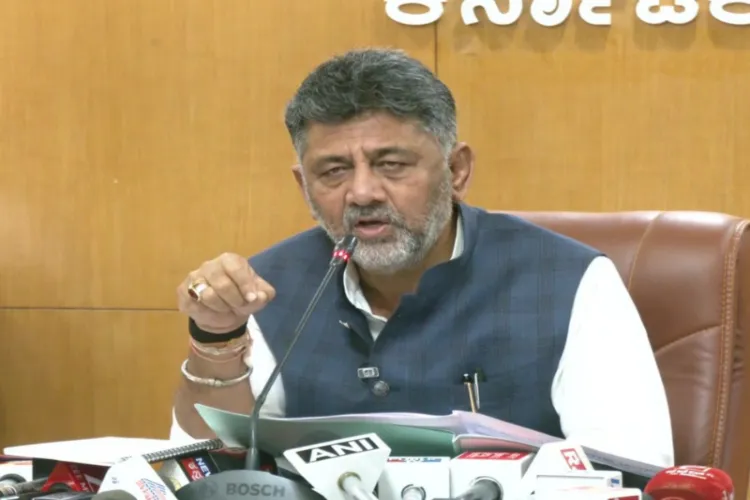
Meanwhile, Chief Minister D.K. Shivakumar and the Congress leadership have categorically rejected the allegations that the government is compromising national security or interfering with the Election Commission’s exercise. The ruling dispensation has maintained that the Special Intensive Revision is an entirely independent process being conducted by the Election Commission of India and that the state government has no role in its execution.
According to the government, the Permanent Residence Certificate has been introduced solely as a citizen-friendly measure aimed at protecting the democratic rights of genuine residents, particularly poor and minority citizens, who may otherwise face deletion from the electoral rolls due to the absence of complex documentary requirements.
The state government also rejected the allegations made by Union Minister Shobha Karandlaje and defended its decision to issue Permanent Residence Certificates, asserting that it possesses the constitutional authority to do so.
Responding to the BJP’s criticism, Karnataka Home Minister Priyank Kharge defended the state’s decision, stating that the government has the constitutional authority to frame rules and issue Permanent Residence Certificates.
“Can’t the state government frame rules regarding permanent residency? We are an elected government, and it is our responsibility to govern. We issue government orders through the established administrative system. We are issuing Permanent Residence Certificates through the government, not through the Congress party,” Kharge said.
He questioned the BJP’s objections to the proposal, adding, “I don’t understand what their problem is. The government has every right to issue Permanent Residence Certificates in accordance with the law.”
The controversy has further sharpened the political confrontation between the BJP-led NDA and the Congress government in Karnataka. While the Opposition maintains that the introduction of Permanent Residence Certificates and the alleged interference in the Special Intensive Revision process create serious vulnerabilities for internal and national security, the state government insists that the initiative is intended solely to protect legitimate residents from being wrongfully disenfranchised and that all actions have been taken within the constitutional and legal framework.

Comments are closed.