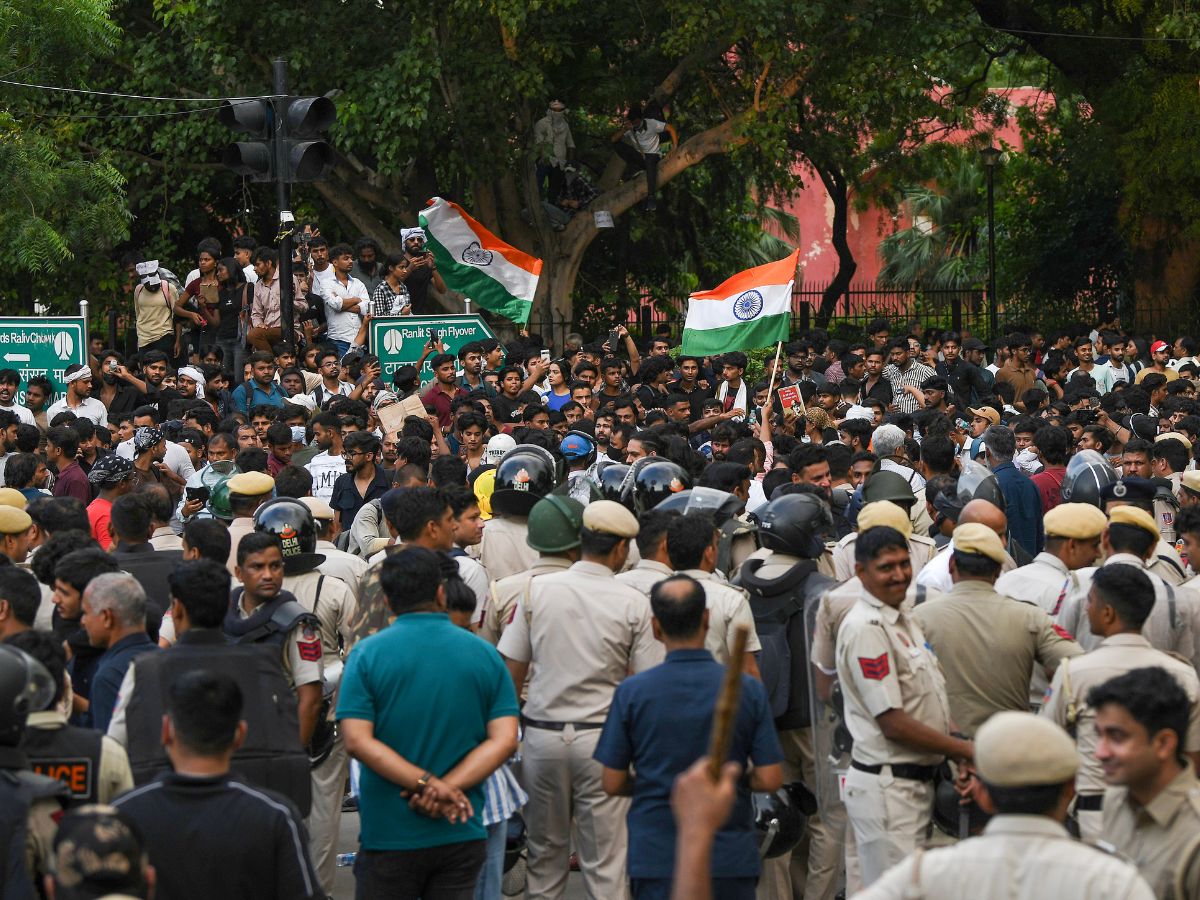
The resignation of the Union Education Minister Dharmendra Pradhan amid the protests against the NEET-UG paper leak throughout the country may not be only a political setback to the ruling party but also an issue of a larger concern going into the 2029 Lok Sabha elections. Gen Z emerges as India’s most influential vote bank. The protest against a paper leak started as an agitation by students on the entrance test has become a debate about transparency, accountability, and the future of the education system. Importantly, the protest has revealed how fast a digitally active youth population can influence the opinion of the nation and bring pressure to political entities. The protest gives an idea about how influential the political power of Gen Z is going to be at the end of the decade.
The protest has also revealed a change in the political arena of the country. While previous generations had defined Indian politics using conventional methods of campaigning, Gen Z has already proved its ability to organize quickly and gain the country’s attention using social media.
Why Gen Z could become the biggest political force by 2029
Based on the figures presented by NDTV, the next adult generation, called Gen Z, which consists of people who are between 18 and 32 years old, will have reached close to 380 million by 2029, which includes 199 million men and 181 million women. It will turn out that this generation will be India’s largest, as its figure is forecast to be slightly higher than that of the Millenials, estimated to reach 357 million by 2029.
However, the importance of this transition goes far beyond the number of people. It will consist of the largest student generation, voting generation for the first time, professionals, and families. Therefore, the problems of education, jobs, affordability, housing, governance, and climate change will come to be of increasing importance in the political conversation. This will be followed by Generation Alpha, with their numbers being expected to exceed 417 million people, while they will not be able to vote at the time in 2029.
Gen Z may hold fewer votes proportionally but greater political influence
Despite becoming the largest adult generation, Gen Z will account for a smaller share of India’s overall electorate due to the country’s ageing population. NDTV, citing UN median projections, reported that people aged 18 to 29 made up 38.3 per cent of India’s voting age population in 1988. This figure declined to 30.1 per cent in 2024 and is projected to fall further to 27.8 per cent by 2029.
To be more precise, by the end of the decade, almost one quarter of the eligible voting population will fall within the age bracket of 18 to 29 years. Nevertheless, politics does not depend on numbers alone. Generation Z enjoys the demographic weight as well as being connected, educated, and able to mobilise. Recently, the student demonstrations illustrated that very quickly the problems of youth become the centre of national political discussion.
India’s ageing population reshapes the Gen Z political equation
The rise of Gen Z is occurring alongside a major demographic transition. India’s population is ageing, with the share of children steadily declining while older age groups continue to grow. Among men, the proportion of those below 18 years is projected to fall from 45.2 per cent in 1989 to 27.8 per cent in 2029. Among women, it is expected to decline from 44.8 per cent to 27.3 per cent over the same period, according to data highlighted by NDTV.
At the same time, the population aged 45 to 61 has increased steadily, rising from 10.9 per cent to 18.3 per cent among men and from 11.3 per cent to 18.6 per cent among women. The share of people aged 62 years and above has also grown significantly, increasing from 5 per cent to 9.9 per cent among men and from 5.7 per cent to 11.3 per cent among women, reflecting higher life expectancy among women.
As India’s demographic dividend gradually narrows, Gen Z is entering adulthood at a defining moment. It is becoming the country’s largest adult generation, the most digitally connected, and one of the most politically aware. The NEET-UG protests may ultimately be remembered not only as a movement over an examination but also as an early signal that Gen Z could play a decisive role in shaping India’s political future and influencing the outcome of the 2029 general election.
Also Read: Meta India Head Arun Srinivas Booked: Here’s What The Hyderabad Police Case Is About
Khalid Lateef is a Sub-Editor at NewsX Digital, specializing in Indian politics and global affairs. He also covers viral trending stories and major crime developments.
The post Will Gen Z Emerge As Decisive Vote bank In India’s 2029 Elections? appeared first on NewsX.