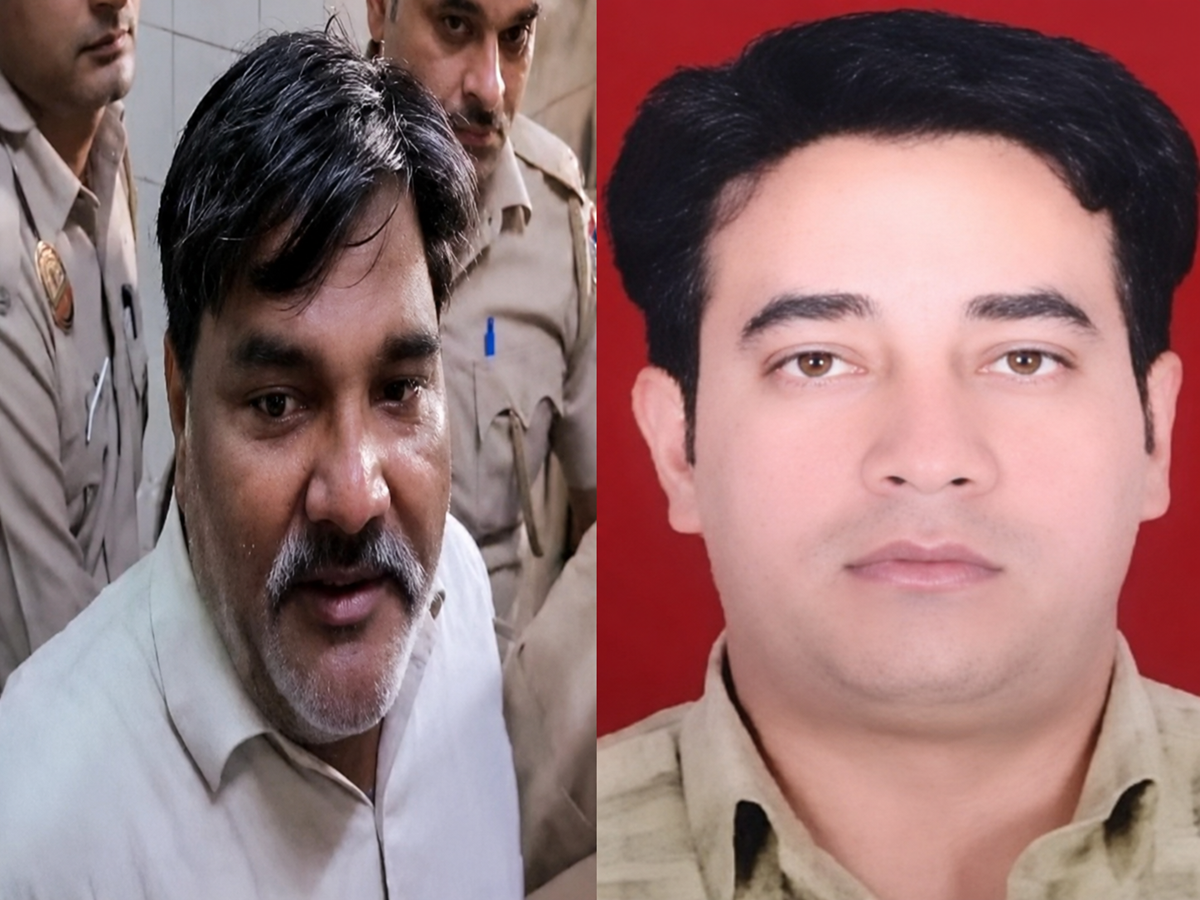
Delhi Police had managed to create a convincing chain of evidence to establish the involvement of the erstwhile AAP councillor, Tahir Hussain, in the killing of Intelligence Bureau (IB) officer Ankit Sharma in the northeast Delhi riots of 2020.
After a long six-year trial, a Delhi court sentenced Hussain and four other individuals to life in prison. Though the prosecution wanted the death penalty for Hussain, the court considered life imprisonment to be an appropriate sentence.
Evidence from various sources formed the basis of the conviction, including eyewitness testimonies, digital evidence, forensic evidence, and evidence from the investigation process.
1. Mobile Video Helped Reveal Body Disposal Sequence
Ankit Sharma, a 26-year-old IB staffer, went missing on February 25, 2020, during the northeast Delhi riots. His body was recovered the next day from a drain near Chand Bagh Pulia.
A key breakthrough in the investigation came from a mobile phone video recorded by a witness. The footage showed three people dumping Sharma’s body into the drain. The court said the video helped establish the sequence of events after the murder and supported the statements of witnesses.
2. Digital Records Tracked Accused Movements
Evidence from mobile phones, call detail records, location of cell towers, and other forms of digital evidence was used by the Delhi Police to trace the movements and presence of the accused at the time of the incident.
According to the court, such evidence was gathered in accordance with the rules and laws, which assisted in proving the movements and whereabouts of the accused. This digital evidence played an important role in building up the case for the prosecution.
3. Medical and Forensic Evidence Confirmed Brutal Attack
According to the post-mortem report, Ankit Sharma was found to have sustained 51 different injuries from sharp weapons and heavy objects. The blood stains, soil, and other physical evidence collected from the crime scene by investigators were sent to forensics for analysis. The FSL reports proved the case of the prosecution.
4. Weapons and Riot Materials Recovered During Probe
Police recovered weapons during the investigation and sent them for forensic testing. Experts said the injuries found on Sharma’s body could have been caused by those weapons. The court clarified that the conviction was not based only on weapon recovery but on the complete chain of evidence.
Police also searched Tahir Hussain’s house and claimed to have recovered stones, bricks, petrol-filled bottles, catapults, and other riot-related materials.
5. Witnesses Established Tahir Hussain’s Role
The prosecution presented 91 witnesses, including residents, police officials, doctors, forensic experts, and technical specialists. Several witnesses told the court that Tahir Hussain was present near Chand Bagh Pulia during the violence and played an active role in the mob.
The court also relied on in-court identification of the accused. It said the case did not depend on a single witness but on multiple independent sources of evidence.
Court’s Final Finding in Ankit Sharma Murder Case
The court concluded that the accused were part of a violent mob with a common objective. It held that Sharma was killed during this coordinated violence. The Delhi Police investigation combined eyewitness accounts, electronic evidence, forensic reports, and recovered materials to build the case against Tahir Hussain and other accused persons.
Sudeep Singh Rawat is a Copy Editor at NewsX Digital with over five years of experience in digital journalism. He covers national and international news, with a focus on politics, crime, technology, public affairs, and trending topics. Before joining NewsX Digital, he worked with Business Standard, The Sunday Guardian, and other digital media organisations. His reporting focuses on breaking news, enterprise stories, and explainers that inform readers through accurate, balanced, and context-driven journalism.
The post 5 Key Highlights: How Delhi Police Built the Case and Proved Tahir Hussain’s Role in IB Officer Ankit Sharma’s Murder appeared first on NewsX.