
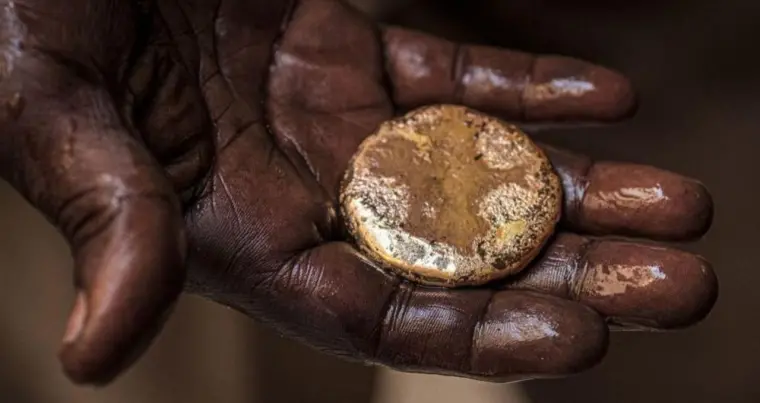

The European Union has banned the import, purchase and transfer of gold from Sudan. The EU says the gold trade is funding the civil war. Besides, export of mining chemicals like mercury and cyanide has also been banned.
Khartoum: The European Union (EU) has taken a major decision with the aim of economically weakening the ongoing civil war in Sudan. The foreign ministers of the member countries have approved a ban on the purchase, import and transfer of gold coming from Sudan. Along with this, the export of chemicals like mercury and cyanide used in gold mining has also been banned.
The EU says that illegal gold trade has become a major means of funding the ongoing conflict in Sudan. The purpose of these sanctions is to limit the financial sources through which the parties to the conflict can continue their activities.
Fierce civil war continues from 2023
Violent conflict has been going on in Sudan since April 2023 between the regular army (Sudanese Armed Forces) and the paramilitary organization Rapid Support Forces (RSF). This war has pushed the country into a serious political, social and humanitarian crisis.
According to the United Nations and international relief agencies, the conflict has forced more than 14 million people to flee their homes. Millions of civilians are forced to live in displacement camps, while there is acute shortage of food, health services and basic amenities in many parts of the country. Experts believe that this conflict has become one of the world’s most serious humanitarian crises.
Gold became the biggest economic force of struggle
Sudan is among the major gold producing countries in Africa. The country’s vast gold reserves have long been an important part of its economy. But after the civil war started, this gold became the biggest source of income for the parties involved in the conflict.
Human rights organizations and international analysts say both the army and the RSF are raising revenue from gold production and trade in areas under their control. This is why the EU has directly targeted the gold trade in order to reduce war funding.
Most of the country’s gold goes out through illegal smuggling.
According to UN experts and other international studies, more than half, and by some estimates as much as 70 percent, of the gold produced in Sudan is illegally shipped out of the country each year.
This gold reaches international markets through neighboring countries. Major smuggling routes include countries like Egypt, Chad and Libya. After this, a large quantity of this gold reaches Dubai in the United Arab Emirates (UAE), which is considered a major center of gold refining and trading globally. Experts say that without controlling the illegal supply chain, it will be challenging to stop this business completely.
Who controls which areas?
According to reports, the Rapid Support Forces (RSF) control most of the gold mining areas in the Darfur and Kordofan regions. On the other hand, the Sudanese army monitors major mines and production areas located in the northern and eastern regions. This is the reason why both sides are gaining economic benefits from gold trade.
What things did the EU ban?
Under new EU sanctions, individuals, companies and institutions based in Europe will no longer be able to buy, import, sell or transport gold originating from Sudan. Apart from this, the export of chemicals like mercury and cyanide used in gold mining has also been banned. However, limited uses of these chemicals for humanitarian aid, public health and special needs are excluded from the ban.
Extension of restrictions already in place
This new decision is being considered an extension of the already implemented ban policy of the European Union. Even before this, the EU has imposed sanctions on many individuals and institutions accused of promoting the conflict. Now an attempt has been made to increase the economic pressure by including gold trade also in the ambit of restrictions.
Experts expressed fear of limited impact
However, many international experts believe that EU sanctions alone will not be enough. According to him, unless global gold trading centres, regional transit routes and concerned countries crack down on the buying and selling of illegal Sudanese gold, it will be difficult to stop this trade completely. Experts also say that effective control of illicit trafficking and conflict funding will be possible only through coordinated action at the international level.
The humanitarian crisis continues to deepen
According to the United Nations and relief agencies, the humanitarian situation in Sudan continues to deteriorate. It is estimated that more than 2.8 crore people are facing severe food crisis.
Health services have almost come to a standstill in many areas, while millions of children and women are not getting adequate nutrition. The international community is continuously appealing for a ceasefire, humanitarian assistance and political solution.
Comments are closed.