

Amit Sharma, Haldwani
The war between Iran and the US has now turned towards a very dangerous turn. Globally, this cannot be ignored, although India has become so capable today that it can successfully face every global challenge, but still there is a need to seriously think about what will be the outcome of this war and how India should be prepared to deal with its side effects, but there is a need to take concrete steps. Just like during the Corona pandemic, India played an important role in getting not only the country but the world out of the Covid crisis.
The most likely outcome of an Iran-US war is a prolonged, costly and uncertain detente. This is not full war, but it is not peace either. This is both a crisis and an opportunity for India. If we talk about the crisis then it is mainly related to inflation and oil and if we talk about the opportunity then it is to show the world that India is not just a country to be affected but is also a country to provide solutions. Big market, diverse supply chain and neutral diplomacy are our strengths. If we make preparations in advance on all three fronts – energy, economy and diplomacy, then we can convert this global storm into an opportunity.
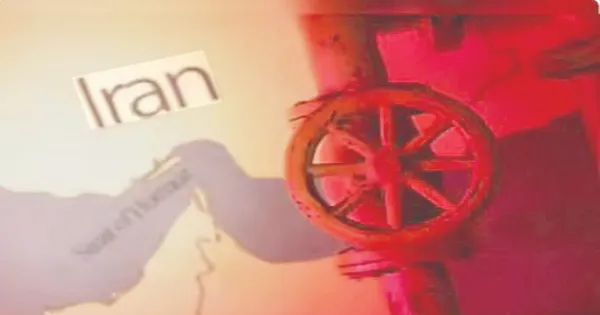
After the alleged Iranian hitlist has surfaced in media reports, it can be estimated that we cannot expect this tension to subside right now. This war is becoming just like a disease, the more it is treated, the more it is taking birth in new variants. This conflict, which has been going on since February 2026, has now moved from being a shadow war to a straight battle for the Strait of Hormuz. It is not possible to ignore it globally, because the pulse of the world economy passes through this route.
The war between Iran and the West is now being fought on drones, missiles and shipping blockade bases rather than on diplomatic grounds and gunfire. When the US declared itself the ‘Guardian of Hormuz’ and imposed a 20 percent fee on every cargo, Iran retorted and said that we are its real guardian. After this the US carried out drone attacks on the submarine base in Iran. In response, Iran also targeted US bases in Bahrain, Kuwait, Oman and Jordan. This happened at a time when claims of agreement on ceasefire between these two countries were being made in front of the whole world.
Now, it would not be wrong to call the whole game ‘diplomacy to capture oil’, because after these attacks, Brent crude rose by five percent and the movement of ships from Hormuz fell by 52 percent on July 10-12. With this, the ‘interim deal’ made between the two countries last month broke down. Then the poisoned arrows of statements were fired. From one side it was said that deals are always broken, while from the other side the answer came that the era of one-sided deals is over.
Now the question is that for how long will this continue, because the wrestling match between these two countries is having a deep economic impact on India. It is still believed that limited conflict will continue. Drone-missile attacks will continue in this manner, but not full war. Hormuz will also remain partially open. This means that the tension may continue for 6-12 months. Yes, if there is a major regional war i.e. if there is a major attack, then Israel, Saudi, Houthi will all jump in and Hormuz will be completely closed, although the possibility of full war is less, because despite such huge tension, diplomacy is at such a level that both US and Iran do not want a big war directly, but this situation of long drawn, inflation increasing war is proving to be the most dangerous.
This shadow war has some big side effects for India. The first shock is of energy. More than 40 percent of India’s oil comes from Hormuz. If the road becomes expensive or closed then both petrol and inflation will increase. If transport becomes expensive, everything will become expensive. This will be a big crisis for the country and if a big war breaks out, trouble will also increase for the NRIs. The biggest crisis may be faced by more than 80 lakh NRIs living in Gulf countries. Not only this, India’s trade corridor may also be affected.
The purpose here is not to scare. We are capable of facing every crisis in the country and the world, we just need to be ‘proactive’ i.e., active at every level to identify every possible problem and prevent them. We have to pay constant attention to energy security. Even though oil is not cheap right now, it will be necessary to top-up the reserve for at least three months. While reducing dependence on Iran, focus will have to be on purchasing more from other countries. We have to put solar and green hydrogen systems on fast track, and keep inflation under control to strengthen the economic shield. To avoid dollar shock, attention will have to be paid to export boost.
Apart from all this, one important aspect still remains. India is so strong at the diplomatic level that it can play the role of ‘neutral mediator’ in any global crisis, but we will have to struggle more on the domestic front. This crisis on the domestic front can be countered with weapons like work from home, limited use of vehicles, increasing the habit of minimizing expenses, but we will also have to keep in mind the challenge of dealing with cyber warfare within the country.

Comments are closed.