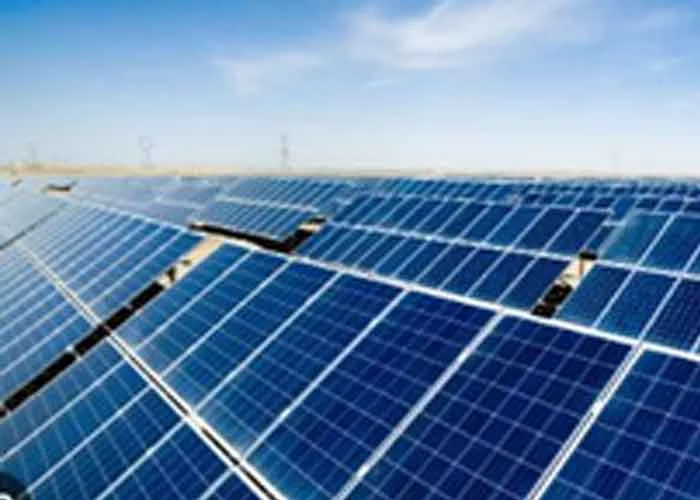
India has overtaken the United States to become the world’s second-fastest growing solar energy market after adding 37 GW of solar capacity in 2025, according to a government factsheet released on Sunday.
The country’s installed solar power capacity has increased nearly 50-fold over the past decade, rising from just 3 GW in 2014 to 162.15 GW as of June 30, 2026, reflecting rapid growth in the renewable energy sector.
The government said one of the key drivers behind this expansion has been the sharp decline in solar power tariffs through competitive e-reverse auctions. Solar tariffs have fallen from around Rs 18 per unit in 2010 to a record low of Rs 2.44 per unit, making India one of the world’s most affordable solar power markets.
In 2025, the Levelised Cost of Electricity (LCOE) from utility-scale solar photovoltaic projects in India stood at 35 US dollars per MWh, lower than the global average of 44 US dollars per MWh.
The solar sector has also received a boost with the approval of the Pradhan Mantri Surya Sarovar Yojana (PM-SSY) on July 31, 2026. The scheme aims to support 5,000 MW of floating solar photovoltaic projects integrated with energy storage systems. With a financial outlay of Rs 5,070 crore, the programme will be implemented between FY 2026-27 and FY 2030-31.
According to the factsheet, the scheme is expected to reduce pressure on land resources by utilising reservoirs and industrial ponds while strengthening grid reliability through integrated energy storage.
Large-scale solar projects currently account for 118.79 GW of India’s installed solar capacity, while rooftop solar systems contribute 27.88 GW. The remaining capacity comes from hybrid and off-grid solar installations.
India’s total non-fossil fuel power capacity has reached 283.46 GW, including 274.68 GW from renewable energy sources. On July 29, 2025, renewable energy met 51.5 per cent of the country’s electricity demand, the highest monthly share recorded so far.
The government said these developments are aligned with India’s climate commitments announced at the COP26 summit in Glasgow, including achieving 500 GW of non-fossil fuel capacity by 2030 and net-zero emissions by 2070.