
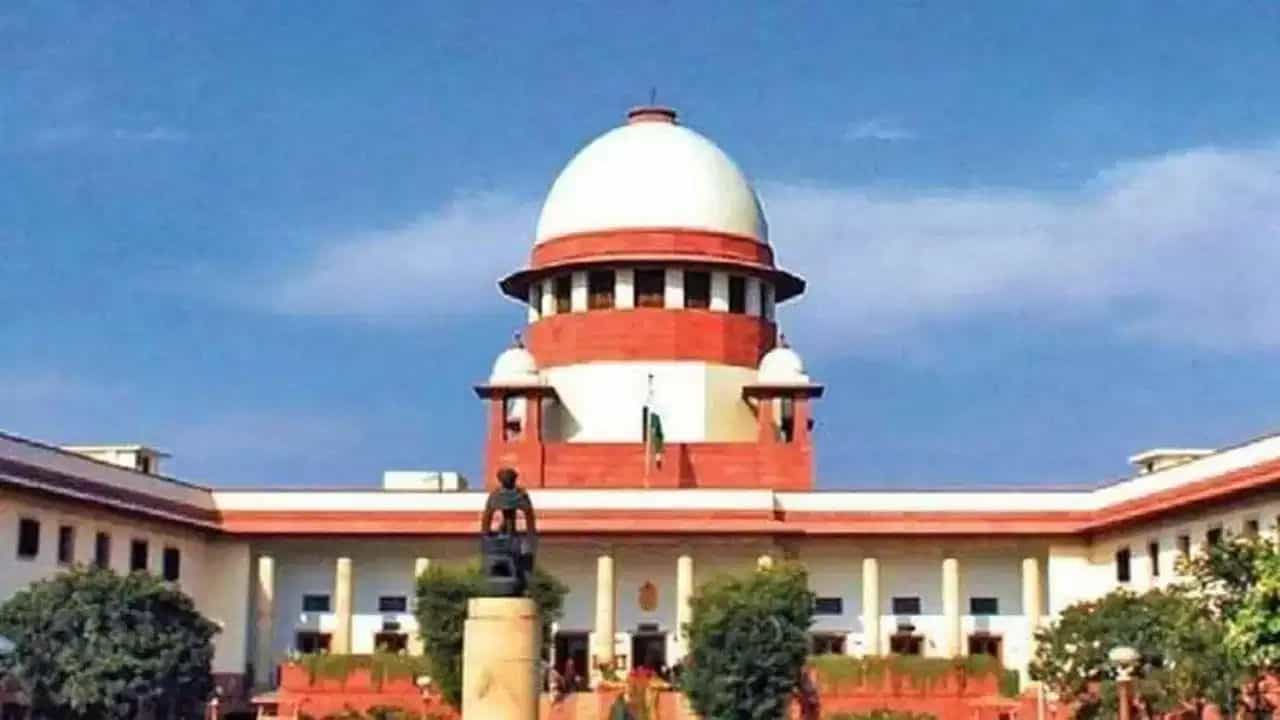
SC Freebies Hearing Update: Supreme Court refuses to hear soon the petition to ban ‘free raves’ in elections, CJI said – we still have a lot of work

As elections approach in the country, political parties make a flurry of announcements of free electricity, water and many other things (commonly called ‘freebies’ or freebies). A public interest litigation (PIL) seeking a complete ban on these populist promises and confiscation of election symbols or cancellation of registration of political parties doing so was urged for an early hearing in the Supreme Court on Friday. However, the apex court has clearly refused to hear this immediately. The court clarified that at present he has a lot of pressure with other important matters, so this matter can wait for now. CJI Surya Kant said – When we have free time, we will talk about freebies. Petitioner and senior lawyer Ashwini Upadhyay raised this sensitive matter before a three-member special bench of Chief Justice Surya Kant, Justice Joymalya Bagchi and Justice V. Mohan and demanded a speedy hearing. Upadhyay reminded the court that notices have been issued to the Central Government and the Election Commission on this PIL in the year 2022 itself. Earlier on February 5, a request was made for an immediate hearing on this matter, on which the court agreed to the hearing in March. On this request for a speedy hearing, Chief Justice (CJI) Surya Kant took a strong stand, saying, “When we have free time to talk about freebies, then we will hear it in detail.” He further said that there is a lot of work pending with the court right now and the matter may wait for some time. Both parties agreed to form a committee, Kapil Sibal also supported. After the Chief Justice’s remarks, petitioner Ashwini Upadhyay underlined the importance of the case and said that it is very important to hear the matter soon. He informed the bench that an expert committee has to be formed on this issue and both the parties related to this subject (petitioner and respondent) have fully agreed to form the committee, only the formal approval of the court is yet to be given on it. The country’s well-known senior lawyer Kapil Sibal, who was present in the court, also strongly supported the argument of Ashwini Upadhyay and requested the court to hear it soon, but the bench did not change its stand. In the year 2022, the then CJI Ramana had considered it a serious issue. This matter first came into limelight in January 2022, when the bench headed by the then Chief Justice NV Ramana accepted this PIL and sought a detailed reply from the Central Government and the Election Commission of India (ECI). During that time, the Supreme Court had termed the culture of freebies as a very serious issue. The then bench had expressed concern and remarked that many times the total estimated budget of freebies declared by political parties to win elections far exceeds the regular annual budget of the state, which is fatal for the economy. Arguments of petitioner Ashwani Kumar Dubey and demand for direction to the Election Commission In another petition related to this matter, petitioner Ashwani Kumar Dubey has strongly urged the court to declare that promising personal freebies from public money (taxpayers’ money) just before the elections unduly influences the voters’ decision. The main points of the petition are as follows: Attack on Fairness: Free promises completely hamper equal and fair competition for all parties in the electoral arena and taint the sanctity of the entire electoral process. Threat to democracy: This recent trend of political parties to woo voters by giving them freebies is the biggest threat to the existence of democratic values and it deeply hurts the basic spirit of the Constitution. Bribing Voters: Giving benefits to voters at the expense of the public exchequer in order to retain or grab power is tantamount to bribing voters and is a completely unethical practice. The petition demands the court to direct the Election Commission to add an additional stringent condition in the relevant sections of the ‘Election Symbols (Reservation and Allotment) Order 1968’. This condition should be related to recognition of any party as a state or national party, under which no registered party will be able to promise or distribute free gifts from public money immediately before the elections. The petitioner clearly states that distribution of private goods or services out of public money, which are not for any public purpose, is a clear and serious violation of Articles 14 (equality before law), 162, 266(3) and 282 of the Constitution.

Comments are closed.