
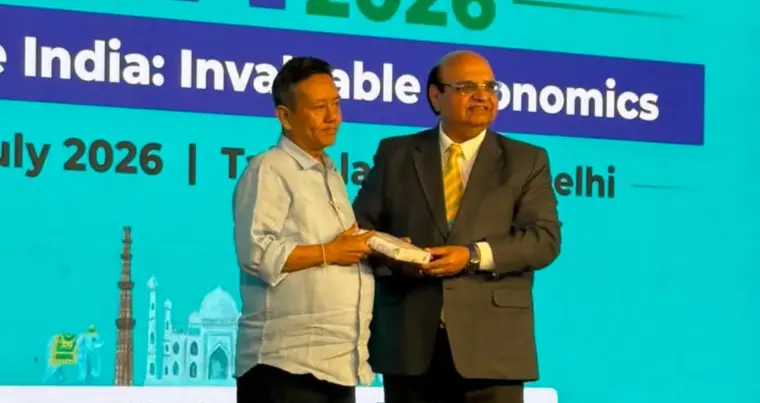

Speaking at the FAITH Tourism Conclave 2026 held in New Delhi, Arunachal Pradesh Tourism Minister Pasang Dorji Sona described sustainable eco-tourism, participation of local communities and cultural heritage conservation as the main pillars of the state’s tourism policy.
New Delhi: In the FAITH Tourism Conclave 2026, one of the major tourism forums of India, Arunachal Pradesh presented its eco-tourism model and sustainable tourism strategy at the national level. On this occasion, Arunachal Pradesh Tourism Minister Pasang Dorji Sona stressed the need to give the state’s natural beauty, cultural heritage and biodiversity a unique identity not only in the country but on the global tourism map. The conference, held in New Delhi, brought together policy-makers, tourism industry representatives, investors and experts to discuss the future of India’s tourism sector. The objective of the conference was to consider new strategies towards making tourism more sustainable, inclusive and technology-based.
Arunachal declared eco-tourism gem of North-East
In his keynote address during the conference, Pasang Dorji Sona shared views on the topic “Arunachal Pradesh: The Unique Eco-Tourism Jewel of India’s North East”. He said that Arunachal Pradesh is one of the most unique tourist destinations in the country due to its snow-capped mountain ranges, dense forests, clean rivers, rich biodiversity and traditional tribal culture. He stressed that tourism development in the state should not be limited to just increasing the number of tourists, but a model should be adopted that gives equal importance to environmental protection and the interests of local communities.
Sustainable tourism said to be the basis of development
The Tourism Minister said that the Arunachal Pradesh government is giving priority to sustainable eco-tourism. He clarified that the state’s policy is to promote such a tourism model in which there is balanced use of natural resources, local culture is preserved and the economic benefits from tourism reach the local people directly. According to him, responsible tourism is the most effective model of the future because through it a balance can be established between environment and economic development.
Local communities will get direct benefits
Pasang Dorji Sona said that the real objective of tourism should be to improve the living standards of local people. He said that the state government is paying special attention to connecting local youth, women self-help groups, artisans and small entrepreneurs with tourism activities. Work is also being done towards strengthening the rural economy by promoting homestays, local handicrafts, traditional food and cultural programmes.
Special emphasis on conservation of cultural heritage
Arunachal Pradesh is known for the rich cultural traditions of various tribal communities. The Tourism Minister said that the cultural diversity of the state is its biggest identity and its conservation is equally important along with tourism development. He said that by linking traditional festivals, folk dances, handicrafts and local lifestyle with tourism, a new identity can be given at the international level.
Discussion on investment and partnership possibilities
Addressing the FAITH Tourism Conclave, the Minister said that this platform provides an excellent opportunity to enhance cooperation between different states, industry and investors. He said that such events strengthen the possibilities of new investments, public-private partnerships (PPP), tourism infrastructure and global cooperation. The Minister expressed confidence that the discussions held during the conference will give Arunachal Pradesh a new identity in the national and international tourism market.
Eco-tourism is growing rapidly in India
In recent years, the demand for nature-based and experiential tourism has continuously increased in India. Tourists no longer want to be limited to mere sightseeing but also want to experience the local culture, rural life, biodiversity and natural environment. According to experts, this is why eco-tourism is becoming a rapidly emerging sector of India’s tourism industry.
Growing tourism potential of North-East India
North-East India is considered an extremely important region for global tourism due to its biodiversity, natural resources and cultural diversity. With better roads, air connectivity and expansion of digital facilities, tourism potential in this region is increasing rapidly. Arunachal Pradesh also wants to be an important part of this transformation and the government is making efforts to attract long-term investment in the tourism sector.
India’s role in global tourism will be strengthened
Experts believe that if India maintains a balance between environmental protection, involvement of local communities and modern tourism infrastructure, it can further strengthen its position in the global eco-tourism market. Initiatives of states like Arunachal Pradesh can play an important role in giving India a new identity in the field of sustainable tourism.
Comments are closed.