
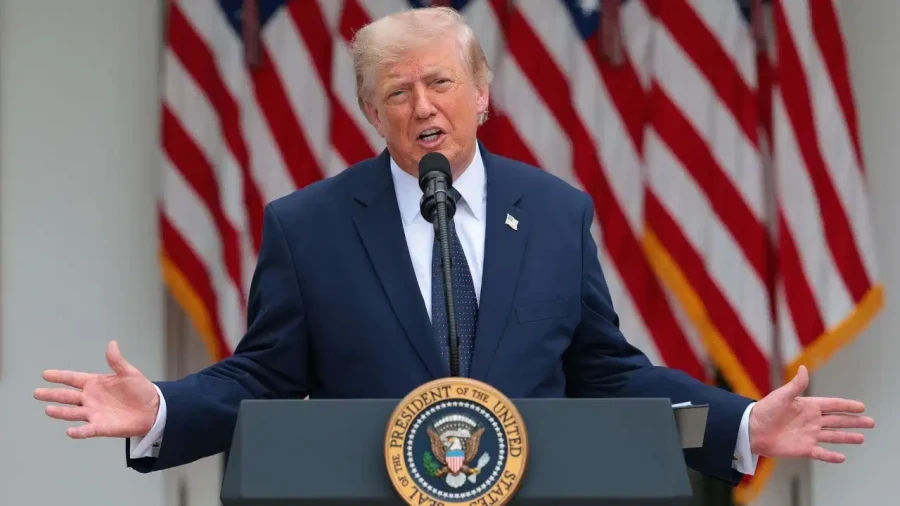

US President Donald Trump has intensified his tariff campaign against Canada by incorporating the issue of wildfire smoke into his economic threats. Trump has accused Canada of failing to properly manage its forests, which has resulted in smoke from massive wildfires drifting across the border and affecting several American states. He asserted that the environmental and health damages caused to the United States must be compensated by Canada, suggesting that these costs will be added to the existing tariffs already imposed on Canadian goods.
Allegations of Negligence in Forest Management
In a statement shared on his social media platform, Truth Social, Trump claimed that Canada isn’t adequately cleaning or maintaining its forests and brushlands. According to him, this lack of oversight is the primary reason why dirty, polluted, and health-threatening air is spreading into the United States. He emphasized that such air quality is harmful to the public and is completely unacceptable. Trump argued that the recurring nature of this problem places an unfair burden on American citizens, and he intends to hold the Canadian government accountable for what he perceives as deliberate negligence.
Diplomatic Discussions and Economic Consequences
Trump announced his intention to discuss this matter directly with Canadian Prime Minister Mark Carney. He expressed a desire to understand the specific steps the Canadian government is taking to prevent and control these wildfires. According to Trump, the economic damage caused to the United States by this smoke is unimaginable. He stated that the cost of this pollution would be calculated and integrated into the tariff structure for products coming from Canada, ensuring that the financial impact is shifted back to the source of the problem.
Scale of the Wildfire Crisis
The President’s remarks come at a time when Canada is battling approximately 850 active forest fires. Among these, more than 180 fires are burning in the province of Ontario alone. Data from the American space agency NASA indicates that the smoke generated by these fires has blanketed large portions of North America. This widespread pollution has triggered air quality alerts in more than 20 US states, stretching from the Upper Midwest to the Northeastern regions. Health officials in these areas have advised residents to limit outdoor exposure and avoid strenuous physical activities, as fine particulate matter in the air has reached unsafe levels.
Regional Context and Legal Ambiguity
While the focus remains on Canada, the wildfire problem isn’t exclusive to one side of the border, while the United States is also dealing with more than 150 active forest fires, including several significant blazes in Michigan. Experts suggest that prolonged drought conditions and record-breaking heat across various parts of North America are the primary drivers behind the rapid spread of these fires, while despite Trump’s firm stance on imposing extra tariffs, there is significant uncertainty regarding the legal framework for such a move. Typically, tariffs are applied to imported goods and commodities, and there is no clear legal provision for taxing cross-border air pollution or smoke. It remains to be seen how the administration plans to implement this proposal in practice.
Comments are closed.