
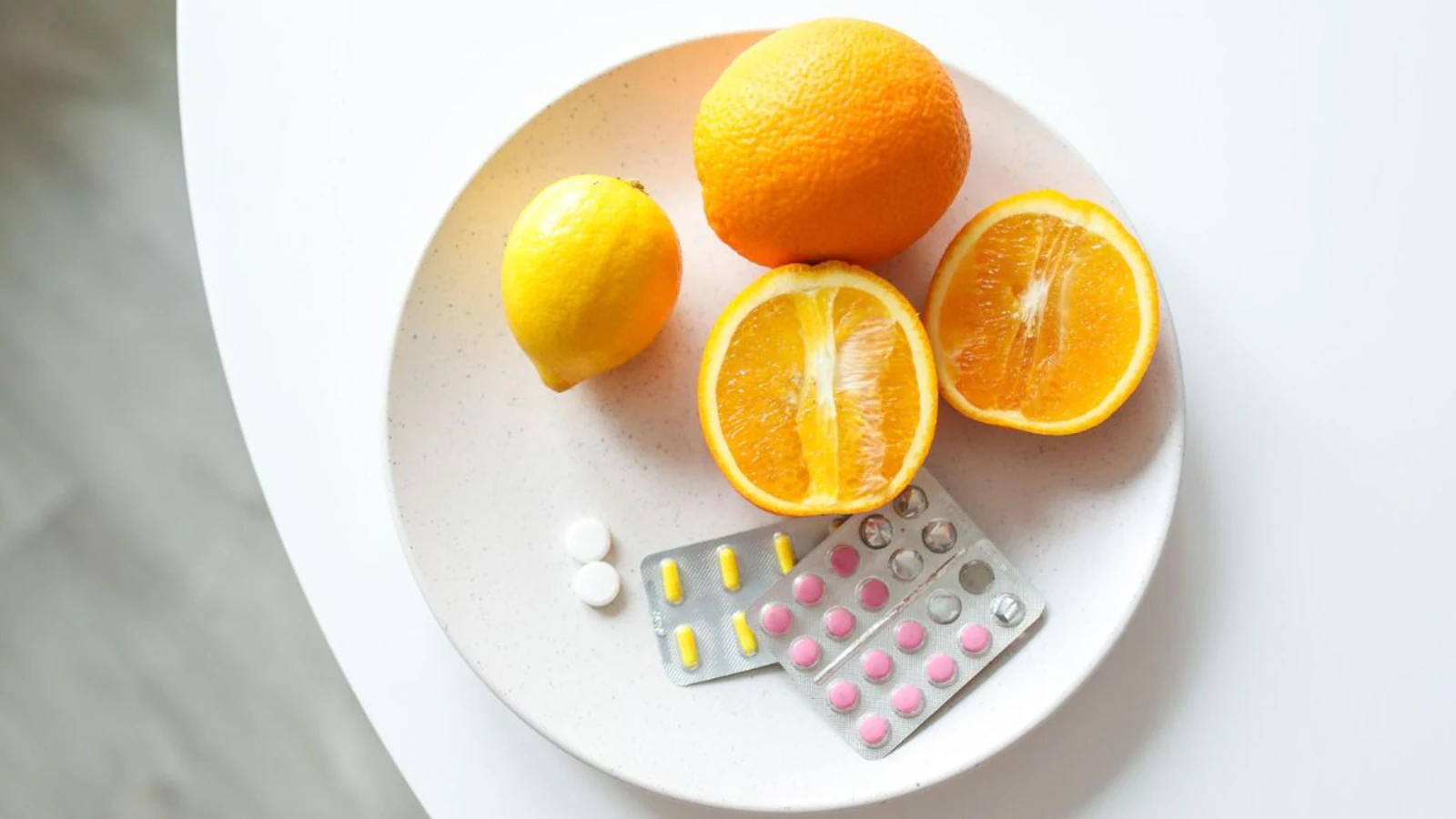

Iron deficiency is one of the most common nutritional problems in India, and iron supplements are among the most prescribed. But your body absorbs only a fraction of the iron in each tablet, often well under 20%, and how much depends heavily on what else is in your stomach. The foods and drinks you have around your supplement can sharply increase its effect, or blunt it. Your kitchen already has most of what you need to tip the odds in your favour.
Vitamin C Is Your Iron’s Best Friend
Photo Credit: Pexels
Vitamin C converts iron into a form the gut absorbs more readily, and pairing the two can sharply increase how much iron you take up from a single dose, especially from plant-based meals where iron is harder to absorb. The simplest version: take your iron tablet with a small glass of nimbu paani or fresh orange juice. If you prefer food, a few pieces of amla, a handful of guava, or a side of tomato and capsicum with your meal does the same job.
Timing matters. Vitamin C only helps when it reaches your gut at the same time as the iron, so it has to be part of the same meal or drink, not something you had an hour earlier.
Also Read: Honey And Warm Water For Weight Loss: Does The Popular Morning Ritual Actually Work?
Indian kitchen sources of vitamin C to pair with your iron tablet:
- Amla, one of the richest sources of vitamin C available
- Guava, widely available and inexpensive
- Fresh lime or lemon juice, squeezed over food or into water
- Tomatoes and red or yellow capsicum
- Fresh coriander or green chillies as garnish
The Foods That Work Against You
Photo Credit: Pexels
Some of India’s most everyday foods and drinks are among the worst things to have alongside an iron supplement. This isn’t a reason to give them up. It’s a reason to time them better.
- Chai and coffee: Tannins and polyphenols in tea can cut iron absorption from a meal by around 64%, and coffee by close to 40%. The caffeine isn’t the main culprit; the polyphenols are, which is why even decaf counts. Have your chai or coffee at least an hour before your tablet, or two hours after.
- Dairy: Milk, curd, paneer, and cheese are high in calcium, which can blunt the absorption of an iron dose taken at the same time. If you take your tablet with breakfast, keep the glass of milk separate. Space them by a couple of hours.
- Phytate-rich foods: Whole wheat rotis, rajma, chana, and lentils contain phytates that bind iron and can reduce absorption by 50% to 60%. These are nutritious foods and there’s no reason to cut them. But taking your iron tablet in the middle of a heavy dal-roti meal isn’t ideal. If your stomach allows, take it about 30 minutes before eating.
When to Take It
Iron absorbs best on an empty stomach, ideally first thing in the morning with water and a vitamin C source. If that upsets you, and nausea and stomach cramps are common, take it with a small, light meal. Include a vitamin C source and skip dairy, chai, and heavy grains in that meal. A small bowl of papaya or a tomato scramble works well. Drink plenty of water throughout the day, since iron is a frequent cause of constipation.
If you’re also taking a calcium supplement, stagger the two by at least two hours. Calcium and iron compete for absorption when taken together, so keeping them apart helps each one land.
Also Read: Should You Avoid Rice At Night If You Want To Lose Weight?
The Bigger Picture
Iron deficiency is often treated as a simple fix: take the tablet, move on. But a supplement works within a system, and that system includes everything you eat and drink throughout the day. A few adjustments, when you have your chai, what you pair your tablet with, and how you time your meals, can be the difference between your levels slowly inching up and actually improving. Your supplement is doing its part. Make sure your meals are doing theirs.
Dr. Rani Rangwani is a Research Analyst at MrMed.
Disclaimer: The opinions expressed within this article are the personal opinions of the author. NDTV is not responsible for the accuracy, completeness, suitability, or validity of any information in this article. All information is provided on an as-is basis. The information, facts or opinions appearing in the article do not reflect the views of NDTV and NDTV does not assume any responsibility or liability for the same.

Comments are closed.