
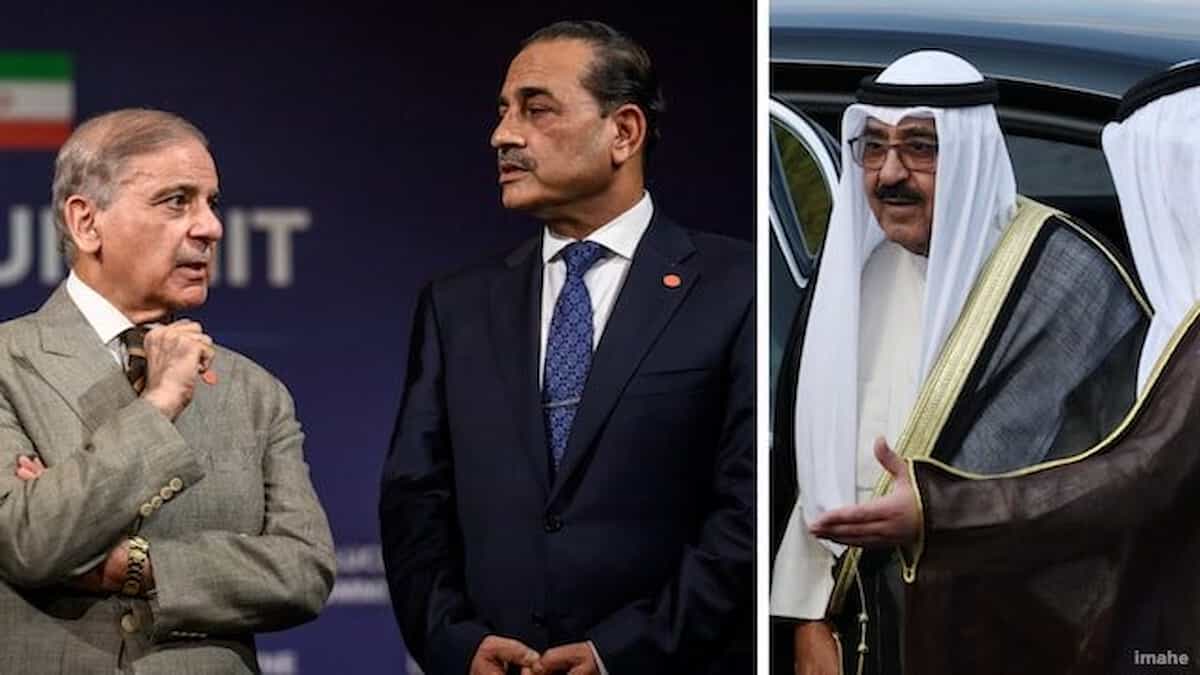
After Saudi and Turkey, now poor Pakistan is targeting this Gulf country, will the dream of ‘Islamic NATO’ awaken again?

Facing economic crisis and isolation on the global stage, Pakistan is trying new tactics to save its sinking economy. After not getting expected financial help and diplomatic support from old allies like Saudi Arabia and Turkey, Islamabad has now turned its attention towards another rich Gulf country Kuwait. These days, the country’s top leadership under the leadership of Pakistani Prime Minister and Army Chief General Asim Munir is trying hard to strengthen strategic and trade relations with Kuwait. However, international affairs experts believe that behind this new closeness, not only the request for loan but also the old Pakistani agenda of creating a so-called ‘Islamic NATO’ of Muslim countries may be hidden behind the scenes. After all, why is Islamabad extending its hand to Kuwait? Pakistan is currently trapped in the trap of severe shortage of foreign exchange reserves and strict conditions of the International Monetary Fund (IMF). Saudi Arabia and the United Arab Emirates (UAE) have now put a condition of directly investing in the country’s government assets instead of giving a free bailout package to Pakistan. In such a situation, Pakistan sees Kuwait as a safe and big investor. The Pakistani delegation is proposing huge investment to Kuwait in oil refinery, agriculture, mining and IT sectors. Along with this, Pakistan is requesting for relaxation in visa rules to send millions of its skilled and unskilled workers to Kuwait so that the flow of remittance (foreign currency) in the country can be increased. Geopolitical analysts believe that Pakistan’s move closer to countries like Kuwait and Turkey is a part of its old and worn-out diplomacy. Pakistan has always dreamed of forming a strong military and political block i.e. ‘Islamic NATO’ with Saudi Arabia-led Organization of Islamic Cooperation (OIC) and Turkey-Malaysia, so that international pressure can be created against India on issues like Kashmir. But this dream of Pakistan has always proved to be hollow because influential Gulf countries like Kuwait, UAE and Saudi Arabia have very strong and deep trade relations with India, which they are in no mood to jeopardize for the sake of Pakistan. There are big dangers hidden in this ambitious move of Shahbaz-Munir. At a time when the tension between Iran, Israel and America in the Middle East is at its peak, this diplomatic maneuver of Pakistan can prove to be costly for it. Kuwait and other Gulf countries are currently focusing on regional stability and not on any new military or ideological factionalism. Experts say that if Pakistan tries to drag the Gulf countries into its defense agenda or the politics of the Islamic block, it may have to pay consequences. According to foreign policy experts in Lucknow and Delhi, if Pakistan continues to indulge in diplomatic maneuvers, leaving aside its economic priorities, it will also lose out on potential economic cooperation and investment from Kuwait.

Comments are closed.