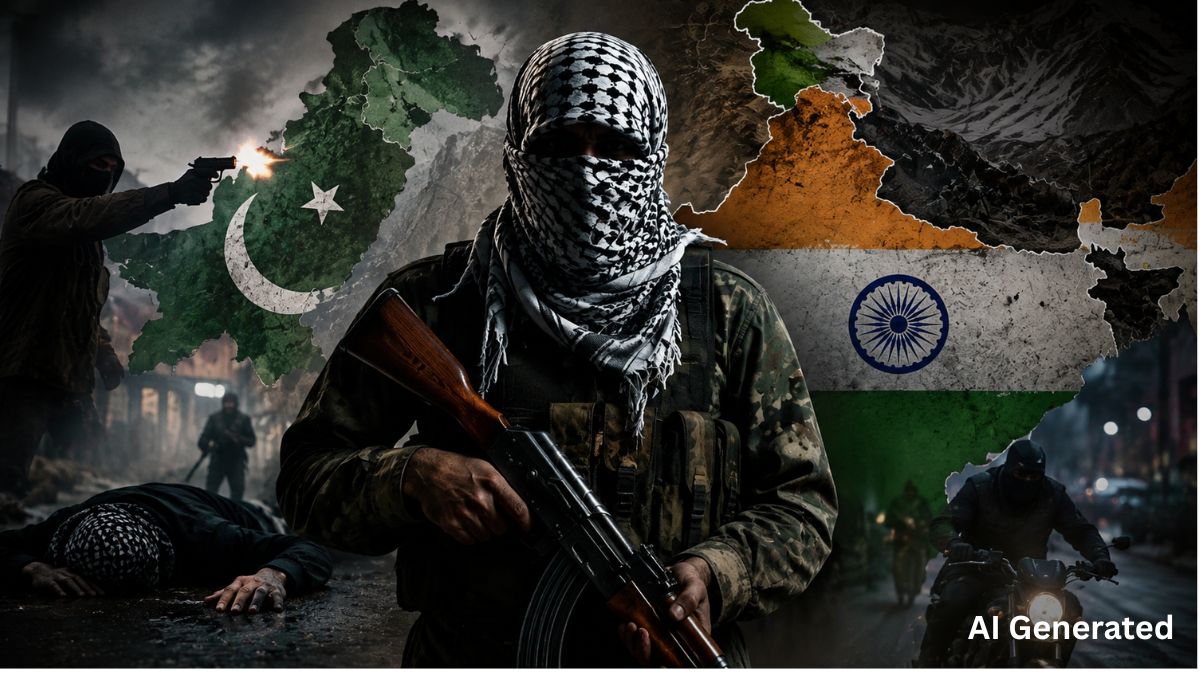
A statement by a senior commander associated with the Pakistani terrorist organization Lashkar-e-Taiba (LeT) has raised many questions. A speech attributed to Rizwan Hanif, a senior commander of the LeT/JKUM and deputy chief of its PoK wing, is going viral on social media, in which he claims to have killed more than 30 members of the organization.
According to Hanif, over 30 LeT members have been killed in various areas of Pakistan and Pakistan-occupied Kashmir (PoK) over the past three to four years. He claimed that these killings took place in cities such as Peshawar, Karachi, Rawalpindi, Rawalkot, and Muzaffarabad.
What did he say about ‘unknown gunmen’?
- In his speech, Hanif blamed “unknown gunmen” for the killings, alleging they were agents linked to India and were targeting members of a terrorist organization in Pakistan.
- However, the most important point here is that Hanif has not provided any evidence to support this allegation against India. Therefore, this claim remains limited to his statement for now.
- In his speech, Hanif named Peshawar, Karachi, and Rawalpindi in Pakistan, as well as Rawalakot and Muzaffarabad in PoK. He claimed that over 30 members of the organization had been killed in these various locations over the past few years.
- This statement is also in the news because for the first time a senior LeT/JKUM commander has publicly acknowledged the killing of so many members of the organization.
- In his speech, Hanif discussed the deaths of members of the terrorist organization and made derogatory remarks against Hinduism and its followers. He used offensive words against Hindus.
- Rizwan Hanif’s statement comes at a time when Pakistan is grappling with security challenges on multiple fronts. The activities of terrorist organizations are also in the news, amid unrest in Balochistan, protests in PoK, and tensions along the border with Afghanistan.
However, no independent evidence has yet emerged to support the allegations against India made in Haneef’s speech. Therefore, his claims should be viewed as mere allegations, not as established facts.