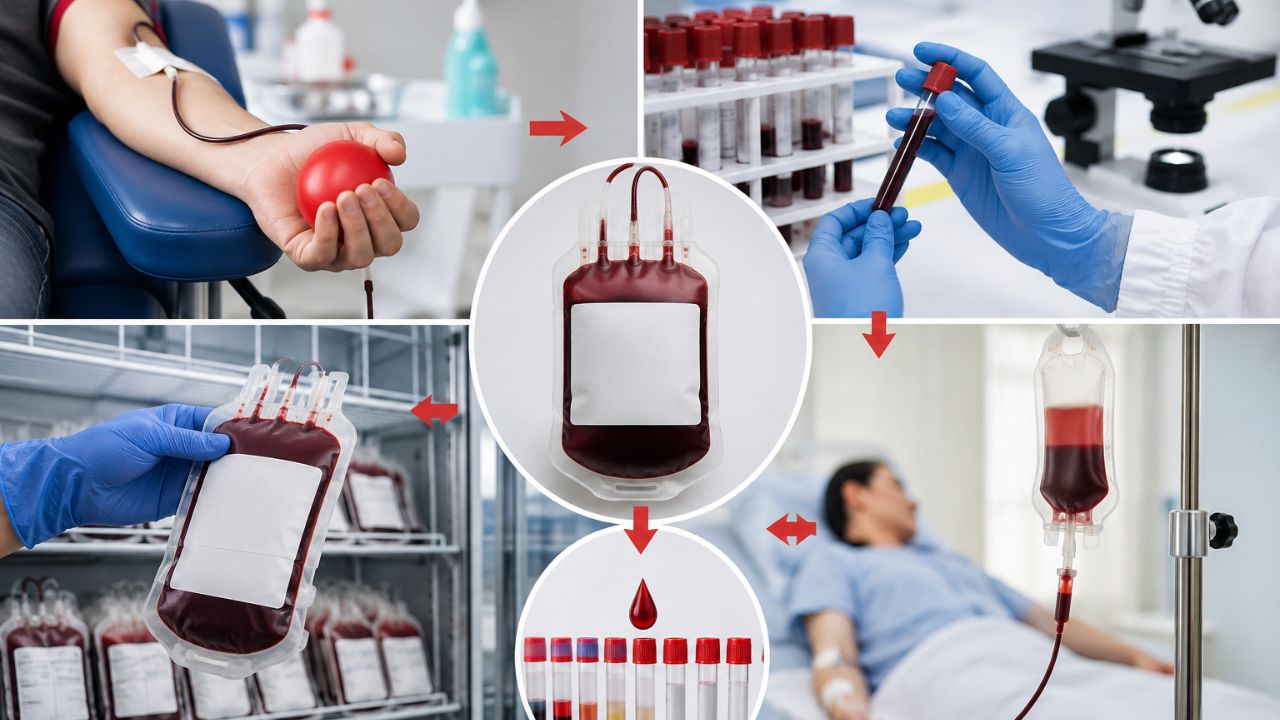
The blood bag hanging near the patient’s bed is often unnoticed by anyone. The patient’s family sees hope in it. For doctors, it is an important part of treatment. But as a pathologist, I see a different journey behind it. Numerous tests, verifications and many important decisions, which begin long before the blood reaches the patient. Dr. Pooja Trehan, Consultant Pathologist and Zonal Chief of Labs Uttar Pradesh and Uttarakhand, Metropolis Healthcare Limited has given detailed information about this . (Photo courtesy – AI)
Blood is a unique medium in the treatments used in modern medicine. It cannot be manufactured in any factory, cannot be artificially made, or cannot be created when needed. It depends entirely on the selfless donation of blood donors. According to the World Health Organization (WHO), about 120 million blood donations are made worldwide every year. Therefore, people who donate blood voluntarily are a very important pillar of the world’s health system. According to the latest WHO data, today more than 85% of blood donations worldwide are made voluntarily and by donors who do not take any remuneration, which is considered a great achievement in the field of public health.
But collecting blood is just the beginning. Before the blood is given to a patient, several steps are taken to ensure that it is completely safe. The process begins with the selection of the donor and their health screening. The donor’s medical history, current health, recent travel history, and other potential risks for infection are carefully assessed. While these questions may seem simple, they are the first and most important safety step in protecting patients from blood-borne infections.
After blood collection, each unit of blood is mandatorily tested for infections such as HIV, Hepatitis B, Hepatitis C and Syphilis as per WHO guidelines. Modern technologies such as Immunoassays and Nucleic Acid Testing (NAT) have made it possible to detect infection at an early stage, thus greatly reducing the risk of transmission to patients.
In addition to the traditional serological tests used in the past, highly sensitive chemiluminescence-based immunoassays and nucleic acid testing (NAT) are now used. Serological tests detect antibodies or antigens produced in the body, while NAT tests directly detect the genetic material of the virus. This greatly reduces the diagnostic window period, the time from infection to its detection in the test, and makes blood safer. Especially for infections such as HIV, hepatitis B and hepatitis C, this technology has transformed blood testing from a reactive process to a proactive and safer process.
Another important step in blood safety is compatibility testing. Many people think of blood type as simply A, B, AB or O and positive or negative. But in reality, much more thorough testing is done during a blood transfusion. Blood type testing, antibody screening and crossmatching are used to ensure that the donor and recipient’s blood are a safe match.
One of the most important of these tests is the Antiglobulin Test, also commonly known as the Coombs Test. The direct Coombs test is used to detect antibodies or complement proteins that are already attached to red blood cells, while the indirect Coombs test is used to detect antibodies in the patient’s blood that can react with the donor’s red blood cells. Therefore, these tests can detect abnormalities that are not detected by blood group testing alone, and the blood transfusion process is safer. To an outsider, all these tests may seem excessive. But in laboratory medicine, it is this rechecking that is the most effective way to avoid errors.
Modern blood banking is no longer limited to donating whole blood. Today, different components like Red Blood Cells, Plasma, Platelets and Cryoprecipitate are separated from a single blood donation. Therefore, the blood of a single donor can be useful for many patients. A critically injured patient may need red blood cells, a dengue patient may need platelets, while plasma can be useful for a patient suffering from blood clotting disorders. That is, a single blood donation can help save the lives of many.
Platelet concentrates are specifically tested for bacterial contamination, while plasma and cryoprecipitate are stored under strict temperature control. Continuous temperature monitoring, traceability systems, barcode verification, and a computerized blood bank information system all strengthen blood safety at every stage.
The same cutting-edge laboratory technology used in blood transfusion is also widely used in many other healthcare services. Highly sensitive molecular diagnostics, immunoassays, infectious disease tests, viral marker testing, and specialized immunohematology tests are playing a key role in the diagnosis and treatment management of many diseases today. Whether it is screening blood donors, diagnosing infectious diseases, or monitoring complex medical conditions, modern laboratory medicine is now based on precise technology that can detect signs of disease before symptoms appear.
It is not just a blood group test that is performed on each unit of blood before it reaches the patient. It involves donor evaluation, infectious disease screening, immunohematology tests, compatibility studies, quality control procedures, and multiple layers of modern technological safety systems. Each of these tests has a single purpose. The precious gift of blood given to save someone’s life should never pose a risk to the patient.