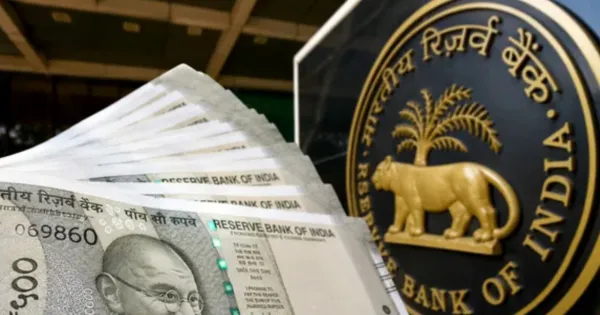
Mumbai. The Reserve Bank of India (RBI) made several important announcements during its monetary policy review. RBI Governor Sanjay Malhotra stated that the central bank is preparing to issue polymer notes, or plastic notes, at the beginning of the next fiscal year. Additionally, the RBI has decided to keep the repo rate unchanged at 5.25 percent.
Plastic notes will come into circulation
RBI Governor Sanjay Malhotra said that if all plans proceed as planned, polymer notes could be introduced into the market at the beginning of the next fiscal year. Polymer notes are made from a special type of synthetic material. They use a strong and flexible plastic film, making them more durable than ordinary paper notes.
Features of plastic notes
They last longer and don’t wear out quickly. They may be more useful for lower denomination notes. In some countries, polymer notes have a record lifespan of over 30 years.
RBI did not change the repo rate.
Following a meeting of the Monetary Policy Committee (MPC), the RBI kept the policy interest rate, the repo rate, steady at 5.25 percent. All MPC members voted to keep the repo rate unchanged. The RBI stated that future decisions will be made based on evolving economic data and circumstances. The central bank aims to maintain retail inflation close to the target of 4 percent over the medium term.
GDP forecast raised, inflation forecast lowered
The RBI has revised its economic outlook. It raised its GDP growth forecast for fiscal year 2026-27 from 6.6% to 6.7%. It also lowered its inflation forecast from 5.1% to 5%. The RBI stated that the inflation outlook remains uncertain due to the monsoon, El Niño, and global geopolitical conditions.
Indian economy remains strong
The RBI Governor stated that despite global challenges, the Indian economy remains strong. The average daily cash surplus in the banking system has been around ₹1 trillion since June. A current account surplus of $2.8 billion was recorded during April-May. Gross foreign direct investment (FDI) inflows in the first quarter were $30.7 billion. Net foreign portfolio investment (FPI) inflows were $7.1 billion in June-July.
RBI monitors foreign exchange reserves and rupee
Sanjay Malhotra stated that the country’s foreign exchange reserves remain adequate. Regarding the rupee’s strength, he said that despite increased foreign capital inflows, the rupee has not appreciated. The RBI will strive to ensure that the rupee’s movement remains orderly and stable. The rupee is likely to strengthen further as global tensions ease. The RBI’s next Monetary Policy Committee (MPC) meeting will be held between October 5th and 7th. Overall, this decision by the RBI is being considered an important step towards economic stability, inflation control, and a digital and sustainable monetary system.