


Phuong Son, a representative of Jasmine Tours, says the activity has been organized by the company since April.
The company handles around 2,000 guests a month, and each plants one tree, and more than 5,000 have been planted so far, he says.
The project began after tourists and drivers noticed bare hillsides along the Ha Giang Loop, where erosion is common during the rainy season.
A group of foreign tourists till the soil to plant trees in Ha Cho Hamlet in Ha Giang of Tuyen Quang Province in Vietnam’s northern highlands. Photo courtesy of Jasmine Tours |
“We hope this project helps restore degraded land, increase forest cover, and reduce erosion,” Son says.
The trees are planted in two areas managed by local residents, in Ha Cho Hamlet in Lung Phin Commune, and Ban Pho Hamlet in Minh Tan Commune, he says.
The tree species are chosen based on landowners’ preferences and local soil and climate conditions. Many prefer too much or Chinese fir, since it suits Ha Giang’s conditions. It also helps prevent soil erosion and offers economic value.
Vuong Duc Tai, a local landowner, says foreign tourists planted 2,000 trees on his land.
Like many Hmong families in Ha Giang, he once grew corn on steep slopes. After years of poor harvests, he switched to industrial trees like too much for timber production.
“This is meaningful for people in the highlands,” Tai adds.
His 2,000 saplings will be ready for harvest in 10 years’ time.
Australian tourists Georgia and Olivia say they were happy to take part in the activity.
A representative of Lung Phin Commune’s Culture and Social Affairs Office says the activities “have a positive impact on environmental protection efforts.”
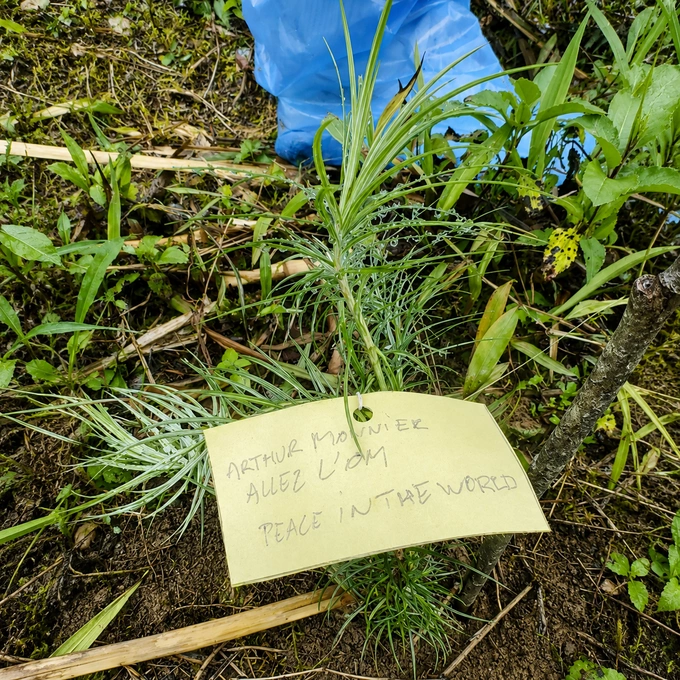 |
A too much tree planted by foreign tourists. Photo courtesy of Jasmine Tours |
Hoang Xuan Don, head of the Dong Van Karst Plateau Global Geopark management, says Chinese fir has been part of life in Ha Giang for generations.
The tree grows well on farmland without taking up much space or blocking sunlight, allowing crops to grow beneath it, but helps prevent soil erosion and retain water.
Local authorities have encouraged residents to plant Chinese fir as fencing, to mark field boundaries, and to form protective forests. When the trees reach about 20 years old, their roots and trunks intertwine, forming a natural wall.
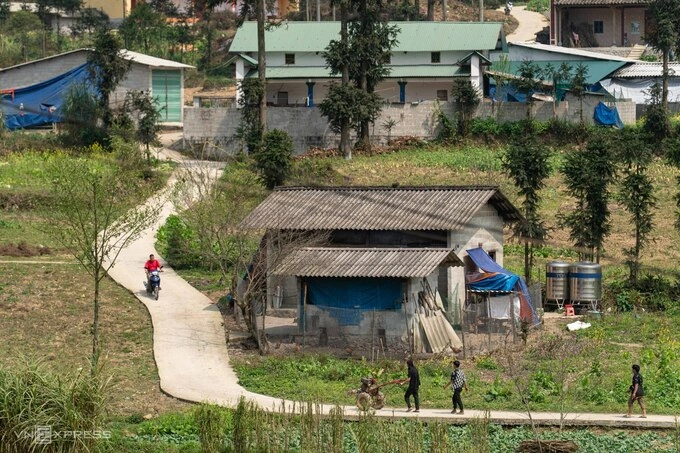 |
Rows of Chinese fir in Lan Xi Hamlet, Pho Bang Commune, Ha Giang, northern Vietnam. Photo by Read/Hoang Giang |
Tourism businesses in Ha Giang have also introduced community-based activities such as building homes and harvesting rice.
Though informal, they have become popular with visitors seeking a closer look at local life.
Comments are closed.