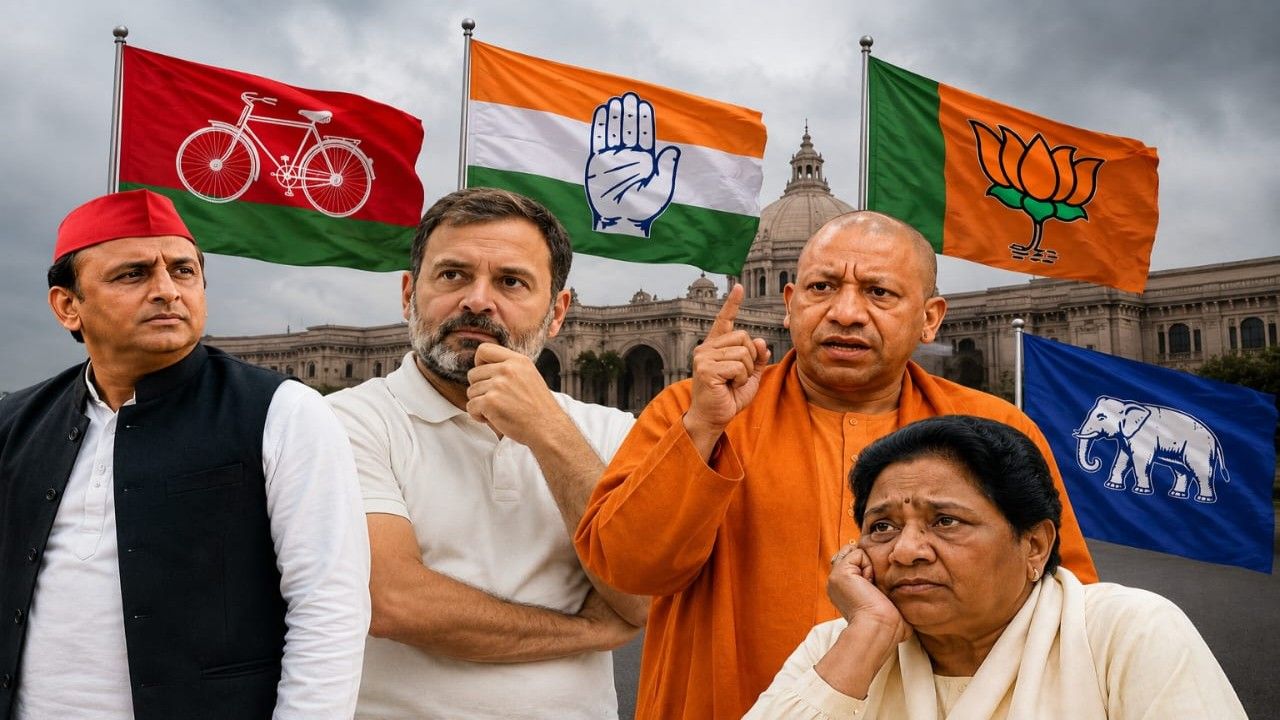
The Dalit vote bank is emerging as the biggest electoral battleground in Uttar Pradesh politics ahead of the 2027 assembly elections. The Bahujan Samaj Party (BSP), long a dominant force in Dalit politics, is now grappling with the challenge of preserving its traditional vote bank. The victory of senior Samajwadi Party Dalit leader Awadhesh Prasad from the general seat of Faizabad (Ayodhya) in the 2024 Lok Sabha elections sent a new message to the state’s politics. Following this, the Bharatiya Janata Party (BJP), Samajwadi Party (SP), and Congress are also rapidly working on a strategy to create new social equations by fielding Dalit candidates on general seats.
Political analysts believe that if this experiment is implemented on a large scale in the 2027 assembly elections, it could have a direct impact on the BSP’s core vote bank. This is why Mayawati is engaged in major organizational changes, appointing new leaders, and strengthening the party down to the booth level.
Awadhesh Prasad’s victory became a new political model
In the 2024 Lok Sabha elections, the Samajwadi Party fielded Dalit leader Awadhesh Prasad from the general seat of Faizabad (Ayodhya) and won. This result sent the message that Dalit candidates can win even on general seats if a strong social equation is formed. Since then, almost all major parties are preparing to try this political experiment in assembly elections as well.
The biggest challenge before the BSP
The BSP’s political strength has been its Dalit vote bank, particularly the Jatav community. However, the party’s support base has steadily weakened in the last few elections. If the BJP, SP, and Congress succeed in fielding strong Dalit candidates even in general seats, the BSP’s traditional vote bank could be further eroded. Therefore, the party is attempting to rebuild its organization and strengthen its old social base.
Why is everyone changing their strategy?
The Samajwadi Party is promoting Dalit leadership through the PDA (Backward, Dalit, and Minority) formula. The BJP is strengthening its hold among non-Jatav Dalit communities and developing a strategy to field Dalit candidates in general seats. Congress is also trying to expand its support base by giving greater representation to Dalit leaders.
Political parties are closely monitoring general constituencies where Dalit voters are in a position to influence election results. These include the general constituencies of Ayodhya (Faizabad), Barabanki, Unnao, Hardoi, Sitapur, Fatehpur, Kanpur Nagar, Kanpur Dehat, Prayagraj, Agra, Aligarh, Hathras, Firozabad, Jalaun, Jhansi, Hamirpur, Kaushambi, Banda, Chitrakoot, and several general constituencies in Mirzapur and Sonbhadra. Due to the significant number of Dalit voters in these areas, all major parties are making them a key part of their electoral strategy.
Why is Dalit vote the biggest electoral factor?
The Scheduled Caste (SC) population in Uttar Pradesh is approximately 21 percent. This includes several major communities, including Jatavs, Pasi, Valmikis, Koris, Dhobis, and Khatiks. This is why no political party wants to limit the Dalit vote bank to reserved seats; instead, it is considered the key to victory in general seats as well. Political experts believe that the 2027 assembly elections will not only be a battle for power for the BSP, but also a major test for its political existence and preservation of its core vote bank. If the experiment of Dalit candidates on general seats is successful, it could have a major impact on the BSP’s traditional politics. Furthermore, if Mayawati succeeds in re-strengthening the organization and uniting Dalit voters, the electoral landscape could change.
The biggest political battle of 2027
The 2027 Uttar Pradesh Assembly elections will not only be a power struggle between the BJP and the Samajwadi Party, but also a major political battle for control of the Dalit vote bank. The increasing number of Dalit candidates on general seats could create new social equations in the upcoming elections, and this strategy could play a crucial role in shaping the state’s political landscape.