

For many Americans, buying a new car has become increasingly difficult as average vehicle prices continue to hover close to the $50,000 mark. While headlines often paint a bleak picture of affordability, the latest dealership inventory data suggests the market is more balanced than it first appears.
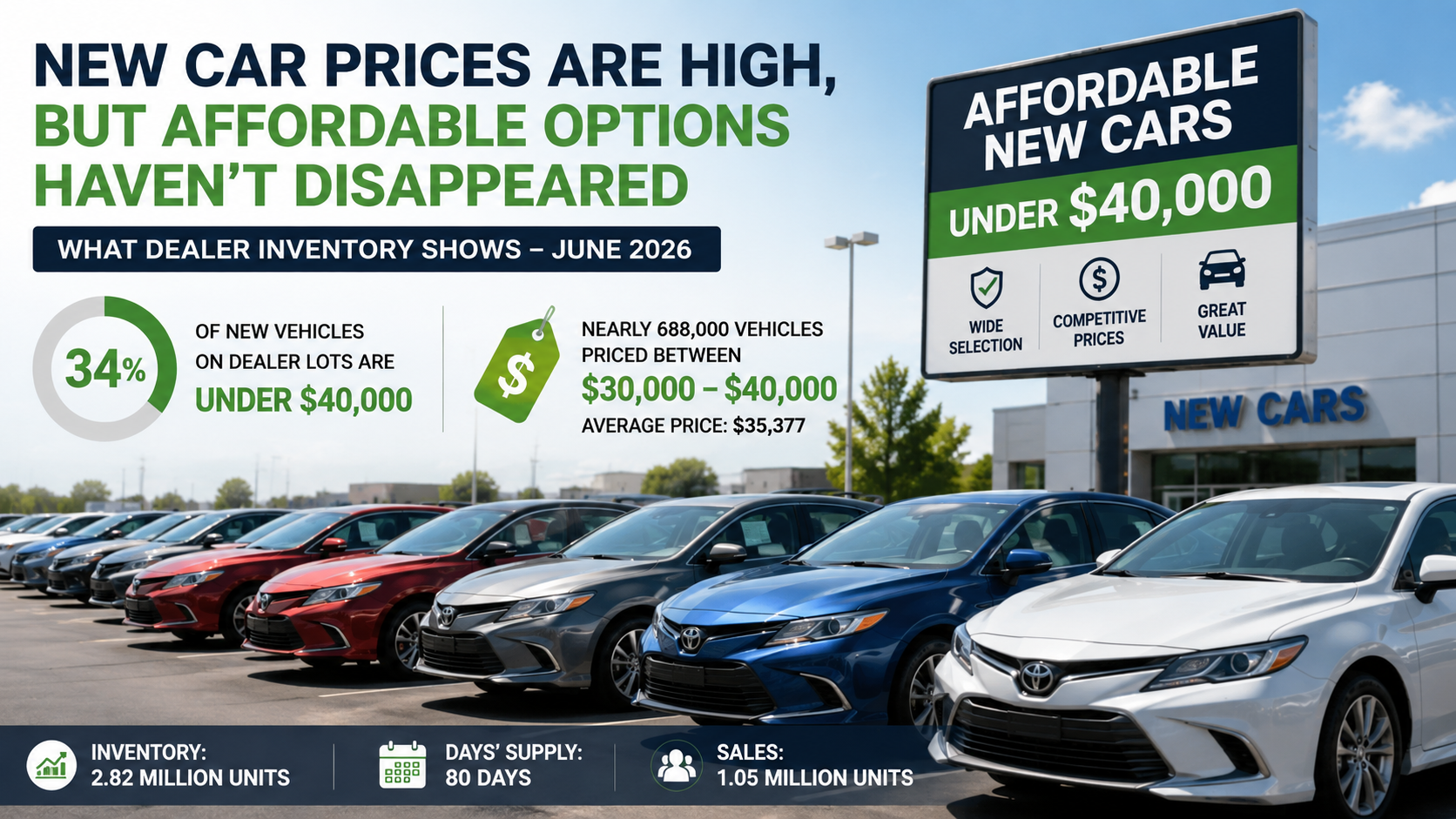
According to the latest Auto Live Market View report from Cox Automotive, US dealerships finished June with nearly 2.82 million new vehicles in stock. Although inventory slipped slightly compared to May, it remained broadly stable year over year, indicating a healthy supply of vehicles across the country.
More importantly for buyers, a significant portion of those vehicles still falls within a more affordable price range.
One-Third of Dealer Inventory Is Priced Below $40,000
The average listing price for a new vehicle reached $49,336 in June, a modest increase from both the previous month and the same period last year. However, averages can often be misleading because expensive luxury SUVs, premium electric vehicles, and heavy-duty pickup trucks heavily influence the overall figure.
The real story lies in where inventory is concentrated.
Nearly 688,000 vehicles, representing almost one-quarter of all available inventory, were priced between $30,000 and $40,000. These vehicles carried an average listing price of $35,377 and sold faster than the overall market, reflecting strong demand among budget-conscious buyers.
Expanding the range further, around 34 percent of all new vehicles currently sitting on dealership lots are priced below $40,000. This suggests that while premium vehicles continue pushing average prices higher, affordable new cars remain widely available for shoppers willing to explore different models and brands.
Toyota Keeps Selling While Jeep Faces Inventory Pressure
Inventory levels continue to vary dramatically across manufacturers.
Toyota entered July with one of the lowest inventory levels at just 37 days of supply, highlighting continued strong consumer demand. Lexus and Honda also maintained relatively lean inventories, while Subaru, Cadillac, Kia, and Chevrolet remained comfortably below the national average.
At the opposite end of the spectrum, Stellantis brands continue to struggle with excess stock.
Jeep recorded the highest inventory level in the market with a massive 160-day supply, followed by Ram and Dodge, both carrying inventories well above industry norms. Such high inventory levels typically encourage manufacturers to increase discounts and incentives to stimulate demand.
Surprisingly, that hasn’t happened.
Heavy Inventory Doesn’t Always Mean Bigger Discounts
Despite holding the largest inventory surplus, Jeep offered incentives worth only 6.7 percent of its average transaction price during June. That sits below the overall industry average of 7 percent.
For shoppers hoping large inventories would translate into aggressive bargaining opportunities, the numbers suggest otherwise. Jeep dealers are still holding firm on pricing, even as unsold vehicles continue accumulating on showroom floors.
This unusual strategy contrasts with traditional market behaviour, where manufacturers often use stronger incentives to reduce excess inventory.
The Market Remains More Stable Than Expected
Despite ongoing concerns surrounding inflation, rising living costs, and economic uncertainty, the US new vehicle market has remained surprisingly resilient throughout 2026.
Sales continue at a healthy pace, dealership inventories remain balanced overall, and affordable models continue to make up a meaningful share of available stock.
While the average new car price may continue grabbing headlines near the $50,000 mark, buyers searching in the mid-$30,000 range still have plenty of options. For consumers willing to compare models and shop strategically, today’s market offers far more choice than the averages alone would suggest.

Comments are closed.