

When the 2026 Commonwealth Games open in Glasgow on July 23, they will look nothing like the sprawling, multi-venue spectacles Indian fans are used to. Victoria’s withdrawal from hosting duties, driven by cost overruns estimated at AUD 6-7 billion, forced the Commonwealth Games Federation into a stripped-down “Games Reset”.
Glasgow’s organisers, working with roughly 60% less money than 2022 Birmingham Games spent, have trimmed the programme to just ten able-bodied and six para-sports packed into an eight-mile radius.
Badminton, shooting, wrestling, hockey and cricket, the sports that delivered the bulk of India’s 61-medal haul four years ago, are simply not on the schedule.
The 125-athlete contingent India is sending to Glasgow is the product of a recalibrated funding architecture that leans harder on secondary Olympic disciplines and para-sport than any Indian CWG delegation before it.
The headline number: Rs 53.09 crore
India’s total preparatory outlay for the 2026 Commonwealth Games in Glasgow stands at Rs 53.09 crore, split across two funding channels that rarely get equal public attention.
A bulk of Rs 48.90 crore flows through the Annual Calendar for Training and Competition (ACTC), the mechanism under the Scheme of Assistance to National Sports Federations (NSFs) that pays for group training camps, domestic competitions, boarding, lodging and the general machinery of national squads.
The remainder, Rs 4.19 crore, comes through the Target Olympic Podium Scheme (TOPS), which funds customised, athlete-specific plans, foreign training blocks, personal support staff, specialised equipment, for India’s highest-priority medal prospects.
It’s a small number compared to Olympic-cycle spending, but it is deliberately front-loaded toward disciplines with the best medal-conversion history in this compressed format.
Of the 191-member Indian contingent, 125 are athletes – 77 men and 48 women – competing across athletics, boxing, judo, weightlifting, artistic gymnastics, track cycling, lawn bowls, swimming, and the para-disciplines of para-athletics, para-swimming, para powerlifting, para track cycling and wheelchair basketball.
Each of these 125 athletes trains under some form of government-assisted structure: SAI’s National Centres of Excellence (NCOE), the Khelo India scheme, or NSF-run ACTC programmes.
There is no athlete in the Glasgow squad training entirely outside the state system.
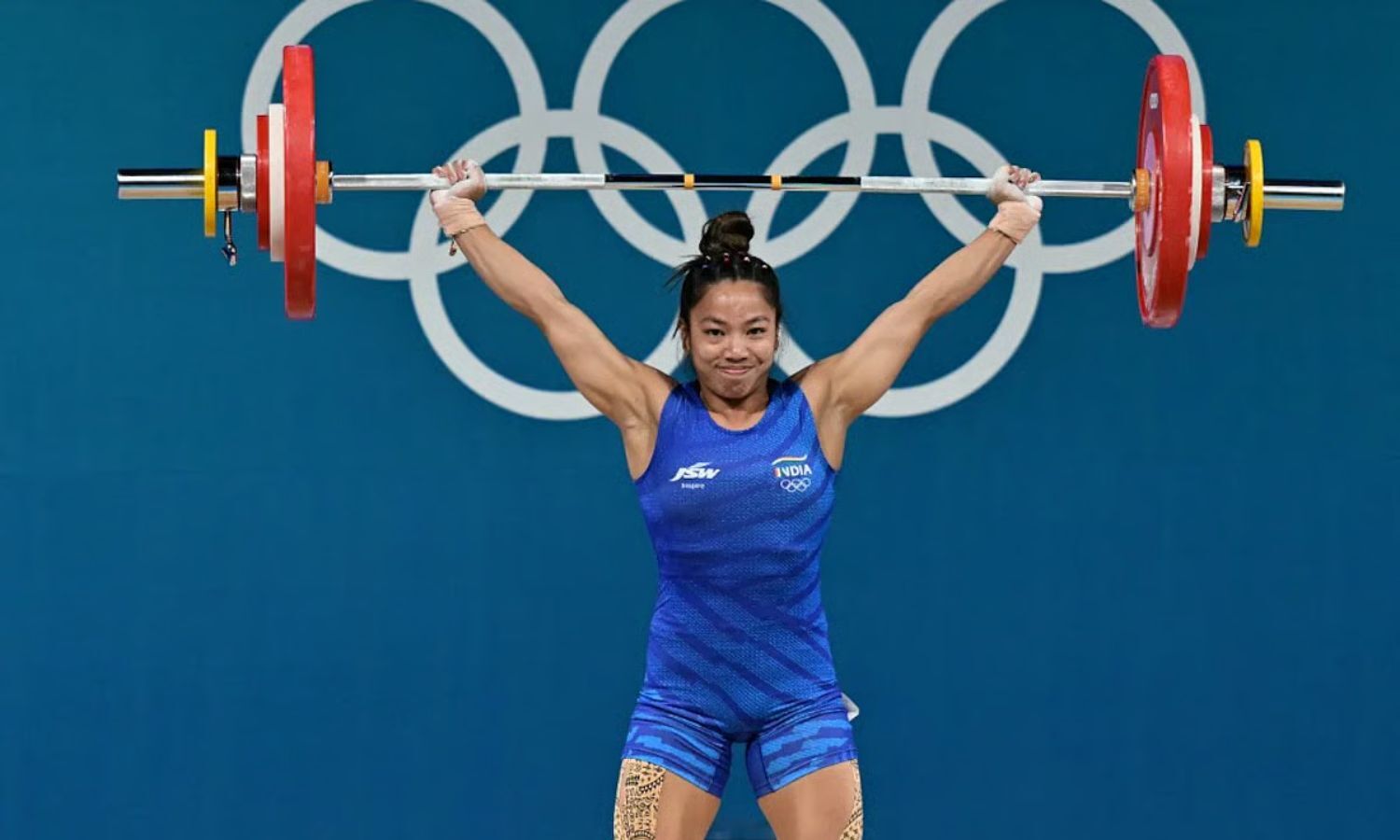
Within that 125, a smaller, elite core sits inside TOPS. The TOPS Core Group, receiving Rs 50,000 a month as an out-of-pocket allowance plus full coverage for customised international training, includes Neeraj Chopra, Lovlina Borgohain, Mirabai Chanu, Gulveer Singh (promoted into the Core group in 2026 after breaking national records over 5,000m and 10,000m), and Jaismine Lamboria (also upgraded this year).
A second tier, the TOPS Development Group – Rs 25,000 a month plus strategic tracking – includes long-term prospects such as Parul Chaudhary, Arundhati Choudhary, Praveen Chitravel and others.
Where the NSF money goes
Grants are heavily skewed toward federations with proven medal-conversion records:
Athletics Federation of India (AFI): Over Rs 20 crore, the single largest share, covering high-altitude camps, European exposure tours, foreign coaching salaries and recovery specialists.
Boxing Federation of India (BFI): Over Rs 10 crore, funding Ireland-based preparatory camps, Boxam tournament entries and elite support staff.
Indian Weightlifting Federation (IWLF): Rs 5–7.5 crore, funding a Birmingham acclimatisation base, equipment and its High-Performance Director’s salary.
Remaining federations: Gymnastics, Judo, Cycling, Swimming, Lawn Bowls and the para-sports disciplines routed through the Paralympic Committee of India share a combined Rs 15.59–18.09 crore for domestic camps, travel, sports-science testing and shorter overseas stints.
Separately, on the annual (non-Glasgow-specific) ACTC books, two CWG disciplines carry notable federation budgets for FY 2026–27: the Judo Federation of India at Rs 6 crore (with a mandated Rs 1.2 crore toward grassroots zone centres), and the Gymnastics Federation of India at Rs 4 crore for FY 2025–26, focused on junior development.
The exposure camps: Who trained where?
The Mission Olympic Cell ran a deliberate pre-Games acclimatisation strategy, moving contenders into European and altitude bases well ahead of the Games:
Athletics: A 32-member squad, including Neeraj Chopra, Gurindervir Singh and Parul Chaudhary, trained at the Spala Olympic Training Centre in Poland. Gulveer Singh and Parul Chaudhary separately did altitude work at Colorado Springs, USA, under coach Scott Simmons.
Priyanka Goswami logged long stints in Canberra/Melbourne, Switzerland and France refining her race-walking technique, while Murali Sreeshankar underwent knee surgery and rehab at Aspetar Hospital, Doha.
Boxing: A 14-strong squad, including Lovlina Borgohain, trained in Belfast, Ireland, for sparring and time zone adjustment.
Weightlifting: A 12-member group, including Mirabai Chanu, based itself at the Warley Weightlifting Club in Birmingham, UK.
Track Cycling: A six-member squad trained in France, while Dinesh Kumar and Harshveer Singh Sekhon ran an endurance camp in Kazakhstan.
Swimming: Sajan Prakash based in Edinburgh, with the rest of the squad, including Aryan Nehra, training across Aberdeen, Stirling and Stockport.
Lawn Bowls: A six-member team trained directly in Glasgow to adapt to local green conditions.
Each of these trips is billed to the respective federation’s ACTC allocation or TOPS’s customised training budget rather than as a separate travel line item.
The foreign coach’s bill
India is sending foreign coaches or High-Performance Directors in three Commonwealth Games disciplines: athletics, boxing, track cycling to Glasgow.
In athletics, Scott Simmons (middle/long distance) drew roughly USD 11,364 a month, while sprints coach Jason Dawson drew about USD 10,732 as per the publicly available data before 2024 Paris Olympics.
Track cycling’s Kevin Sireau, who is travelling to Glasgow as a part of the Indian contingent, was on a contract worth roughly Rs 70 lakh for six months before the Paris Olympics two years ago.
Boxing’s Santiago Nieva, head coach of the women’s programme, is paid around USD 13,500 monthly currently.
Boxing, notably, has been running without a permanent foreign HPD or men’s head coach since Bernard Dunne and Dmitry Dmitruk’s exits, caught in a salary standoff between BFI’s ask (USD 15,000 for HPD, USD 12,000 for head coach) and SAI’s cap (USD 8,500), as per a report in the Times of India.
Apart from the aforementioned names, Ronald Weigel (racewalking) and Yoandri Betanzos (jumps) are also slated to travel with the Indian contingent as Extra officials (ETOs).
While Weigel is contracted by the Athletics Federation of India (AFI), meaning he is paid under the ACTC mechanism, Betanzos is employed by the Inspire Institute of Sports (IIS) run by JSW Sports.
Where the system still lacks
Money alone hasn’t resolved governance friction. SAI was forced to intervene and halt the Boxing Federation of India’s proposed selection trials over conflict-of-interest concerns involving national coaches sitting on the evaluation panel.
Separately, 16-year-old para-track cyclist Lisha Das raised concerns about the absence of female support staff on her tour, despite a 2022 SAI mandate requiring exactly that, a gap that triggered a public disagreement between the Cycling Federation of India and the Paralympic Committee of India.
Both episodes point to the same conclusion that a high budget and a fully scheme-backed contingent are necessary conditions for a competitive Commonwealth Games campaign, but not sufficient ones.
Standardised, independently run selection trials and enforced safeguarding audits are a must as India looks ahead to hosting the Games itself in Ahmedabad in 2030.

Comments are closed.