
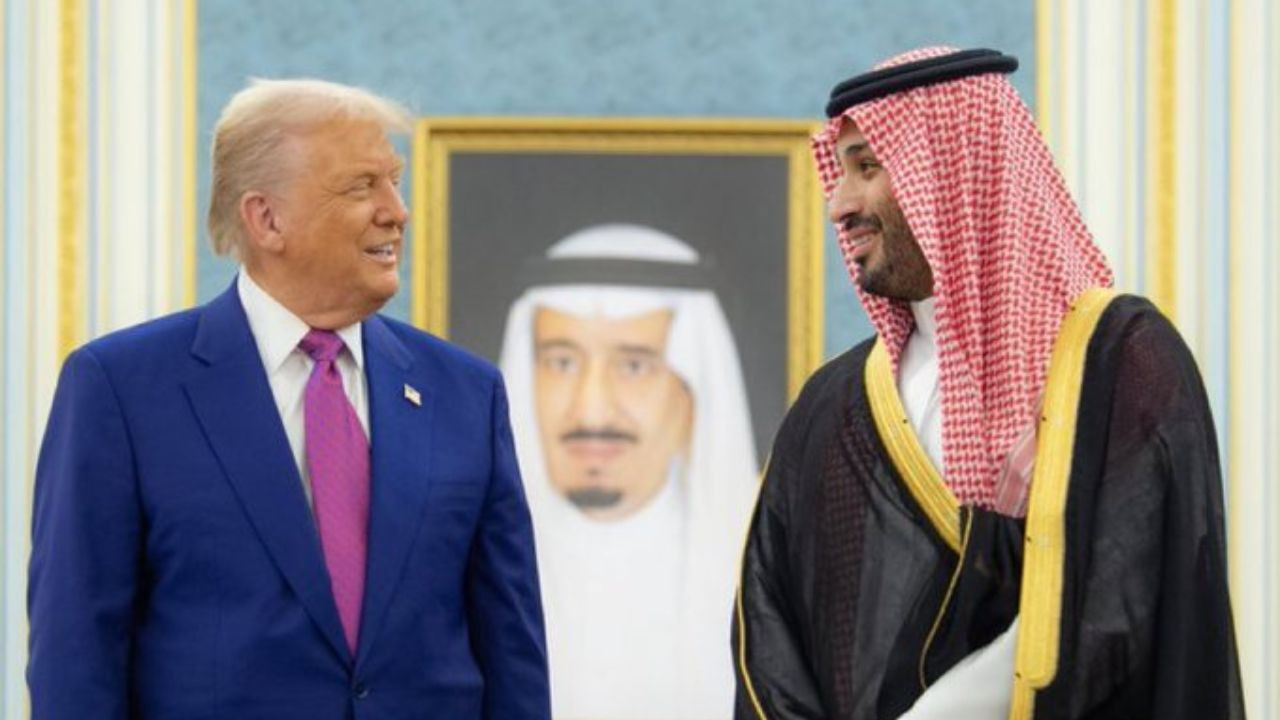
America going to give nuclear power to Saudi Arabia? Trump approves the agreement, tension will increase for Iran

US President Donald Trump has approved a major civil nuclear deal with Saudi Arabia. According to reports, under this agreement, Saudi Arabia is likely to get permission for uranium enrichment in its country. However, the agreement does not include some of the stringent security provisions that the US generally considers necessary to prevent the military use of nuclear technology.
The Wall Street Journal quoted officials as saying that this agreement could last for about 30 years and would involve an investment of billions of dollars. Under this, American companies are expected to get a bigger role in the construction of Saudi Arabia’s civil nuclear program. American companies will benefit from this arrangement, while the opportunities for competition for companies from other countries may be quite limited.
Agreement can be presented before Congress
According to Reuters report, the Trump administration may present this agreement before the US Congress in the coming days. The proposed package will also include ‘123 agreement’. This is the legal framework under which the United States controls nuclear energy-related cooperation with other countries. However, according to reports, this agreement does not include the provision which is called the ‘gold standard’ to prevent nuclear proliferation. Under this arrangement, a country is prevented from activities like uranium enrichment and extracting plutonium from used nuclear fuel.
Concern about the threat of nuclear weapons
Experts say that uranium enrichment and plutonium reprocessing are the two main ways to obtain the material needed to make nuclear weapons. If a country allows these activities and there is not adequate international monitoring, the risk of nuclear proliferation may increase. Many countries using civilian nuclear energy, instead of producing nuclear fuel themselves, obtain enriched fuel from other countries under international supervision. In such a situation, the proposal to allow Saudi Arabia to enrich uranium domestically is creating concern among security experts.
Questions also regarding IAEA monitoring
Reports also say that under the agreement, Saudi Arabia will not be required to adopt additional protocols of the International Atomic Energy Agency (IAEA). This protocol strengthens the monitoring of nuclear activities and gives the agency additional powers such as surprise inspections of a country’s undeclared nuclear sites. Instead, security rules related to Saudi Arabia’s nuclear program can be decided through bilateral negotiations between the two countries. This is the reason why experts are raising questions about the monitoring system of this agreement.
Regional concerns may increase due to Iran
Iran is also a major reason for concern about Saudi Arabia’s nuclear program. Saudi Crown Prince Mohammed bin Salman has previously said that if Iran acquires nuclear weapons, his country can also take steps in the same direction for its security. In such a situation, if Saudi Arabia gets domestic capacity for uranium enrichment, then fears regarding nuclear competition in West Asia may increase. Experts believe that strong monitoring is essential to maintain a distinction between civilian nuclear programs and military nuclear capabilities.

Comments are closed.