
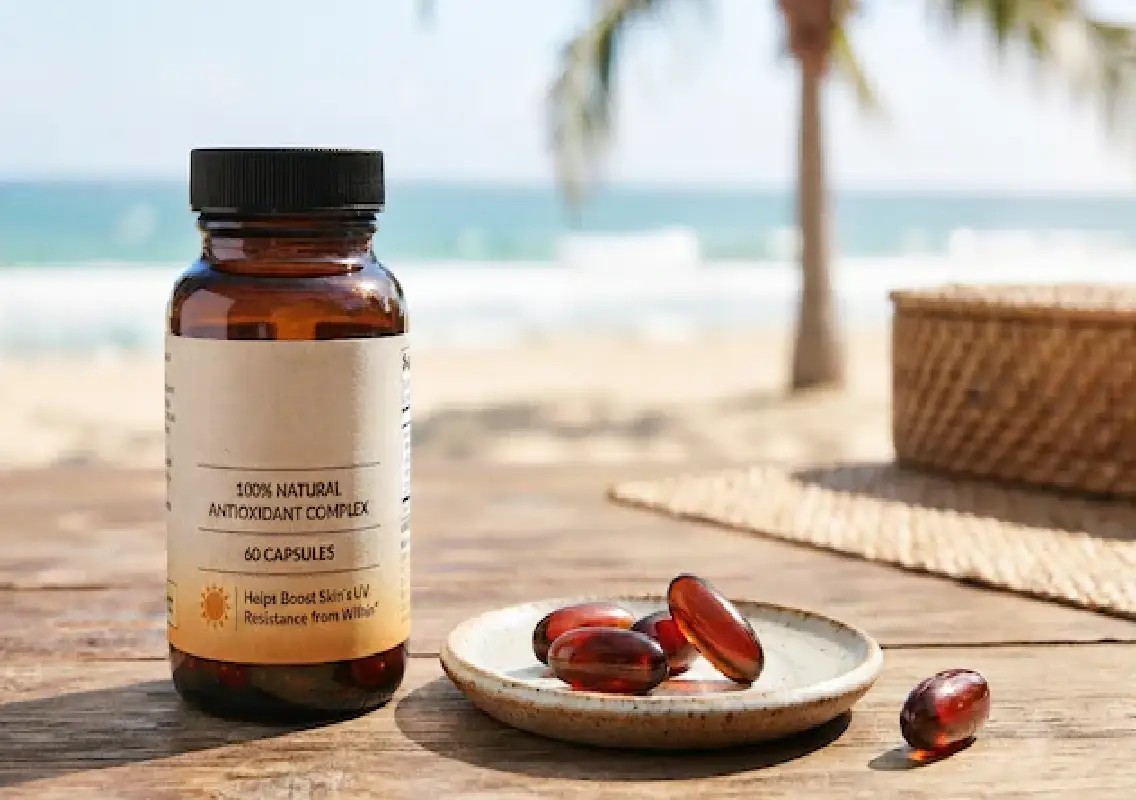

New Delhi: Sunscreen pills are gaining popularity as a convenient way to protect the skin from the sun, with manufacturers claiming they provide “sun protection from within”. However, dermatologists caution that while some oral supplements may offer antioxidant benefits, they cannot replace topical sunscreen in preventing sunburn, skin ageing or skin cancer.
Experts emphasise that broad-spectrum sunscreen remains the most effective defence against harmful ultraviolet (UV) rays.
What are sunscreen pills?
Sunscreen pills, also known as oral sun protection supplements, contain ingredients believed to help the body cope with oxidative stress caused by UV exposure.
Common ingredients include:
- Polypodium leucotomos extract
- Beta-carotene
- Lycopene
- Vitamins C and E
- Astaxanthin
These compounds possess antioxidant properties that may help reduce cellular damage caused by free radicals. However, experts say they do not physically block UV radiation from reaching the skin.
Can sunscreen be replaced by a pill?
According to dermatologists, the answer is no.
Doctors explain that there is currently no oral supplement capable of providing the level of protection offered by a sunscreen’s Sun Protection Factor (SPF).
Unlike topical sunscreens, oral supplements do not create a protective barrier on the skin to absorb or reflect harmful UV rays.
While some supplements may complement an overall skin protection routine, they cannot prevent sunburn or shield the skin from prolonged UV exposure on their own.
Why topical sunscreen remains essential
Dermatologists stress that sunscreen should be applied daily to all exposed areas of the skin.
Regular sunscreen use helps protect against several skin conditions, including:
- Sunburn
- Hyperpigmentation
- Dark spots
- Premature skin ageing
- Skin cancer
Experts recommend choosing a sunscreen suitable for one’s skin type and applying it generously before going outdoors.
They also advise reapplying sunscreen every two to four hours, particularly after sweating, swimming or prolonged sun exposure.
Risks of relying only on sunscreen pills
Doctors warn that depending solely on oral supplements for sun protection may increase the risk of skin damage.
Without topical sunscreen, prolonged UV exposure may lead to:
- Increased sunburn risk
- Premature wrinkles and skin ageing
- Pigmentation disorders
- Higher likelihood of developing skin cancer
Experts say sunscreen pills should never be viewed as a substitute for conventional sun protection methods.
What research shows
Scientific studies suggest that certain oral supplements possess antioxidant and anti-inflammatory properties that may reduce oxidative damage caused by sunlight.
However, researchers have found no convincing clinical evidence that sunscreen pills alone prevent sunburn or provide SPF-equivalent protection.
Health experts therefore describe these products as supportive nutritional supplements rather than true alternatives to sunscreen.
Who may benefit from oral supplements?
Although sunscreen pills are not a replacement for sunscreen, dermatologists say they may provide additional support for certain groups, including:
- People with photosensitivity disorders
- Individuals with melasma
- Outdoor workers
- Frequent travellers
Even in these situations, doctors recommend combining supplements with topical sunscreen and other protective measures.
Best ways to protect your skin
Dermatologists recommend a comprehensive approach to sun protection.
This includes:
- Applying a broad-spectrum SPF 30 or higher sunscreen suited to your skin type
- Reapplying sunscreen every two hours, or more frequently after sweating or swimming
- Wearing long-sleeved clothing and wide-brimmed hats
- Using UV-protective sunglasses
- Seeking shade whenever possible
- Avoiding prolonged outdoor exposure between 10 am and 4 pm, when UV radiation is strongest
Warning signs of excessive sun exposure
Experts advise seeking medical attention if you notice:
- Persistent redness or burning
- Blistering
- Severe tanning
- New moles
- Changes in the size, shape or colour of existing moles
- Persistent skin lesions
Early evaluation by a dermatologist can help detect sun-related skin damage and other conditions before they become serious.
Conclusion
While sunscreen pills may offer antioxidant support and contribute to overall skin health, they cannot replace the proven protection provided by topical sunscreen. Dermatologists continue to recommend daily use of broad-spectrum sunscreen, along with protective clothing and sun-safe habits, as the most effective strategy for preventing UV-related skin damage.

Comments are closed.