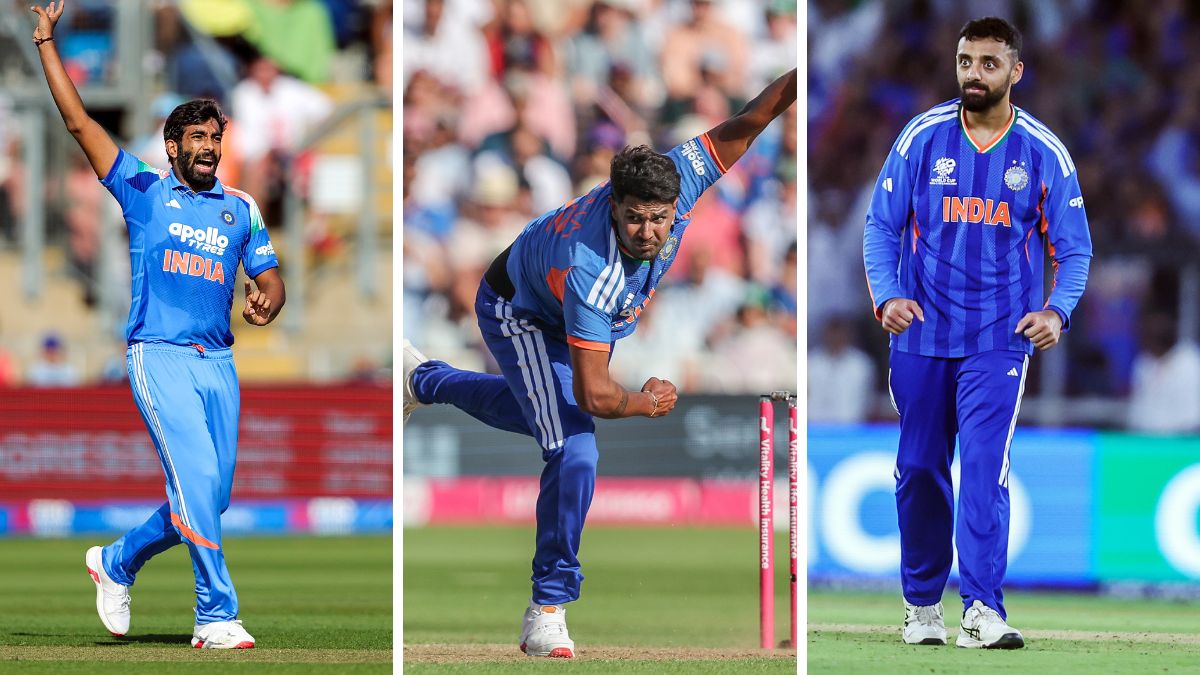
The BCCI is preparing to tighten fitness standards for the Indian cricket team. According to a TOI report, the Centre of Excellence (CoE) in Bengaluru has revised the fitness test standards for players. Notably, passing just one test will no longer be sufficient; the Bronco Test will also be followed by a 2-kilometer run.
The ongoing injuries and fitness concerns among players have been cited as a major reason for this change. The BCCI has also established new minimum fitness parameters to facilitate better coordination between the team management and the medical team.
What is the BCCI’s new fitness test?
According to the report, the Yo-Yo Test was previously used primarily to assess the fitness of Indian cricketers. Now, the Bronco Test has been made the primary fitness test. Players will also be required to complete a 2-kilometer run. The biggest challenge is that both tests will be conducted back-to-back. This means that players will first demonstrate their speed and recovery abilities in the Bronco Test, followed by a 2-kilometer run.
How much running does the Bronco Test entail?
The Bronco Test is essentially a rugby-related fitness test. Players must sprint continuously over varying distances. In one set, players:
Run 20 meters forward and backward,
Followed by 40 meters forward and backward,
Followed by 60 meters forward and backward.
This totals 240 meters in one set. Five such sets must be completed. This means a Bronco Test covers a total of 1200 meters. According to the report, the base time was approximately 6 minutes, which is being reduced to approximately 5 minutes 15 seconds to 5 minutes 20 seconds.
But the test is still pending…
After the Bronco Test, players will also be required to run 2 kilometers. According to the report, the time limit for this is approximately 9 to 10 minutes. However, players may be given up to 10 minutes to provide some relief. This means the challenge isn’t just about running fast. Players will first have to complete a grueling 1200-meter sprint-based test, followed immediately by a 2-kilometer run.
Why was this decision taken?
The report cites the increasing number of injuries and declining fitness levels among players as the primary reason. The BCCI and team management believe that players should remain on the field for longer periods of time, improve their mobility, and ensure batsmen don’t face difficulties running between the wickets while batting for long periods. The fitness regime, particularly during the England tour, raised questions about players’ injuries and cramps.
Questions also arise regarding senior players
The report also claims that fitness standards were not applied uniformly to every player last year. It has also been revealed that some senior players were given relatively easy targets. This is why the BCCI is now emphasizing that regardless of a player’s star status, any decline in fitness must be immediately reported to the medical and support staff.
New fitness target for Harshit Rana
According to reports, new parameters have been set for Harshit Rana’s fitness. After his return from the England tour, discussions regarding his weight surfaced. The report quoted team management as saying he weighed 97 kg. Now, the CoE has set a target for him to remain under 96 kg. According to the report, his current weight is around 94 kg, and he is expected to be declared fit by next week.
Why did the Bumrah and Siraj issue arise?
Questions have also been raised about the coordination between the CoE and team management regarding the fitness regime. According to reports, Jasprit Bumrah was expected to be fit for the first match of the Test series against Sri Lanka, starting August 15th, but the CoE failed to do so. Meanwhile, when Mohammed Siraj arrived at the CoE before the Sri Lanka tour, he was surprised by the new Bronco and 2KM tests. Now, even non-Test players have been asked to prepare according to these new fitness standards…
Will excessive fitness tests be detrimental?
This is where the other aspect of this entire change comes into play. Repeatedly subjecting players to Yo-Yo, Bronco, and 2KM tests could put additional strain on their bodies and minds. India’s injury management during the 2023 ODI World Cup, 2024 T20 World Cup, and 2025 Champions Trophy was described as effective. At that time, the emphasis was on keeping players fit while also avoiding unnecessary workload. Now, if the workload of fitness tests and training increases excessively, it could lead to increased mental and physical fatigue among players, potentially increasing the risk of injury.
Understand in simple terms
Old method: Yo-Yo Test → Fitness assessment
New method: Bronco Test → 1200-meter sprint-based run → Quick 2KM run
Objective: Improve fitness + reduce injuries + improve athletes’ mobility and endurance
Challenge: Excessive workload → Fatigue → Risk of burnout and potential injury