
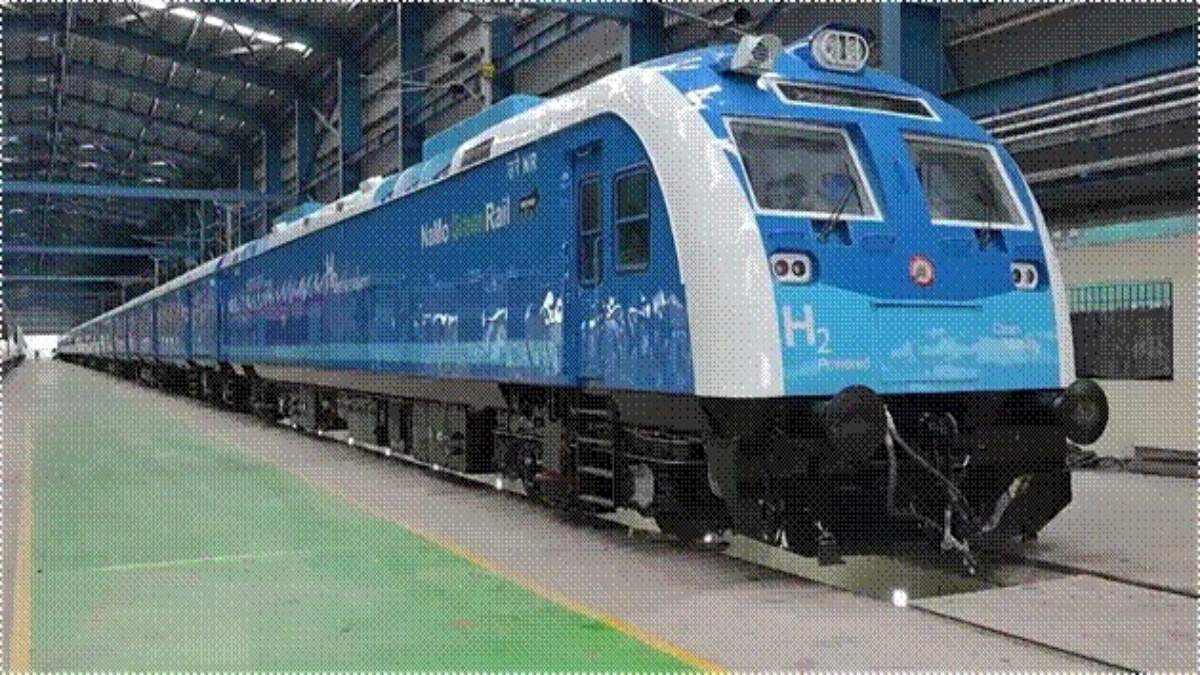
Hydrogen Fuel Cell Train: India’s first hydrogen train becomes a new identity for green transportation, 2600 passengers will travel

Indian Railways has taken a historic step towards clean and green transportation, the country’s first hydrogen fuel cell train (Hydrogen Fuel Cell Train) has been started. Launched on July 17, 2026, the train runs on self-generated electricity from hydrogen and emits almost zero carbon emissions during operation. This 10-coach train has a capacity to carry about 2,600 passengers, making it one of the largest capacity hydrogen passenger trains in the world.
The train produces its own electricity (Hydrogen Fuel Cell Train)
Unlike traditional electric trains, this train does not draw power from overhead wires. In the Proton Exchange Membrane (PEM) fuel cell installed in it, electricity is generated from the chemical process of hydrogen and oxygen of air, which runs the motors. In this entire process, only water vapor and heat are released, while there is no smoke and carbon emission.
Capacity of 2600 passengers, speed of 110 km per hour
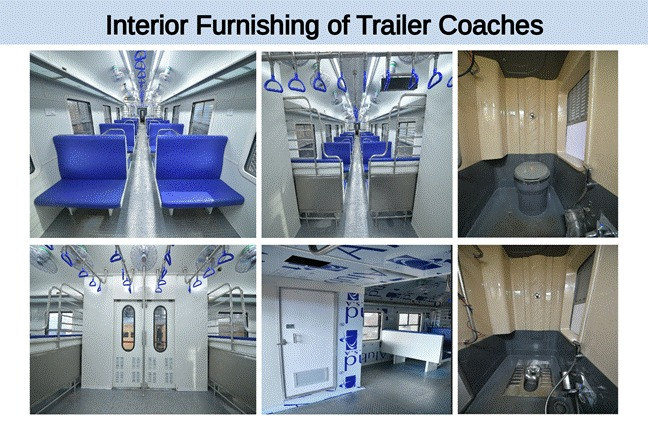
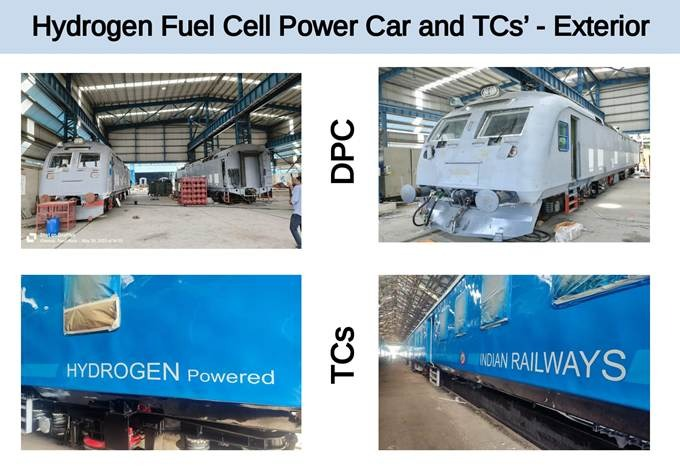
Two driving power cars and eight trailer coaches have been installed in the Hydrogen Fuel Cell Train. Both power cars generate 1,200-1,200 kW of power, allowing the train to reach a design speed of 110 km per hour. At present it is being run on the Jind-Sonipat section of Northern Railway.
Country’s largest hydrogen station built in Jind
Railways has set up the country’s largest railway hydrogen refueling facility in Jind, Haryana. Here green hydrogen is produced, stored, compressed and distributed. This center is capable of storing about 3,000 kg of hydrogen at a time, which will ensure regular operation of the train.
Multi-tier system for safety (Hydrogen Fuel Cell Train)
The train is fitted with modern sensors to detect hydrogen leakage, fire, smoke and abnormal temperatures. In case of any danger, the supply of hydrogen stops automatically. The entire system has been tested as per international standards and has also undergone safety assessment from Germany’s independent agency TUV SUD.
Completely prepared with indigenous technology
This project has been developed under the leadership of Indian Railways. RDSO prepared the technical design, while integration of the train was done by Medha Servo Drives. Integral Coach Factory (ICF) developed the exterior design of the train. This project is also being considered a great example of the country’s indigenous engineering capability.
Big step towards green future
Indian Railways says that based on the experience gained from the Jind-Sonipat project, there is a plan to run Hydrogen Fuel Cell Train on heritage railway routes like Kalka-Shimla in future. This initiative will play an important role in accelerating the National Green Hydrogen Mission and India’s net-zero target.

Comments are closed.